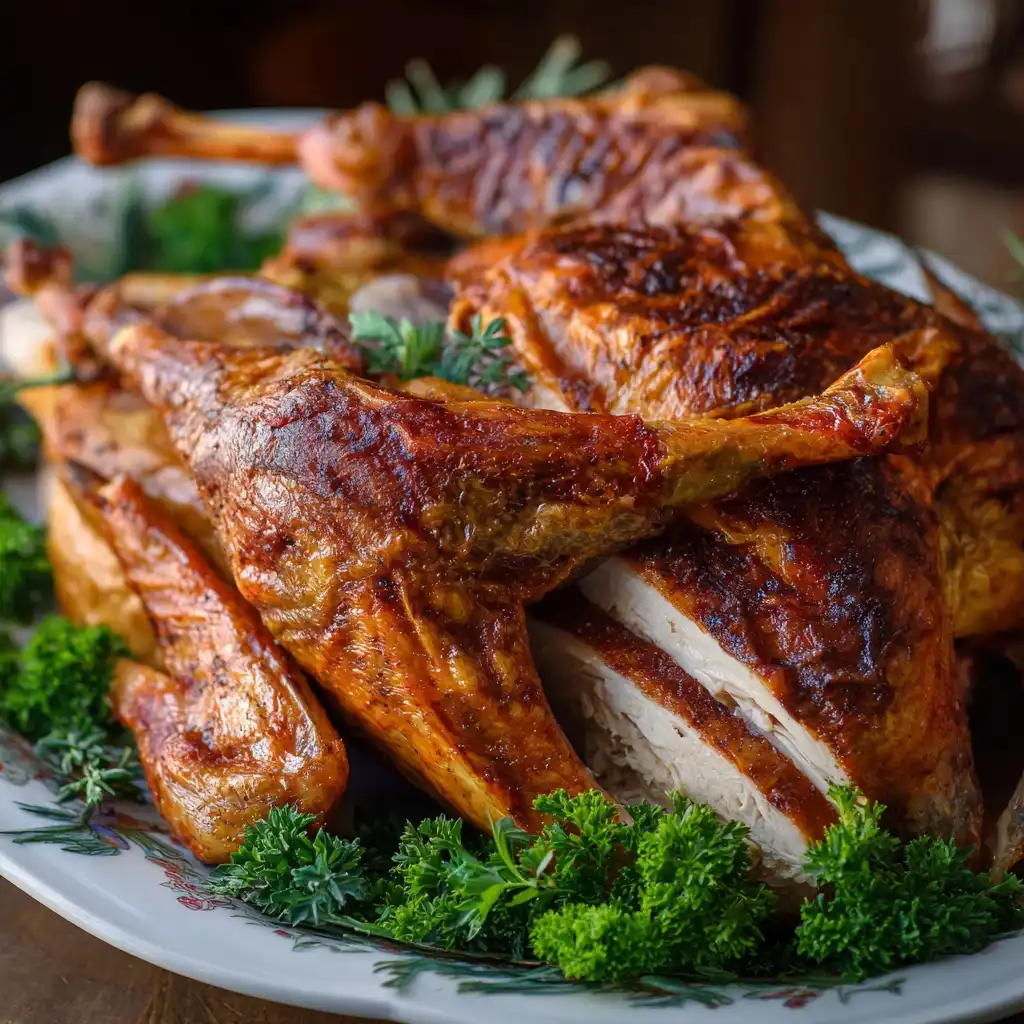
Master an easy, incredibly flavorful deep fried turkey for your Thanksgiving feast! Crispy skin, moist meat, and simple steps.
Why You’ll Love This Recipe
- Incredibly Crispy Skin: Experience a shatteringly crisp, golden-brown skin that’s unlike any roasted turkey.
- Juicy, Flavorful Meat: Injecting and rubbing ensures every bite is infused with savory goodness.
- Faster Cooking Time: Deep frying significantly reduces cooking time compared to traditional roasting, freeing up your oven and your time.
- Impressive Centerpiece: This method creates a visually stunning and undeniably delicious main course for your holiday table.
- Reliably Delicious: With clear instructions and essential safety tips, this recipe is designed for success, even for beginners.
Ingredients Needed
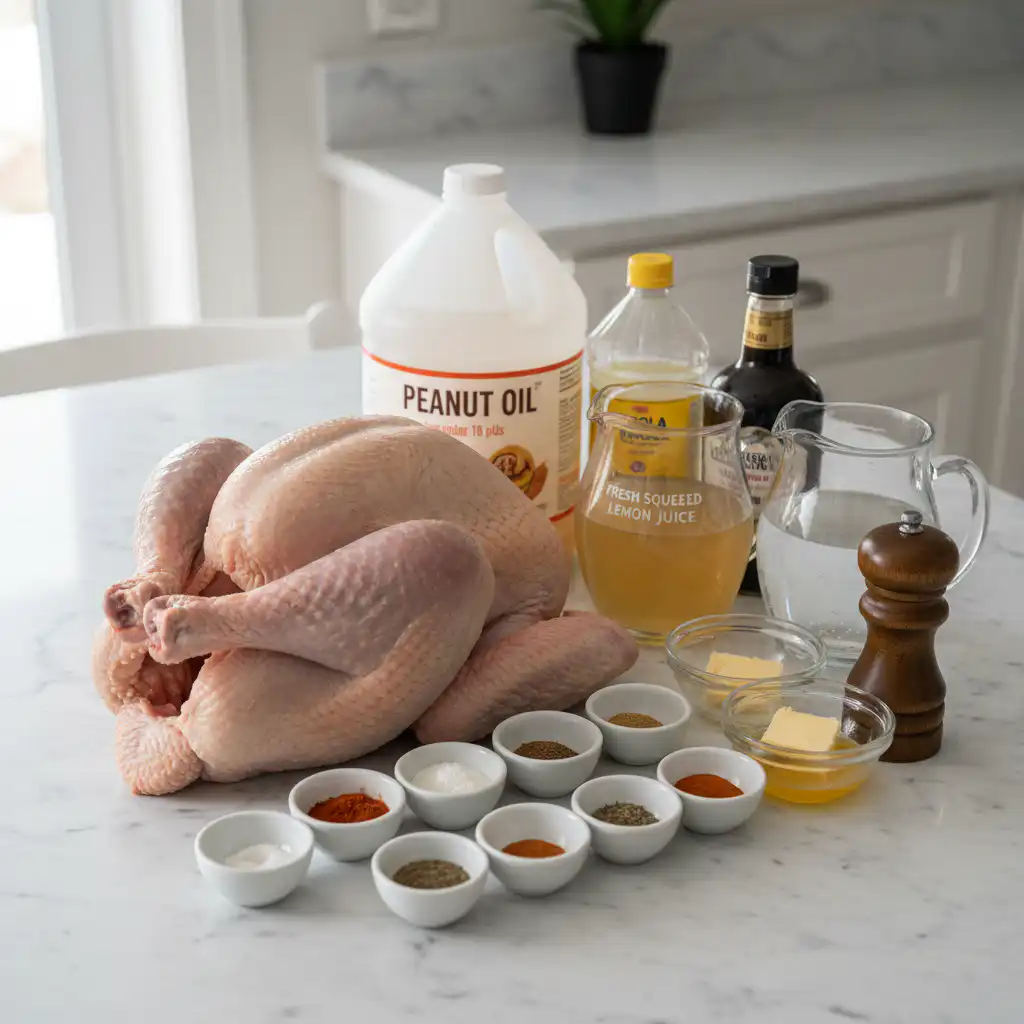
- 1 large turkey (under 18 lbs)
- 3 gallons peanut oil
- 1 tbsp chili powder
- 1 tbsp paprika
- 1 tbsp garlic salt
- 1 tbsp onion salt
- 1 tbsp seasoning salt
- 1 teaspoon fresh ground pepper
- 1/4 cup melted butter
- 1/4 cup oil (canola or vegetable)
- 3 tbsp Worcestershire sauce
- 1/4 cup water
- 1/2 large lemon (fresh, squeezed)
- 1 teaspoon ground sage
- 1 teaspoon dried thyme
- 1 teaspoon garlic salt
- 1 teaspoon onion salt
Ingredient Notes & Substitutions
Turkey Size: Aim for a turkey under 18 lbs to ensure it fits safely in most standard turkey fryers and cooks evenly.
Peanut Oil: This is the preferred oil for deep frying turkeys due to its high smoke point (around 450°F), allowing it to reach and maintain the target frying temperature of 325°F without burning. Its neutral flavor also ensures it won’t impart unwanted tastes to your turkey. Other high smoke point oils like canola or safflower can be used if needed.
Seasoning Salt: A blend like Lawry’s is common, but feel free to use your favorite all-purpose poultry seasoning blend.
How to Make Easy Deep Fried Turkey
Step 1: Prepare the Injection Marinade
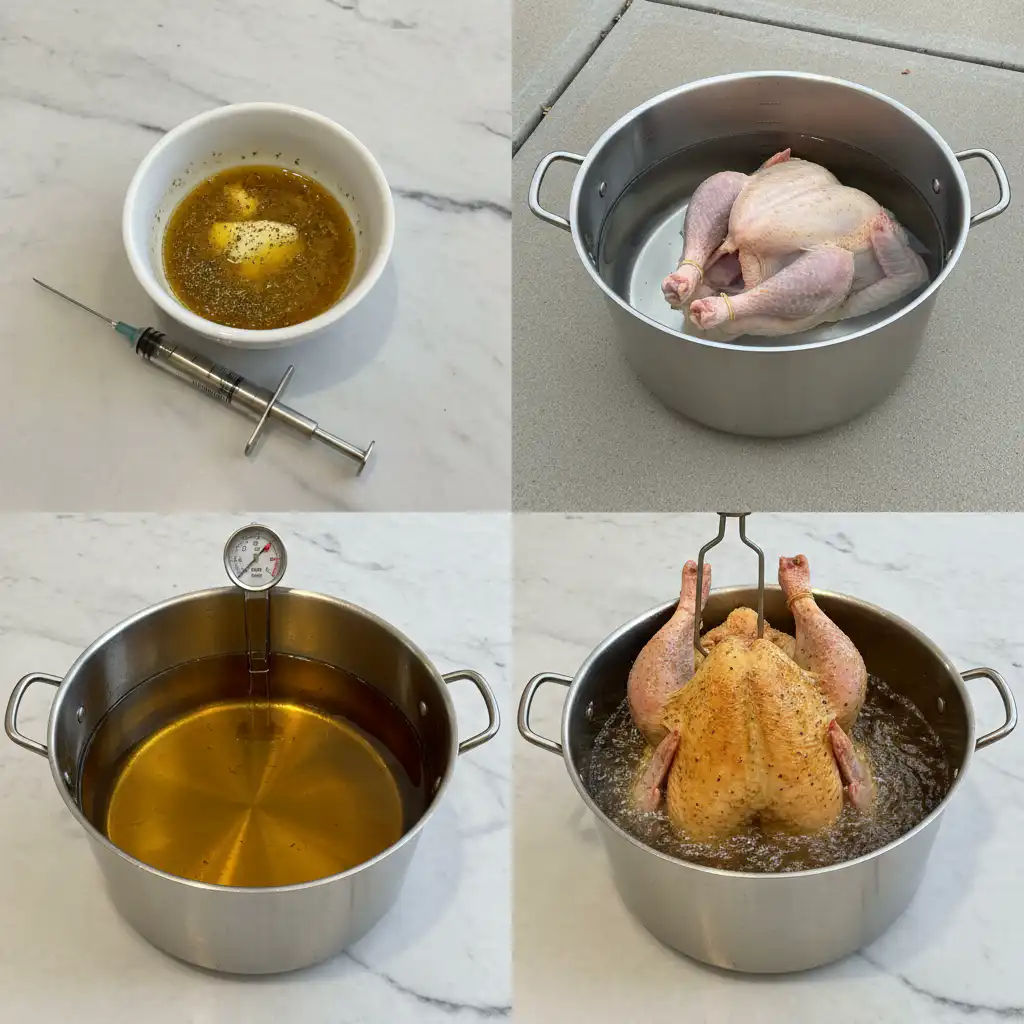
In a small bowl, whisk together the melted butter, 1/4 cup oil (canola or vegetable), Worcestershire sauce, water, lemon juice, ground sage, dried thyme, 1 teaspoon garlic salt, and 1 teaspoon onion salt. Pour this mixture into a marinade injector syringe.
Step 2: Inject the Turkey
Ensure your turkey is completely thawed, rinsed thoroughly, and patted completely dry with paper towels. Carefully insert the injector needle into various thick parts of the turkey (breast, thighs, legs), injecting the marinade deep into the meat. Aim to make as few injection holes as possible while distributing the marinade evenly. This is key for a moist and flavorful bird.
Step 3: Season and Marinate
Combine the chili powder, paprika, 1 tbsp garlic salt, 1 tbsp onion salt, 1 tbsp seasoning salt, and fresh ground pepper in a small bowl to create the dry rub. Generously rub this mixture all over the outside of the turkey, making sure to get some into the cavity and gently under the skin of the breast. Once seasoned, wrap the turkey tightly in plastic wrap. Refrigerate for at least 1 hour, or preferably up to 24 hours, to allow the flavors to meld.
Step 4: Determine Oil Level
When you’re ready to fry, place your clean, dry turkey fryer pot on a level surface outdoors, away from any structures. Fill the pot with water to the first fill line indicated on the pot. Place the turkey (still in an airtight bag, if desired, to keep it dry) into the water-filled pot. The water level should rise. Remove the turkey and mark the water line. This marked line indicates the correct oil level needed to ensure the turkey is fully submerged without overflowing.
Step 5: Fry the Turkey
Drain and thoroughly dry the pot. Add the 3 gallons of peanut oil to the pot, filling it to the water line you marked. Attach your turkey fryer thermometer and preheat the oil over high heat to 275°F (135°C).
- Safety First: While the oil preheats, remove the turkey from the plastic wrap and pat it completely dry one more time – excess moisture causes dangerous splattering. Ensure you are wearing heavy-duty, heat-resistant gloves and eye protection. Have a Class K fire extinguisher readily accessible.
- Lowering the Turkey: Once the oil reaches 275°F, carefully and slowly lower the turkey into the hot oil using the provided turkey fryer hanger or hook. Avoid dropping the turkey, as this can cause oil to splash violently. Wear your protective gear!
Step 6: Cook and Monitor
Once the turkey is submerged, close the lid (if your fryer has one). The oil temperature will drop; allow it to return to and maintain a steady 325°F (163°C). Insert a reliable meat thermometer probe into the thickest part of the thigh, ensuring it doesn’t touch the bone. Cook until the internal temperature reaches 165°F (74°C).
Step 7: Rest and Carve
Carefully lift the turkey out of the oil using the hanger/hook. Allow excess oil to drain back into the pot. Transfer the turkey to a cutting board or platter. Let the turkey rest for 20-30 minutes before carving. This crucial step allows the juices to redistribute, ensuring a moist and tender result.
Safety First: Mastering Outdoor Turkey Frying
Deep frying a turkey is an exciting and delicious way to cook, but safety must be the top priority. Adhering to these guidelines will help prevent accidents and ensure a successful holiday meal.
- Location, Location, Location: Always fry your turkey outdoors on a stable, level surface. Keep the fryer at least 10-15 feet away from any house, garage, deck, or flammable materials. Never fry on a wooden deck or in a garage.
- The Right Pot & Oil: Use a pot specifically designed for turkey frying, large enough to hold the turkey and oil without boiling over. As mentioned, peanut oil is ideal due to its high smoke point. Never overfill the pot – use the water displacement test to get it right.
- Thaw & Dry Thoroughly: A partially frozen or wet turkey is a recipe for disaster. Ensure your turkey is completely thawed and bone-dry inside and out before it even approaches the fryer.
- Fire Safety Equipment: Keep a Class K (or Class B) fire extinguisher specifically designed for grease fires nearby and know how to use it. Do NOT use water to extinguish an oil fire; it will make it worse.
- Protective Gear: Wear oven mitts or heat-resistant gloves, long sleeves, pants, and closed-toe shoes. Safety glasses are also recommended to protect your eyes from potential splatters.
- Gentle Lowering & Removal: Use the provided hook or a sturdy, heat-proof lifter to slowly and carefully lower the turkey into the hot oil. Avoid any sudden movements. Do the same when removing the turkey.
- Never Leave Unattended: Stay with the fryer at all times while it is in use and while the oil is cooling.
- Oil Temperature Control: Monitor the oil temperature closely with a reliable thermometer. Too low, and the turkey will be greasy; too high, and the outside will burn before the inside is cooked.
- Cooling Oil: Allow the oil to cool completely (this can take several hours) before attempting to move or dispose of it.
Pro Tips & Troubleshooting
Expert Tips for the Best Deep Fried Turkey
- Dry Brining: For an extra crispy skin and flavorful bird, consider dry brining the turkey (with salt and spices) in the refrigerator for 1-3 days before injecting and frying.
- Season Under the Skin: Gently separate the skin from the breast meat and rub some of the spice mixture directly onto the meat for maximum flavor infusion.
- Use a Dedicated Thermometer: Invest in a good quality deep-fryer thermometer and a reliable leave-in probe thermometer for the most accurate temperature readings.
- Drain Well: After removing the turkey from the oil, let it drain for a few minutes over the pot before transferring it to a resting rack or platter.
- Pre-Sear (Optional): Some cooks like to briefly dip just the legs and thighs into the oil first to ensure those thicker parts start cooking immediately.
Common Mistakes to Avoid
- Frying a Frozen or Damp Turkey: This is the most dangerous mistake, leading to extreme oil splatter and uneven cooking. Always thaw and dry completely.
- Overfilling the Pot: This is a major fire hazard. Always use the water displacement method to determine the correct oil level.
- Incorrect Oil Temperature: Not preheating adequately or letting the oil drop too much when the turkey is added will result in a greasy, soggy bird.
- Forgetting to Rest: Carving immediately after frying prevents juices from settling, leading to a drier turkey.
- Using the Wrong Equipment: Not using a large enough pot or a stable burner can lead to accidents.
Serving & Storage
Serving Ideas
Classic Thanksgiving Spread: This deep-fried turkey is the star alongside traditional favorites like creamy mashed potatoes, savory stuffing, rich gravy, tangy cranberry sauce, and roasted Brussels sprouts. You might also consider adding a sweet potato turkey chili or a chicken pot pie as complementary dishes.
Condiments: Offer a variety of dipping sauces, from classic gravy to a spicy aioli or a tangy BBQ sauce.
Garnish: Serve on a bed of fresh herbs like rosemary and thyme, with orange slices or cranberries for a festive touch.
Storage and Make-Ahead
Storage: Leftover deep-fried turkey can be stored in an airtight container in the refrigerator for up to 3-4 days.
Reheating: Reheat slices gently in the oven at a low temperature (around 300°F) or in a covered skillet with a little broth to help retain moisture. Avoid microwaving, which can make the meat rubbery.
Make-Ahead: The dry rub can be mixed and stored in an airtight container for weeks. The injection marinade can be prepared a day in advance and refrigerated.
Conclusion
This easy deep fried turkey recipe offers a spectacular alternative to traditional holiday birds, delivering unparalleled crispiness and juicy flavor in a fraction of the time. With a focus on simple steps and crucial safety measures, you can confidently create a memorable Thanksgiving centerpiece that will wow your guests. For other holiday favorites, consider exploring recipes like roasted cabbage with tomato salsa or a hearty Mexican stuffed sweet potato with ground turkey.
Frequently Asked Questions
What is the safest way to deep fry a turkey?
Deep frying a turkey should always be done outdoors, on a level surface, away from any structures. Ensure you have a fire extinguisher rated for grease fires (Class K) nearby. Never leave the fryer unattended, and always wear protective gear like heat-resistant gloves and eye protection. Use the correct amount of oil and follow the water displacement test to prevent boil-overs.
Why is my deep fried turkey greasy?
A greasy deep-fried turkey can result from several factors: the oil not being hot enough when the turkey was added, overcrowding the fryer (if frying multiple items), or not allowing the turkey to drain properly after frying. Ensure your oil is at the correct temperature (325°F) and the turkey is fully drained before resting.
How do I prevent the oil from overflowing when deep frying a turkey?
The most effective method is the water displacement test. Submerge the thawed, dry turkey in the empty pot and mark the water line. Remove the turkey and fill the pot with oil to that same line. This ensures the correct oil-to-two key ratio and prevents dangerous overflow when the turkey is added.
What is the best temperature for deep frying a turkey?
The ideal oil temperature for deep frying a turkey is 325°F (163°C). You’ll initially preheat the oil to 275°F (135°C) before adding the turkey, then allow it to return to and maintain 325°F during the cooking process.
How long should I rest a deep fried turkey?
After removing the turkey from the hot oil, it’s crucial to let it rest for at least 20-30 minutes before carving. This resting period allows the juices to redistribute throughout the meat, resulting in a more moist and tender turkey.
What is the best oil for deep frying a turkey?
Peanut oil is highly recommended due to its high smoke point and neutral flavor, making it ideal for reaching and maintaining the necessary frying temperatures without burning. Canola or vegetable oil are also suitable alternatives if peanut oil is not preferred or available.
How much oil do I need to deep fry a turkey?
The amount of oil needed depends on the size of your turkey and your fryer pot. The ‘water displacement test’ (filling the pot with water to cover the turkey, marking the level, then draining and filling with oil to that mark) is the most accurate way to determine the correct volume for your specific setup.
What temperature should the oil be for deep frying a turkey?
The target oil temperature for cooking is 325°F (163°C). It’s recommended to preheat the oil to 275°F (135°C) before carefully lowering the turkey in, then allow the temperature to rise and stabilize at 325°F during the cooking process.
How long does it take to deep fry a turkey?
A general guideline is approximately 3 to 4 minutes per pound at 325°F. For an 18-pound turkey, this would be around 54 to 72 minutes. Always rely on an internal meat thermometer to ensure doneness. If you’re looking for quicker meal options, consider a juicy baked chicken breast recipe or a sheet pan sausage and roasted butternut squash.
What is the internal temperature of a deep fried turkey?
The turkey is safely cooked when the internal temperature reaches 165°F (74°C) in the thickest part of the thigh, without touching the bone.
Is deep frying a turkey safe?
Deep frying a turkey can be very safe when proper precautions are followed. Key safety measures include frying outdoors, using the correct amount of oil, ensuring the turkey is completely thawed and dry, wearing protective gear, and having a fire extinguisher readily available. Never attempt to fry indoors.
What size turkey can I deep fry?
Most standard turkey fryers can accommodate turkeys up to 14-18 pounds. It’s important that the turkey fits comfortably in the pot without touching the sides and allows for sufficient oil to cover it completely without overflowing.
How do I season a deep fried turkey?
Seasoning involves both an injection marinade (liquids injected into the meat) and a dry rub (spices applied to the exterior). This recipe includes instructions for both, typically applied before refrigerating the bird prior to frying. You can also find other flavorful recipes like Chinese cabbage stir-fry or fried cabbage with bacon for different occasions.
Can I inject a deep fried turkey?
Yes, injecting the turkey with a flavorful marinade before frying is highly recommended. It helps to keep the meat moist and adds flavor deep within the bird, complementing the crispy skin achieved by frying.
What are the best sides for deep fried turkey?
Classic Thanksgiving sides pair wonderfully, including mashed potatoes, gravy, stuffing, cranberry sauce, green bean casserole, sweet potato casserole, and dinner rolls. A simple side salad or roasted vegetables also offer a fresh contrast. For other vegetable options, consider easy shredded cabbage, cooked cabbage recipes, or a Brussels sprout, kale, and apple salad with bacon.
Easy Deep Fried Turkey for Thanksgiving
Ingredients
Equipment
Method
- In a small bowl, whisk together the melted butter, 1/4 cup oil (canola or vegetable), Worcestershire sauce, water, lemon juice, ground sage, dried thyme, 1 teaspoon garlic salt, and 1 teaspoon onion salt. Pour this mixture into a marinade injector syringe.
- Ensure your turkey is completely thawed, rinsed thoroughly, and patted completely dry with paper towels. Carefully insert the injector needle into various thick parts of the turkey (breast, thighs, legs), injecting the marinade deep into the meat. Aim to make as few injection holes as possible while distributing the marinade evenly. This is key for a moist and flavorful bird.
- Combine the chili powder, paprika, 1 tbsp garlic salt, 1 tbsp onion salt, 1 tbsp seasoning salt, and fresh ground pepper in a small bowl to create the dry rub. Generously rub this mixture all over the outside of the turkey, making sure to get some into the cavity and gently under the skin of the breast. Once seasoned, wrap the turkey tightly in plastic wrap. Refrigerate for at least 1 hour, or preferably up to 24 hours, to allow the flavors to meld.
- When you're ready to fry, place your clean, dry turkey fryer pot on a level surface outdoors, away from any structures. Fill the pot with water to the first fill line indicated on the pot. Place the turkey (still in an airtight bag, if desired, to keep it dry) into the water-filled pot. The water level should rise. Remove the turkey and mark the water line. This marked line indicates the correct oil level needed to ensure the turkey is fully submerged without overflowing.
- Drain and thoroughly dry the pot. Add the 3 gallons of peanut oil to the pot, filling it to the water line you marked. Attach your turkey fryer thermometer and preheat the oil over high heat to 275°F (135°C).Safety First: While the oil preheats, remove the turkey from the plastic wrap and pat it completely dry one more time – excess moisture causes dangerous splattering. Ensure you are wearing heavy-duty, heat-resistant gloves and eye protection. Have a Class K fire extinguisher readily accessible.Lowering the Turkey: Once the oil reaches 275°F, carefully and slowly lower the turkey into the hot oil using the provided turkey fryer hanger or hook. Avoid dropping the turkey, as this can cause oil to splash violently. Wear your protective gear!
- Once the turkey is submerged, close the lid (if your fryer has one). The oil temperature will drop; allow it to return to and maintain a steady 325°F (163°C). Insert a reliable meat thermometer probe into the thickest part of the thigh, ensuring it doesn't touch the bone. Cook until the internal temperature reaches 165°F (74°C).
- Carefully lift the turkey out of the oil using the hanger/hook. Allow excess oil to drain back into the pot. Transfer the turkey to a cutting board or platter. Let the turkey rest for 20-30 minutes before carving. This crucial step allows the juices to redistribute, ensuring a moist and tender result.