Ingredients
Equipment
Method
Prepare the Injection Marinade
- In a small bowl, whisk together the melted butter, 1/4 cup oil (canola or vegetable), Worcestershire sauce, water, lemon juice, ground sage, dried thyme, 1 teaspoon garlic salt, and 1 teaspoon onion salt. Pour this mixture into a marinade injector syringe.
Inject the Turkey
- Ensure your turkey is completely thawed, rinsed thoroughly, and patted completely dry with paper towels. Carefully insert the injector needle into various thick parts of the turkey (breast, thighs, legs), injecting the marinade deep into the meat. Aim to make as few injection holes as possible while distributing the marinade evenly. This is key for a moist and flavorful bird.
Season and Marinate
- Combine the chili powder, paprika, 1 tbsp garlic salt, 1 tbsp onion salt, 1 tbsp seasoning salt, and fresh ground pepper in a small bowl to create the dry rub. Generously rub this mixture all over the outside of the turkey, making sure to get some into the cavity and gently under the skin of the breast. Once seasoned, wrap the turkey tightly in plastic wrap. Refrigerate for at least 1 hour, or preferably up to 24 hours, to allow the flavors to meld.
Determine Oil Level
- When you're ready to fry, place your clean, dry turkey fryer pot on a level surface outdoors, away from any structures. Fill the pot with water to the first fill line indicated on the pot. Place the turkey (still in an airtight bag, if desired, to keep it dry) into the water-filled pot. The water level should rise. Remove the turkey and mark the water line. This marked line indicates the correct oil level needed to ensure the turkey is fully submerged without overflowing.
Fry the Turkey
- Drain and thoroughly dry the pot. Add the 3 gallons of peanut oil to the pot, filling it to the water line you marked. Attach your turkey fryer thermometer and preheat the oil over high heat to 275°F (135°C).Safety First: While the oil preheats, remove the turkey from the plastic wrap and pat it completely dry one more time – excess moisture causes dangerous splattering. Ensure you are wearing heavy-duty, heat-resistant gloves and eye protection. Have a Class K fire extinguisher readily accessible.Lowering the Turkey: Once the oil reaches 275°F, carefully and slowly lower the turkey into the hot oil using the provided turkey fryer hanger or hook. Avoid dropping the turkey, as this can cause oil to splash violently. Wear your protective gear!
Cook and Monitor
- Once the turkey is submerged, close the lid (if your fryer has one). The oil temperature will drop; allow it to return to and maintain a steady 325°F (163°C). Insert a reliable meat thermometer probe into the thickest part of the thigh, ensuring it doesn't touch the bone. Cook until the internal temperature reaches 165°F (74°C).
Rest and Carve
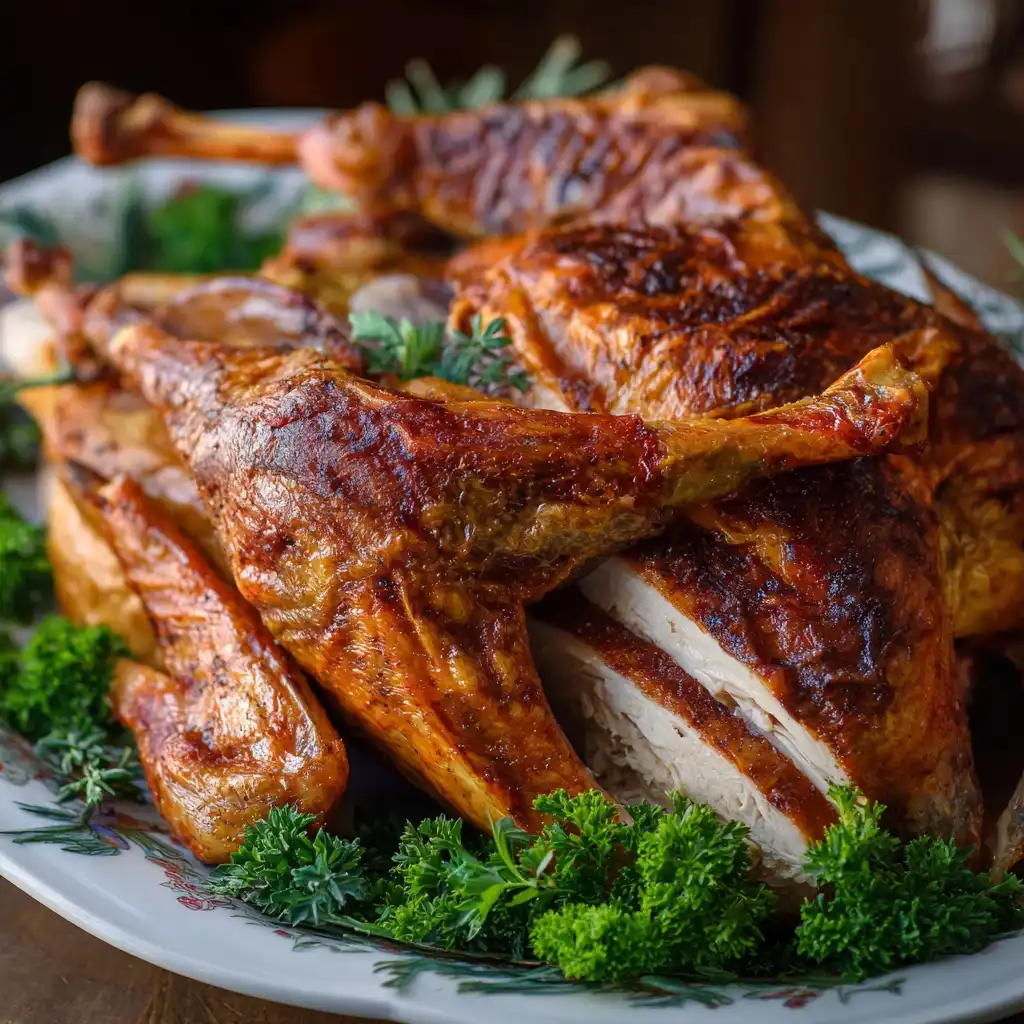
- Carefully lift the turkey out of the oil using the hanger/hook. Allow excess oil to drain back into the pot. Transfer the turkey to a cutting board or platter. Let the turkey rest for 20-30 minutes before carving. This crucial step allows the juices to redistribute, ensuring a moist and tender result.
Nutrition
Notes
Safety First: Deep frying a turkey requires extreme caution. Always fry outdoors on a level surface, away from flammable materials. Use a proper turkey fryer pot and never overfill it. Ensure the turkey is completely thawed and dry. Keep a Class K fire extinguisher nearby and wear protective gear. Lower and lift the turkey slowly and carefully. Never leave the fryer unattended. Monitor oil temperature closely. Allow oil to cool completely before handling.
Nutrition information is estimated based on common ingredients and serving sizes and may vary.