
Whip up a delicious and hearty Mediterranean Vegetable Minestrone Soup! This easy one-pot meal is packed with fresh veggies, pasta, and herbs. Perfect for a healthy lunch or dinner.
Why You’ll Love This Recipe
- Bursting with Fresh Flavors: Experience the vibrant taste of Mediterranean vegetables, aromatic herbs, and savory broth.
- Hearty & Satisfying: Packed with vegetables, beans, and pasta, this minestrone soup is a complete and filling meal.
- Incredibly Easy: Designed as a straightforward one-pot meal, perfect for weeknight dinners or beginner cooks.
- Healthy & Nutritious: Loaded with vegetables and lean protein from beans, it’s a guilt-free way to enjoy comfort food.
- Adaptable: Easily customize with seasonal vegetables or different types of beans and pasta.
Ingredients Needed
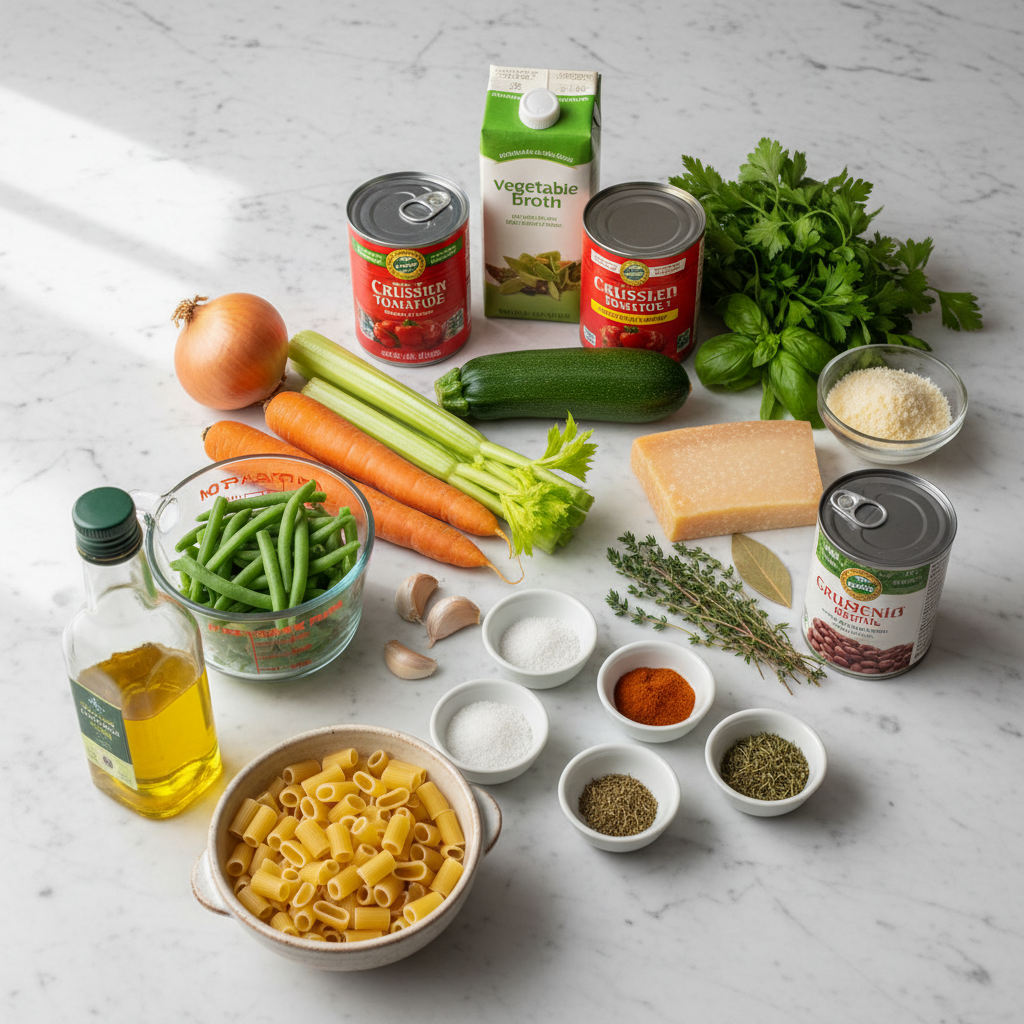
- 1 cup ditalini or elbow pasta
- 1/4 cup extra virgin olive oil
- 1 small yellow onion, (chopped)
- 2 carrots, (chopped)
- 2 celery stalks, (diced)
- 4 garlic cloves, (minced)
- 1 zucchini or yellow squash, (diced)
- 1 cup green beans, (trimmed and cut into 1-inch pieces)
- Kosher salt
- Black pepper
- 1 teaspoon sweet paprika
- 1/2 teaspoon dried rosemary
- 1 (15-ounce) can crushed tomatoes
- 6 cups vegetable or chicken broth
- Parmesan cheese rind, (optional; about 1-inch long)
- 1 dried bay leaf
- 2 to 3 sprigs fresh thyme
- 1 (15-ounce) can kidney beans, drained and rinsed
- 1 large handful parsley, (chopped)
- 1 handful fresh basil leaves
- Grated Parmesan cheese, (to serve (optional))
Ingredient Notes & Substitutions
Pasta Choice: Ditalini is classic, but orzo, small shells, or even broken spaghetti work well. Aim for small shapes that cook quickly and are easy to eat.
Beans: While kidney beans are featured, cannellini beans or chickpeas offer a similar texture and nutritional profile.
Broth: Vegetable broth keeps it vegetarian, but chicken broth adds a richer flavor. Always consider the sodium content of your broth, especially when using a salty Parmesan rind.
Herbs: Fresh thyme, rosemary, parsley, and basil are key to the Mediterranean flavor. Dried herbs can be used in a pinch, but use about 1/3 the amount of fresh.
Parmesan Rind: This is your secret weapon for umami! If you don’t have one, consider a pinch of nutritional yeast or a small amount of mushroom powder for a similar savory depth.
How to Make Mediterranean Vegetable Minestrone Soup
Step 1: Cook the Pasta
Bring a large pot of generously salted water to a rolling boil over high heat. Add the ditalini or your chosen pasta and cook until just shy of al dente (it will finish cooking in the soup). Drain the pasta and set aside. This prevents mushy pasta.
Step 2: Soften the Aromatics
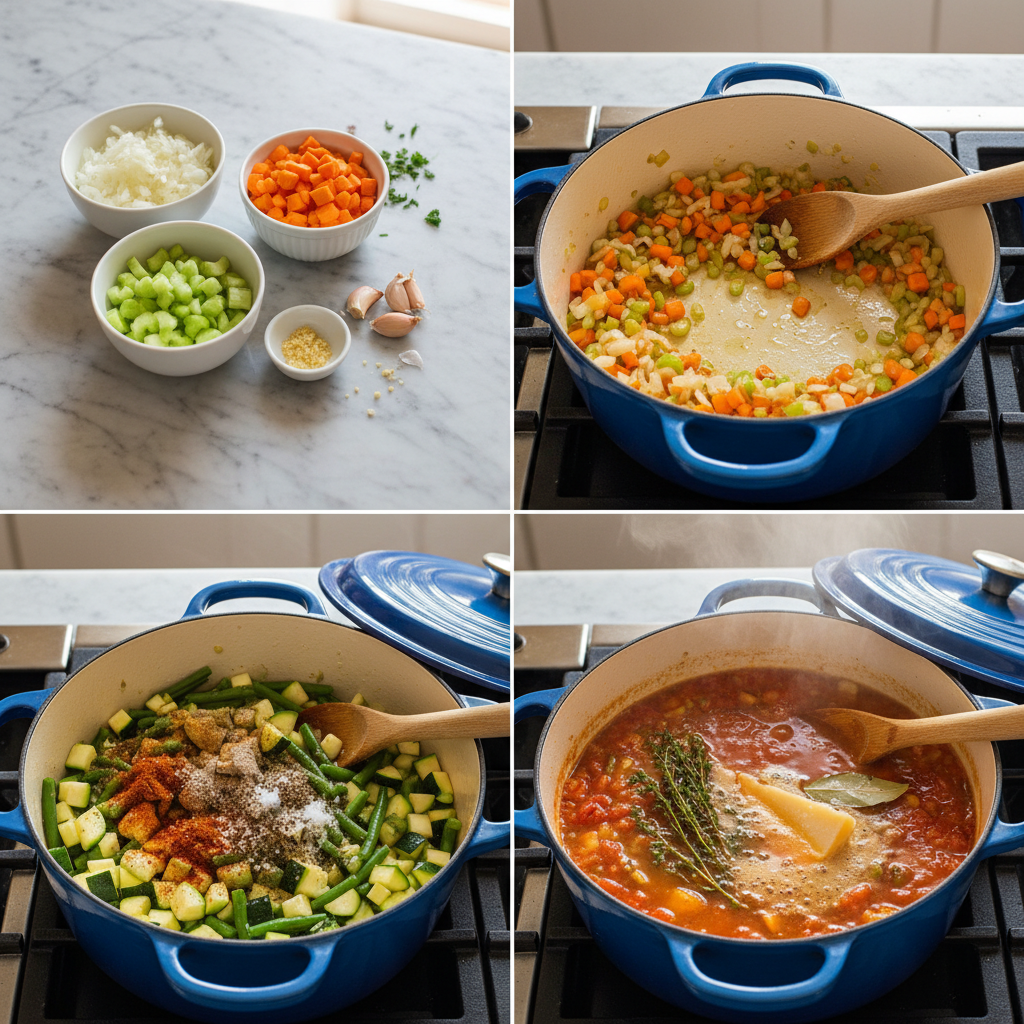
In a large Dutch oven or heavy-bottomed pot, heat the extra virgin olive oil over medium heat until it shimmers. Add the chopped onion, carrots, and celery. Increase the heat to medium-high and sauté, stirring occasionally, until the vegetables begin to soften and the onion becomes translucent, about 5-7 minutes. This step is crucial for developing a deep flavor base. Add the minced garlic and cook for another minute until fragrant, stirring constantly to prevent burning.
Step 3: Add Vegetables and Seasonings
Stir in the diced zucchini (or yellow squash), trimmed green beans, sweet paprika, dried rosemary, and a good pinch of kosher salt and freshly ground black pepper. Toss everything to coat the vegetables evenly and cook for 2-3 minutes, allowing the flavors to meld.
Step 4: Build the Soup Base
Pour in the crushed tomatoes and vegetable broth. Add the fresh thyme sprigs, dried bay leaf, and the Parmesan cheese rind (if using). Stir everything together. Increase the heat and bring the soup to a rolling boil, then immediately reduce the heat to low, cover partially, and let it simmer gently for at least 20 minutes. This allows the flavors to meld and deepen. If you enjoy a creamy texture, you might consider a recipe like our creamy chicken and rice casserole for a different kind of comfort food.
Step 5: Incorporate Beans and Fresh Herbs
Uncover the pot and stir in the drained and rinsed kidney beans. Continue to simmer for another 5 minutes, allowing the beans to heat through. Stir in the chopped fresh parsley and basil during the last minute of simmering.
Step 6: Finish and Serve
Remove and discard the Parmesan rind and bay leaf. Stir the pre-cooked pasta into the soup. Simmer for just 1-2 minutes, only until the pasta is heated through – avoid overcooking! Taste the soup and adjust salt and pepper as needed. Ladle the hot Mediterranean Vegetable Minestrone Soup into bowls. Garnish with extra grated Parmesan cheese and a final drizzle of extra virgin olive oil, if desired. For another flavorful Mediterranean option, try our mediterranean pasta.
The Magic of Mediterranean Minestrone
Why Paprika and Rosemary Shine: Paprika adds a mild sweetness and beautiful color, while rosemary provides its signature piney, earthy aroma that complements the vegetables perfectly. These aren’t just fillers; they are essential flavor builders.
The Power of Sautéing: Browning the onions, carrots, and celery (the aromatic base) is key. This process, a form of the Maillard reaction, breaks down sugars and proteins, creating complex savory notes that form the foundation of a truly delicious soup.
Nutritional Powerhouse: Minestrone soup is a fantastic source of fiber, vitamins, and minerals from its diverse vegetable and bean content. It’s a comforting meal that nourishes your body.
Bean Basics: Fresh vs. Canned: Canned beans are convenient and perfectly fine for this recipe – just be sure to rinse them well to remove excess sodium and starch. If using dried beans, cook them separately until tender before adding them in Step 5.
Pro Tips & Troubleshooting
Pro Tips
- Don’t Skip the Rind: The Parmesan rind is a flavor-booster that adds incredible depth and umami without overpowering the dish.
- Pasta Perfection: Cooking the pasta separately and adding it at the very end guarantees it won’t turn to mush.
- Season in Stages: Taste and adjust salt and pepper throughout the cooking process, especially after adding broth and beans, and definitely at the end.
- Aromatics are Key: Allow sufficient time for the onions, carrots, and celery to soften properly – this builds the flavor foundation.
- Fresh Herbs at the End: Stirring in fresh parsley and basil right before serving preserves their bright flavor and color.
- Quality Broth Matters: A good quality vegetable or chicken broth will significantly impact the final taste.
- A Splash of Wine: For an extra layer of flavor, deglaze the pot with a splash of dry white or red wine after sautéing the garlic, before adding the tomatoes.
Common Mistakes to Avoid
- Overcooked Pasta: Adding pasta directly to the simmering soup for too long results in a mushy, unpleasant texture.
- Under-Sautéed Aromatics: Rushing the softening of onions, carrots, and celery means missing out on crucial flavor development.
- Salty Soup Surprise: Adding too much salt too early, without accounting for the salt in broth and the Parmesan rind, can lead to an overly salty dish.
- Bland Flavor: Insufficient simmering time or skipping key flavor-building steps like sautéing aromatics can result in a dull soup.
Serving & Storage
Serving Ideas
Crusty Bread: Essential for soaking up every last drop of the delicious broth.
Garnishes: A sprinkle of fresh parsley, basil, or grated Parmesan cheese adds freshness and visual appeal.
Olive Oil Drizzle: A high-quality extra virgin olive oil drizzled over the top just before serving adds a luxurious finish.
Side Salad: A simple green salad with a light vinaigrette offers a refreshing contrast.
Storage and Make-Ahead
Refrigeration: This Mediterranean Vegetable Minestrone soup stores beautifully in an airtight container in the refrigerator for up to 3-4 days. The flavors often deepen and improve overnight. If you enjoy cabbage-based dishes, you might also like our best kielbasa and cabbage.
Freezing: While possible, freezing minestrone can sometimes affect the texture of the vegetables and pasta. If freezing, it’s best to omit the pasta and add it fresh when reheating. Freeze in portion-sized containers for up to 3 months.
Reheating: Gently reheat soup on the stovetop over medium-low heat until warmed through. If you froze the soup without pasta, cook it separately and add it just before serving. Avoid boiling after adding pasta to prevent mushiness.
Conclusion
This Mediterranean Vegetable Minestrone Soup is more than just a recipe; it’s a celebration of fresh ingredients and simple, comforting flavors. Easy to make, incredibly versatile, and packed with wholesome goodness, it’s destined to become a go-to meal for any occasion.
Frequently Asked Questions (FAQ)
What is the best pasta for minestrone soup?
Small pasta shapes like ditalini, orzo, or small shells are ideal as they cook quickly and are easy to eat with a spoon. They should be cooked al dente and added at the very end to prevent them from becoming mushy.
Can I make minestrone soup ahead of time?
Yes, minestrone soup can be made ahead of time. The flavors often meld and improve overnight. Store the soup in an airtight container in the refrigerator for up to 3-4 days. If adding pasta, it’s best to cook and add it just before serving to prevent it from absorbing too much liquid.
What is a Parmesan rind and why use it?
A Parmesan rind is the hard outer casing of a wheel of Parmesan cheese. When simmered in soup broth, it infuses the liquid with a rich, savory, umami flavor, similar to a bay leaf or a piece of dried mushroom. It’s typically removed before serving.
How can I make my minestrone soup more flavorful?
To enhance flavor, sauté your aromatics (onion, carrots, celery) until softened and slightly caramelized. Using a high-quality broth, adding a Parmesan rind, incorporating fresh herbs, and seasoning properly at the end are crucial steps for a deeply flavorful soup.
What vegetables are typically in minestrone soup?
Traditional minestrone includes a base of aromatics (onion, carrot, celery), tomatoes, and often beans. This Mediterranean version highlights zucchini, green beans, and fresh herbs, but you can add others like spinach, peas, or potatoes.
Can you freeze minestrone soup?
Yes, minestrone soup can be frozen, but it’s best to cook the pasta separately and add it upon reheating to prevent it from becoming mushy. Store in airtight containers for up to 3 months.
What to serve with minestrone soup?
Crusty bread for dipping is a classic. Other great options include a simple green salad, garlic bread, or a light sandwich. For a hearty alternative, consider a hearty cabbage roll soup.
Mediterranean Vegetable Minestrone Soup
Ingredients
Equipment
Method
- Bring a large pot of generously salted water to a rolling boil over high heat. Add the ditalini or your chosen pasta and cook until just shy of al dente (it will finish cooking in the soup). Drain the pasta and set aside. This prevents mushy pasta.
- In a large Dutch oven or heavy-bottomed pot, heat the extra virgin olive oil over medium heat until it shimmers. Add the chopped onion, carrots, and celery. Increase the heat to medium-high and sauté, stirring occasionally, until the vegetables begin to soften and the onion becomes translucent, about 5-7 minutes. This step is crucial for developing a deep flavor base. Add the minced garlic and cook for another minute until fragrant, stirring constantly to prevent burning.
- Stir in the diced zucchini (or yellow squash), trimmed green beans, sweet paprika, dried rosemary, and a good pinch of kosher salt and freshly ground black pepper. Toss everything to coat the vegetables evenly and cook for 2-3 minutes, allowing the flavors to meld.
- Pour in the crushed tomatoes and vegetable broth. Add the fresh thyme sprigs, dried bay leaf, and the Parmesan cheese rind (if using). Stir everything together. Increase the heat and bring the soup to a rolling boil, then immediately reduce the heat to low, cover partially, and let it simmer gently for at least 20 minutes. This allows the flavors to meld and deepen. If you enjoy a creamy texture, you might consider a recipe like our creamy chicken and rice casserole for a different kind of comfort food.
- Uncover the pot and stir in the drained and rinsed kidney beans. Continue to simmer for another 5 minutes, allowing the beans to heat through. Stir in the chopped fresh parsley and basil during the last minute of simmering.
- Remove and discard the Parmesan rind and bay leaf. Stir the pre-cooked pasta into the soup. Simmer for just 1-2 minutes, only until the pasta is heated through – avoid overcooking! Taste the soup and adjust salt and pepper as needed. Ladle the hot Mediterranean Vegetable Minestrone Soup into bowls. Garnish with extra grated Parmesan cheese and a final drizzle of extra virgin olive oil, if desired. For another flavorful Mediterranean option, try our mediterranean pasta.