
Imagine a soup so velvety smooth, so deeply flavorful, it feels like a warm hug in a bowl. This Creamy Roasted Cauliflower Soup with Olive Oil delivers just that. Roasting the cauliflower brings out its natural sweetness and a hint of nuttiness, which forms the decadent base of this vegetable soup. Unlike other recipes that rely heavily on cream, this version achieves its luxurious texture through smart cooking techniques and the richness of olive oil and butter, making it both an easy and healthy soup recipe. Get ready to discover your new favorite comforting meal, perfect for any day of the week.
Why You’ll Love This Recipe
- Incredible Flavor Depth: Roasting the cauliflower is the secret weapon, transforming it into a sweet, slightly nutty, and deeply savory ingredient that forms the soul of this soup. No more bland cauliflower!
- Luxuriously Creamy, Dairy-Optional: Achieves a wonderfully smooth and creamy texture without relying on heavy cream, making it lighter and more accessible. A touch of butter adds richness, but substitutions are easy.
- Simple & Straightforward: With minimal active cooking time and common pantry staples, this recipe is designed for busy weeknights or relaxed weekends. It’s an easy soup recipe you’ll return to again and again.
- Healthy & Wholesome: Packed with vegetables, this soup is a nutritious choice that doesn’t compromise on taste. It’s a great way to incorporate more cauliflower into your diet.
- Reliably Delicious: Follow these steps, and you’re guaranteed a comforting bowl of soup with perfectly balanced flavors and a satisfying, silky texture.
Ingredients Needed
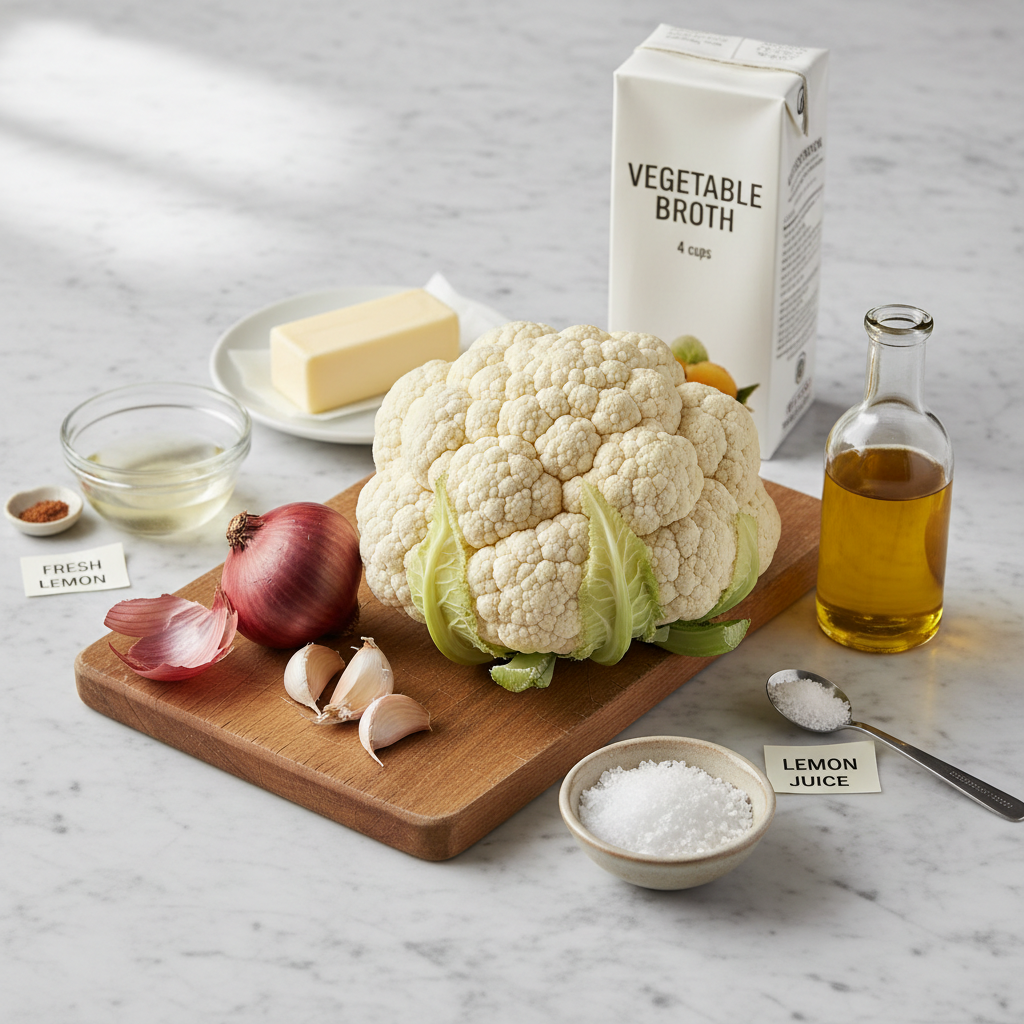
- 1 large head cauliflower (about 2 pounds), cut into bite-size florets
- 3 tablespoons extra-virgin olive oil, divided
- Fine sea salt
- 1 medium red onion, chopped
- 2 cloves garlic, pressed or minced
- 4 cups (32 ounces) vegetable broth
- 2 tablespoons unsalted butter
- 1 tablespoon fresh lemon juice, or more if needed
- Scant ¼ teaspoon ground nutmeg
- For garnish: 2 tablespoons finely chopped fresh flat-leaf parsley, chives and/or green onions
Ingredient Notes & Substitutions
- Cauliflower: Look for firm, white heads. The quantity is about 2 pounds, which typically yields one large head.
- Olive Oil: Extra-virgin olive oil is recommended for its flavor, but a good quality regular olive oil or even avocado oil can be used for roasting.
- Butter: Unsalted butter adds richness. For a dairy-free or vegan version, omit the butter and consider adding 1 tablespoon of tahini or a swirl of full-fat coconut milk (added at the very end) for extra creaminess. Ensure your vegetable broth is also vegan if aiming for a vegan dish.
- Vegetable Broth: Use a good quality broth for the best flavor. Low-sodium options allow you more control over saltiness.
- Lemon Juice: Freshly squeezed lemon juice is key to brightening the soup’s flavors. Adjust to your taste.
How to Make Creamy Roasted Cauliflower Soup
Step 1: Preheat & Prep
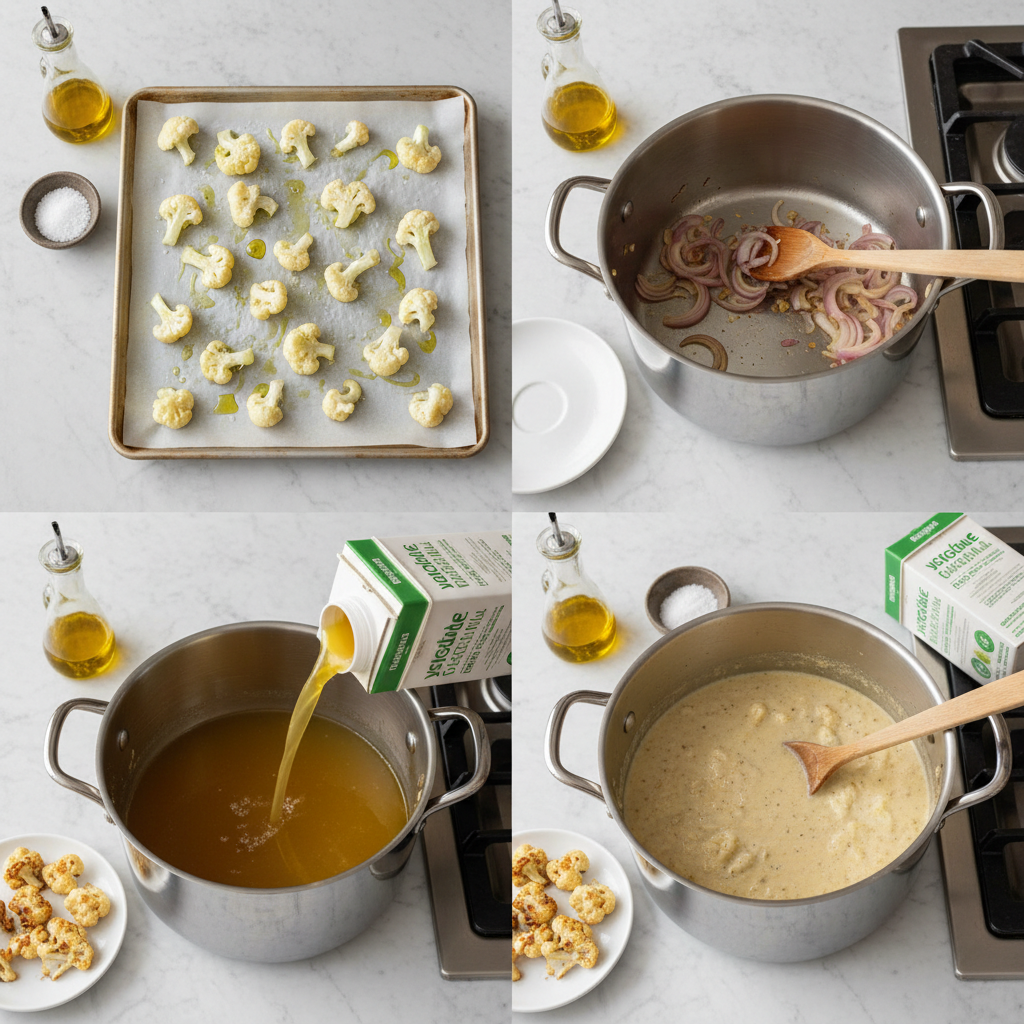
Preheat your oven to 425 degrees Fahrenheit. If desired, line a large, rimmed baking sheet with parchment paper for easy cleanup.
Step 2: Roast the Cauliflower
On the baking sheet, toss the cauliflower with 2 tablespoons of the olive oil until lightly and evenly coated in oil. Arrange the cauliflower in a single layer and sprinkle lightly with salt. Bake until the cauliflower is tender and caramelized on the edges, 25 to 35 minutes, tossing halfway. This step is vital for developing the soup’s deep, sweet flavor.
Step 3: Sauté Aromatics
Once the cauliflower is almost done, in a Dutch oven or soup pot, warm the remaining 1 tablespoon olive oil over medium heat until shimmering. Add the onion and ¼ teaspoon salt. Cook, stirring occasionally, until the onion is softened and turning translucent, 5 to 7 minutes.
Step 4: Add Garlic & Broth
Add the garlic and cook, stirring constantly, until fragrant, about 30 seconds, then add the broth.
Step 5: Simmer & Meld Flavors
Reserve 4 of the prettiest roasted cauliflower florets for garnish. Then transfer the remaining cauliflower to the pot. Increase the heat to medium-high and bring the mixture to a simmer, then reduce the heat as necessary to maintain a gentle simmer. Cook, stirring occasionally, for 20 minutes, to give the flavors time to meld beautifully.
Step 6: Blend to Smoothness
Once the soup is done cooking, remove the pot from the heat and let it cool for a few minutes – this is important for safety when blending hot liquids. Then, carefully transfer the hot soup to a blender, working in batches if necessary. Important Safety Note: Do not fill the blender past its maximum fill line, as hot liquids can expand and cause dangerous overflows.
Step 7: Finish & Season
Add the butter to the blender with the soup and blend until completely smooth and creamy. Add the fresh lemon juice and ground nutmeg. Blend again to combine. Taste the soup and add more salt as needed – properly salting is key to unlocking the full flavor potential! You can also add more lemon juice for extra zing. Blend one final time.
Step 8: Serve
Top individual bowls of soup with 1 roasted cauliflower floret and a sprinkle of chopped parsley, green onion and/or chives.
Understanding the Magic: Roasting & Creaminess
The Maillard Reaction: Flavor Alchemy in Roasting
Roasting cauliflower isn’t just about cooking it; it’s about transforming its flavor through the Maillard reaction. This complex chemical process occurs when amino acids and reducing sugars are heated, leading to the browning of food and the creation of hundreds of new flavor compounds. For cauliflower, this means developing a deeper, slightly nutty, and sweeter taste compared to boiling or steaming. These caramelized notes are what give this soup its rich, savory foundation, making it far more interesting and delicious than a soup made with simply boiled vegetables. If you’re looking to explore other vegetable preparations that bring out deep flavors, check out our guide on roasted autumn vegetables.
Achieving Silky Smoothness: Blending Techniques
Attaining that luxurious, velvety texture is key to a great creamy soup. While this recipe uses butter and careful blending, understanding the options can elevate your soup:
- High-Speed Blenders (e.g., Vitamix, Blendtec): These are your best bet for the smoothest, silkiest consistency. Their powerful motors can pulverize the roasted cauliflower and aromatics into an incredibly fine puree.
- Countertop Blenders: Still very effective, but you might need to blend for a minute or two longer and potentially work in smaller batches. Ensure the lid is vented and held down securely.
- Immersion Blenders (Hand Blenders): These are convenient for blending directly in the pot, but they often produce a slightly less refined texture compared to countertop blenders. For best results, ensure the cauliflower is very tender, blend thoroughly, and consider moving the blender around the pot to catch all ingredients.
Tip: Letting the soup cool slightly before blending is a crucial safety step to prevent pressure build-up and potential explosions from the steam.
Pro Tips & Troubleshooting
Expert Tips for Success
- Don’t Crowd the Pan: When roasting cauliflower, ensure the florets are in a single layer on the baking sheet. Overcrowding causes them to steam instead of caramelize, resulting in less flavor.
- Salt Your Cauliflower: A light sprinkle of salt on the cauliflower before roasting draws out moisture and helps it brown better, deepening its flavor.
- Taste and Adjust: This is the most critical step! Once blended, taste the soup. Does it need more salt? More lemon juice for brightness? A pinch more nutmeg for warmth? Adjusting at the end makes all the difference.
- Reserve Best Florets: Setting aside a few perfectly roasted florets for garnish adds a beautiful visual and textural element to the finished soup.
- Patience with Simmering: Allowing the soup to simmer for 20 minutes after adding the broth and cauliflower helps the flavors meld and deepen.
Common Mistakes to Avoid
- Boiling vs. Roasting: Skipping the roasting step and just boiling the cauliflower will result in a significantly less flavorful and bland soup.
- Under-Seasoning: Not salting the cauliflower before roasting or failing to taste and adjust seasoning at the end is a common reason for flat-tasting soup.
- Overfilling the Blender: This is a major safety hazard. Always blend hot liquids in batches or ensure your blender is not filled past the indicated maximum line.
- Skipping the Cool-Down: Blending extremely hot liquids without letting them cool slightly can lead to pressure build-up and potential burns.
- Impatience: Rushing the simmering or blending steps can result in a less developed flavor or a soup that isn’t as smooth as it could be.
Serving & Storage
Delicious Serving Ideas
- With Crusty Bread: Serve bowls of this creamy soup with slices of warm, crusty baguette or sourdough for dipping. Consider pairing it with a hearty corned beef and cabbage recipe for a comforting meal.
- As an Appetizer: Offer smaller portions as an elegant starter for a dinner party or holiday meal.
- Comfort Meal Combo: Pair a hearty bowl with a classic grilled cheese sandwich for the ultimate comforting lunch or light dinner.
- Garnishes Galore: Elevate the presentation and flavor with a drizzle of high-quality olive oil, a swirl of plain Greek yogurt (if not vegan), toasted pumpkin seeds, crispy fried shallots, or a pinch of smoked paprika.
Storage and Make-Ahead
- Refrigerator Storage: Let the soup cool completely. Store leftovers in an airtight container in the refrigerator for up to 4 days.
- Freezing: This soup freezes beautifully. Allow it to cool completely, then transfer to freezer-safe containers or heavy-duty freezer bags. It can be stored in the freezer for up to 3 months.
- Reheating: Reheat gently on the stovetop over low heat, stirring occasionally, until heated through. Alternatively, reheat individual portions in the microwave. If the soup has thickened too much upon cooling, you can stir in a little extra broth or water while reheating to reach your desired consistency.
This Creamy Roasted Cauliflower Soup with Olive Oil is a testament to how simple ingredients and thoughtful preparation can create something truly special. By harnessing the sweetness of roasted cauliflower and achieving a luxurious creaminess through blending, you get a healthy, comforting, and deeply satisfying soup that’s perfect any time of year. It’s proof that delicious, velvety soup doesn’t need to be complicated or loaded with heavy cream. For more warming soup ideas, explore our collection of quick tortellini soup or a Jerusalem artichoke soup.
Frequently Asked Questions
Why is my roasted cauliflower soup not creamy?
Ensure you’ve blended the soup thoroughly. Using a high-speed blender helps achieve maximum creaminess. The butter also contributes to richness. Roasting the cauliflower until tender also aids in a smoother blend. Make sure no large chunks remain.
Can I use an immersion blender for this soup?
Yes, an immersion blender can be used. For the smoothest result, blend in batches and ensure all the cauliflower is completely tender before blending. It may not achieve the same silky texture as a high-powered countertop blender, but it will still be delicious.
What is the best way to store leftover cauliflower soup?
Store leftover soup in an airtight container in the refrigerator for up to 4 days. For longer storage, freeze in freezer-safe containers for up to several months. Thaw in the refrigerator and reheat gently on the stovetop or in the microwave.
Can I make this soup vegan?
To make this soup vegan, omit the unsalted butter and consider adding 1 tablespoon of tahini or a swirl of full-fat coconut milk (added at the end of cooking) for extra creaminess. Ensure your vegetable broth is vegan-friendly.
How do you make cauliflower soup creamy without cream?
The creaminess in this recipe comes from the pureed roasted cauliflower itself, combined with the emulsifying effect of olive oil and the richness added by butter (or a vegan alternative like tahini or coconut milk). Thorough blending is key.
What is the best way to roast cauliflower for soup?
The best way is to toss bite-sized florets with olive oil and salt, spread them in a single layer on a baking sheet, and roast at a high temperature (like 425°F) until tender and caramelized at the edges. This develops maximum flavor.
Can you freeze roasted cauliflower soup?
Yes, roasted cauliflower soup freezes very well. Ensure it’s completely cooled before transferring to airtight freezer containers. It can be stored for several months.
What to serve with cauliflower soup?
This soup pairs wonderfully with crusty bread, a simple green salad, grilled cheese sandwiches, or even as part of a larger meal with roasted chicken or fish. For a lighter option, consider serving it alongside a kale and apple salad.
Creamy Roasted Cauliflower Soup with Olive Oil
Ingredients
Equipment
Method
- Preheat your oven to 425 degrees Fahrenheit. If desired, line a large, rimmed baking sheet with parchment paper for easy cleanup.
- On the baking sheet, toss the cauliflower with 2 tablespoons of the olive oil until lightly and evenly coated in oil. Arrange the cauliflower in a single layer and sprinkle lightly with salt. Bake until the cauliflower is tender and caramelized on the edges, 25 to 35 minutes, tossing halfway. This step is vital for developing the soup's deep, sweet flavor.
- Once the cauliflower is almost done, in a Dutch oven or soup pot, warm the remaining 1 tablespoon olive oil over medium heat until shimmering. Add the onion and ¼ teaspoon salt. Cook, stirring occasionally, until the onion is softened and turning translucent, 5 to 7 minutes.
- Add the garlic and cook, stirring constantly, until fragrant, about 30 seconds, then add the broth.
- Reserve 4 of the prettiest roasted cauliflower florets for garnish. Then transfer the remaining cauliflower to the pot. Increase the heat to medium-high and bring the mixture to a simmer, then reduce the heat as necessary to maintain a gentle simmer. Cook, stirring occasionally, for 20 minutes, to give the flavors time to meld beautifully.
- Once the soup is done cooking, remove the pot from the heat and let it cool for a few minutes – this is important for safety when blending hot liquids. Then, carefully transfer the hot soup to a blender, working in batches if necessary. Important Safety Note: Do not fill the blender past its maximum fill line, as hot liquids can expand and cause dangerous overflows.
- Add the butter to the blender with the soup and blend until completely smooth and creamy. Add the fresh lemon juice and ground nutmeg. Blend again to combine. Taste the soup and add more salt as needed – properly salting is key to unlocking the full flavor potential! You can also add more lemon juice for extra zing. Blend one final time.
- Top individual bowls of soup with 1 roasted cauliflower floret and a sprinkle of chopped parsley, green onion and/or chives.