
Imagine a beautifully browned, tender pork loin, its savory crust giving way to a warm, aromatic filling of sweet apples and fragrant herbs. This Apple Stuffed Pork Loin is more than just a meal; it’s the centerpiece your Thanksgiving table has been waiting for. This recipe breaks down how to create this impressive yet surprisingly simple holiday pork recipe, ensuring a moist, flavorful roast that will delight your guests.
Why You’ll Love This Recipe
- This stuffed pork loin recipe offers a perfect balance of savory and sweet flavors with a wonderfully tender texture.
- It’s designed for home cooks, ensuring a stress-free cooking experience that delivers restaurant-quality results.
- The combination of tender pork, sweet apples, and savory herbs makes it an ideal, memorable main course for any festive occasion.
- A foolproof method for a moist and flavorful Thanksgiving pork loin every time.
Ingredients Needed
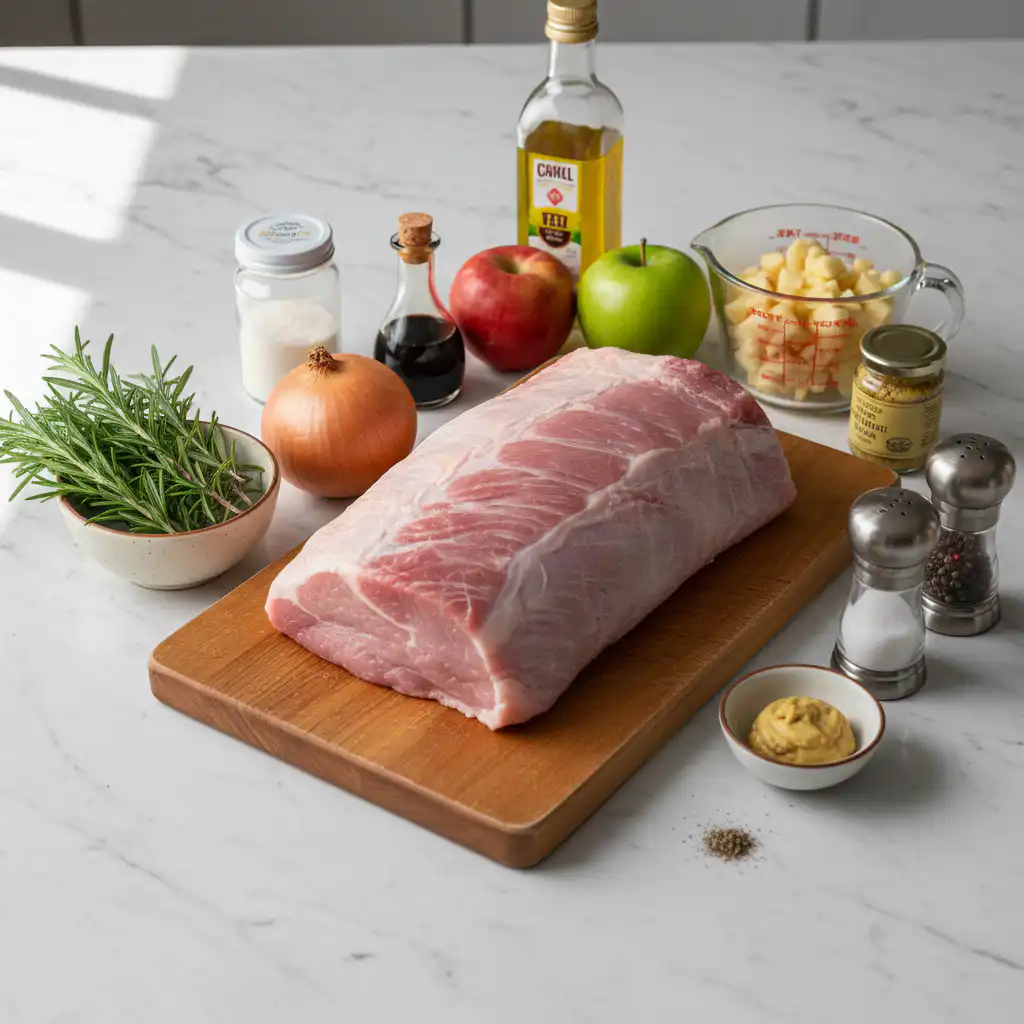
- 2 Tablespoon olive oil (divided)
- 1 medium onion (chopped)
- 2 medium apples (chopped)
- 1 teaspoon garlic powder
- 1½ Tablespoon balsamic vinegar
- 1 teaspoon fresh rosemary (chopped)
- 2½ pounds pork loin
- 1 Tablespoon Dijon mustard
- salt and pepper to taste
Ingredient Notes & Substitutions
Pork Loin: A 2.5-pound pork loin is ideal for even cooking. Look for a loin with a good fat cap for added moisture and flavor.
Apples: For the best results, use firm, tart apples like Granny Smith, Honeycrisp, or Fuji, as they hold their shape and provide a balancing acidity. Softer apples can become mushy.
Herbs: While rosemary is classic, feel free to experiment with sage or thyme, or a combination.
Balsamic Vinegar: Adds a touch of acidity and depth. A good quality balsamic will enhance the flavor.
How to Make Apple Stuffed Pork Loin
Preheat Oven
First things first, let’s get that oven ready. Preheat your oven to 400°F (200°C).
Sauté Aromatics
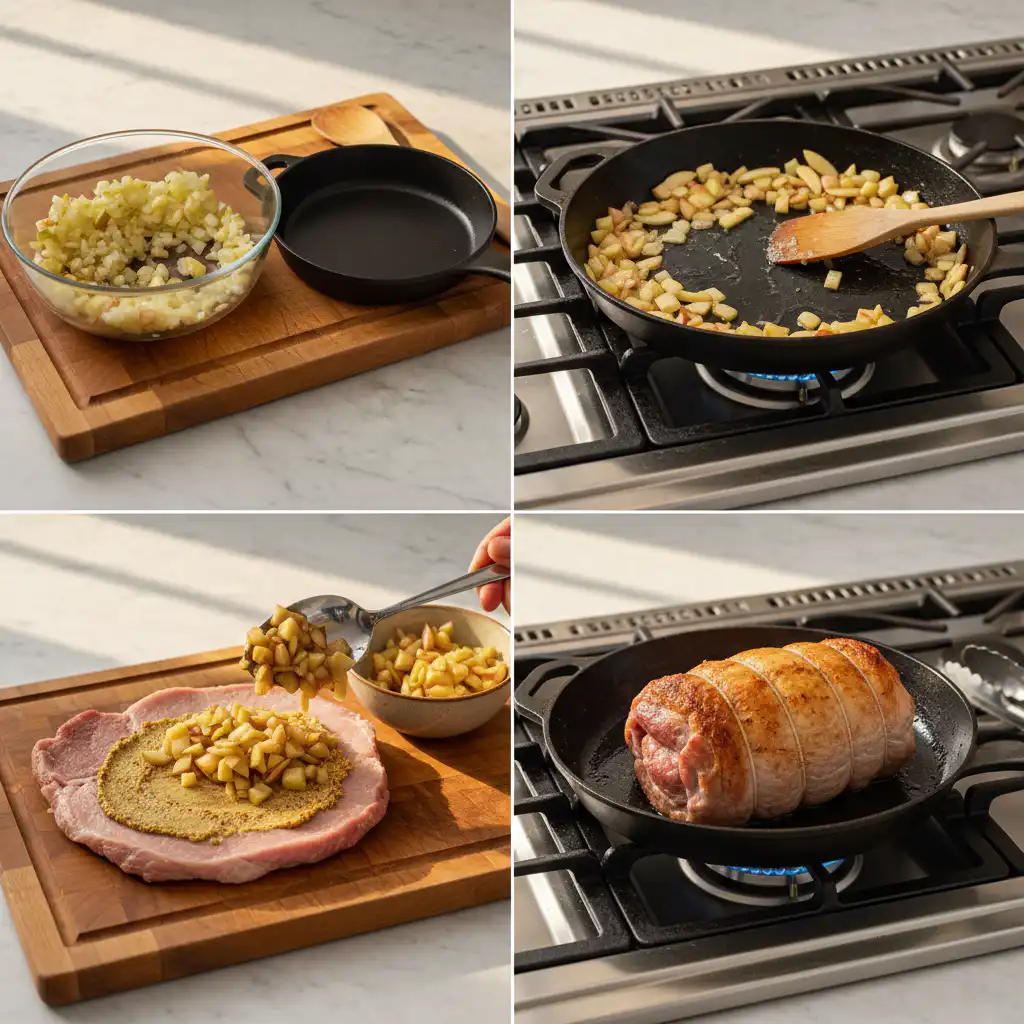
Heat 1 tablespoon of olive oil in a skillet over medium heat. Add the chopped onion and apples and sauté until tender and slightly softened, about 8-10 minutes.
Add Herbs & Deglaze
Stir in the garlic powder and chopped rosemary, sautéing for another minute until wonderfully fragrant. Deglaze the pan with balsamic vinegar, scraping up any delicious browned bits from the bottom. Remove from heat and set aside to cool slightly.
Butterfly the Pork Loin
Now, let’s prepare the pork. Place the 2.5-pound pork loin on a clean cutting board. Make a lengthwise cut down the thickest part of the loin, about halfway through its depth. Carefully cut outwards from that initial cut on each side, almost to the edge, creating flaps that can be opened flat like a book. Use a sharp knife and make shallow cuts, opening the loin as you go until it lays relatively flat, ready for stuffing.
Even Thickness
To ensure even cooking, cover the butterflied pork loin with plastic wrap. Using a meat mallet or a rolling pin, gently pound any particularly thick spots to create a uniform thickness across the entire loin.
Stuff and Roll
Spread the Dijon mustard evenly over the pounded pork loin, creating a savory base. Spoon the cooled apple and onion mixture over the mustard. Tightly roll the pork loin from one long end to the other, keeping the filling contained. Secure the roll firmly with butcher’s twine or toothpicks at intervals to maintain its shape during cooking.
Season and Sear
Season the outside of your beautifully rolled pork loin generously with salt and pepper. Heat the remaining tablespoon of olive oil in an oven-safe skillet over medium-high heat on the stove. Carefully sear the rolled pork loin on all sides until it develops a rich, golden-brown crust. This step is crucial for locking in juices and developing deep flavor.
Roast to Perfection
Transfer the oven-safe skillet with the seared pork loin directly into the preheated oven. Roast for approximately 45 minutes, or until a meat thermometer inserted into the thickest part of the loin (making sure to avoid the stuffing) registers an internal temperature of 145°F (63°C).
Rest Before Slicing
Once your roast pork loin has reached the perfect temperature, carefully remove it from the oven. Let it rest on a cutting board for 5 to 10 minutes before slicing. This resting period is essential as it allows the juices to redistribute throughout the meat, ensuring a moist and tender result with every bite.
Mastering Your Thanksgiving Pork Loin
Understanding Pork Loin Cooking
Why Temperature Matters: Cooking pork loin to the correct internal temperature (145°F/63°C) is vital for both safety and optimal texture. Overcooking leads to dry, tough meat, while undercooking poses a health risk. A meat thermometer is your best friend for accuracy.
The Importance of Resting: Resting the pork loin after cooking is non-negotiable. It allows the muscle fibers to relax and reabsorb the juices, preventing them from running out when you slice into the meat. This step directly contributes to a succulent and tender finished product.
The Magic of Browning: Searing the pork loin before roasting creates the Maillard reaction, which is responsible for that irresistible deep brown crust and complex, savory flavor. Don’t skip this step – it makes a world of difference!
Troubleshooting Your Stuffed Pork Loin
Uneven Cooking: If your pork loin seems to have very thick and thin sections, remember to pound it to an even thickness after butterflying. This ensures all parts cook at the same rate.
Stuffing Falling Out: Ensure you roll the pork loin tightly and secure it well with butcher’s twine or toothpicks. Don’t overstuff, as this can make it difficult to roll and secure properly.
Dry Pork: The most common culprit is overcooking. Always use a meat thermometer and remove the pork as soon as it reaches 145°F (63°C). Resting is also key to retaining moisture.
Serving & Storage
Serve this magnificent stuffed pork loin recipe hot, sliced into thick rounds. It pairs beautifully with classic Thanksgiving sides like mashed potatoes, roasted vegetables, or a cranberry relish. For leftovers, store any remaining pork loin tightly wrapped in the refrigerator for up to 3 days. Reheat gently in the oven or a skillet over low heat to maintain moisture.
Frequently Asked Questions
What is the best way to butterfly a pork loin?
To butterfly a pork loin, make a lengthwise cut about halfway through the thickest part of the loin. Then, carefully cut outwards on each side from that initial cut, almost to the edge, creating flaps that can be opened. This technique allows you to create a larger surface area for stuffing and rolling.
What internal temperature should apple-stuffed pork loin reach?
The safe internal temperature for pork loin is 145°F (63°C), followed by a 3-minute rest. Using a meat thermometer inserted into the thickest part of the loin (without touching the stuffing) is the most accurate way to check for doneness.
How do I prevent my stuffed pork loin from drying out?
To prevent drying, ensure you don’t overcook the pork loin. Pounding it to an even thickness helps with even cooking. Browning the outside before roasting and allowing it to rest after cooking are also crucial steps for retaining moisture.
What are the best apples to use for stuffing pork loin?
Firm, tart apples like Granny Smith, Honeycrisp, or Fuji work best. They hold their shape well during cooking and provide a pleasant tartness that balances the richness of the pork. Softer apples can become mushy.
Apple Stuffed Pork Loin
Ingredients
Equipment
Method
- Preheat your oven to 400°F (200°C).
- Heat 1 tablespoon of olive oil in a skillet over medium heat. Add the chopped onion and apples and sauté until tender and slightly softened, about 8-10 minutes.
- Stir in the garlic powder and chopped rosemary, sautéing for another minute until wonderfully fragrant. Deglaze the pan with balsamic vinegar, scraping up any delicious browned bits from the bottom. Remove from heat and set aside to cool slightly.
- Place the 2.5-pound pork loin on a clean cutting board. Make a lengthwise cut down the thickest part of the loin, about halfway through its depth. Carefully cut outwards from that initial cut on each side, almost to the edge, creating flaps that can be opened flat like a book. Use a sharp knife and make shallow cuts, opening the loin as you go until it lays relatively flat, ready for stuffing.
- To ensure even cooking, cover the butterflied pork loin with plastic wrap. Using a meat mallet or a rolling pin, gently pound any particularly thick spots to create a uniform thickness across the entire loin.
- Spread the Dijon mustard evenly over the pounded pork loin, creating a savory base. Spoon the cooled apple and onion mixture over the mustard. Tightly roll the pork loin from one long end to the other, keeping the filling contained. Secure the roll firmly with butcher's twine or toothpicks at intervals to maintain its shape during cooking.
- Season the outside of your beautifully rolled pork loin generously with salt and pepper. Heat the remaining tablespoon of olive oil in an oven-safe skillet over medium-high heat on the stove. Carefully sear the rolled pork loin on all sides until it develops a rich, golden-brown crust. This step is crucial for locking in juices and developing deep flavor.
- Transfer the oven-safe skillet with the seared pork loin directly into the preheated oven. Roast for approximately 45 minutes, or until a meat thermometer inserted into the thickest part of the loin (making sure to avoid the stuffing) registers an internal temperature of 145°F (63°C).
- Once your roast pork loin has reached the perfect temperature, carefully remove it from the oven. Let it rest on a cutting board for 5 to 10 minutes before slicing. This resting period is essential as it allows the juices to redistribute throughout the meat, ensuring a moist and tender result with every bite.