If you’re craving autumn on a plate, this Creamy Butternut Squash Bowtie Pasta with Sage is exactly what you need. Featuring a luscious roasted butternut squash sauce, nutty brown butter, and fragrant sage, this dish is perfect for cozy weeknight dinners or holiday celebrations. For more seasonal inspiration, explore our guide on fall pasta recipes. Let’s dive into this comforting and flavorful meal.
Why You’ll Love This Recipe
- Flavorful: Sweet, roasted butternut squash pairs beautifully with the earthy, aromatic sage and rich brown butter.
- Creamy Texture: The velvety sauce perfectly clings to the bowtie pasta for a luxurious bite every time.
- Simple Prep: Roasting the squash, garlic, and onion maximizes flavor with minimal effort.
- Customizable: Ideal for various diets by swapping in vegan cream or gluten-free pasta. If you’re looking for more versatile dishes, check out creamy pasta alternatives.
Ingredients Needed
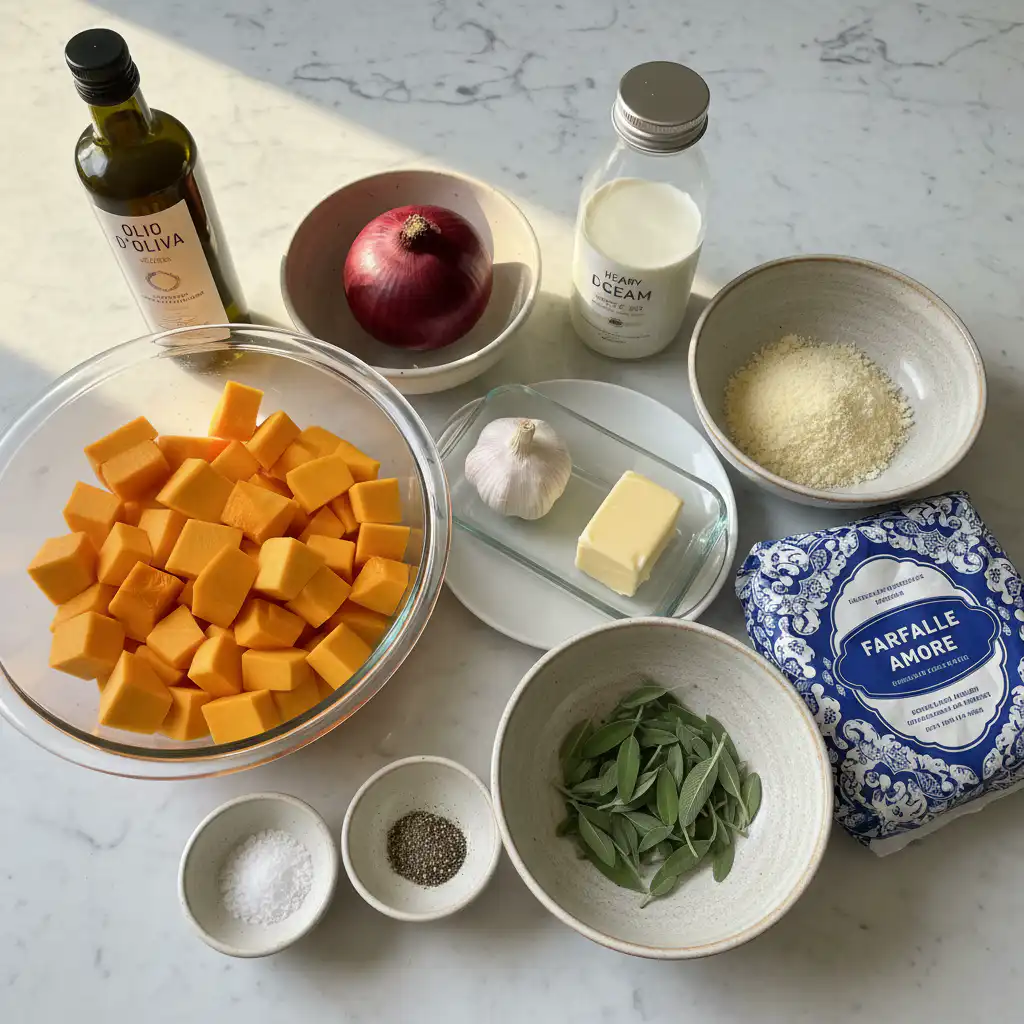
- 1 whole butternut squash (about 2lb/1kg)
- 1 red onion (quartered)
- 1 large head of garlic (halved horizontally)
- 120 ml heavy cream (double cream) (heavy cream)
- 40 g Parmesan (finely grated, plus extra to serve)
- 30 g butter
- 8 fresh sage leaves
- Olive oil
- Salt and freshly ground black pepper
- 350 g pasta of your choice (rigatoni, fusilli, or penne work well)
Ingredient Notes & Substitutions
Heavy Cream: For a dairy-free alternative, use coconut cream or oat cream.
Pasta: While bowtie pasta is the star, you can opt for rigatoni, fusilli, or penne to hold the sauce beautifully.
Sage: If fresh sage is unavailable, substitute with a smaller amount of dried sage, as it has a more concentrated flavor.
Parmesan: Swap Parmesan with Pecorino for a sharper flavor, or use nutritional yeast for a vegan touch. For additional ideas on vegan pasta options, visit vegan pasta recipes.
Butter: Stick to unsalted butter for better control over the seasoning.
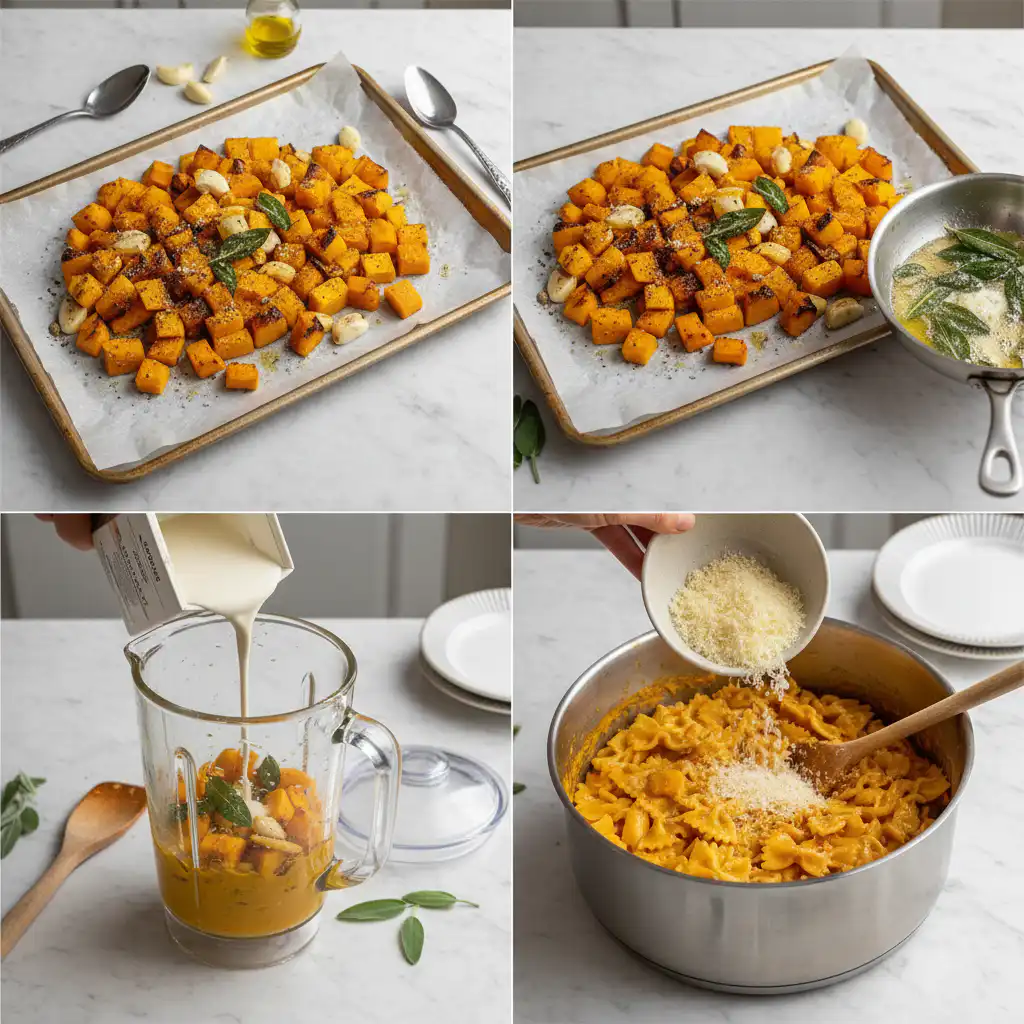
How to Make Creamy Butternut Squash Bowtie Pasta with Sage
Step 1: Prepare Ingredients
Preheat your oven to 190°C (170°C fan). Halve the butternut squash lengthways, scoop out the seeds, and score the flesh lightly with a knife. Place it flesh-side up on a baking tray.
Step 2: Roasting the Vegetables
Drizzle the cut garlic head with olive oil, wrap it in foil, and add it to the tray along with the squash. Roast for 45–50 minutes, until the squash is tender. Add the quartered onion to the tray after 25–30 minutes, tossing it in any olive oil on the tray.
Step 3: Blend the Sauce
Scoop out the roasted squash flesh and transfer it to a blender along with the roasted onions. Squeeze in the soft, caramelized garlic cloves. Add the heavy cream and blend until silky smooth. Adjust the consistency by adding splashes of pasta cooking water until the sauce reaches a thick but pourable texture. Season generously with salt and pepper.
Step 4: Cook the Pasta
Bring a large pot of salted water to a boil. Cook the bowtie pasta until al dente, following package instructions. Remember to reserve some pasta water.
Step 5: Brown Butter and Sage
In a large frying pan, melt butter over medium heat. Add the sage leaves and fry until the butter is golden brown and fragrant, and the sage leaves turn crispy. Remove the crispy sage and set it aside on a paper towel to drain. Pour half the brown butter into a small bowl for later use.
Step 6: Combine Everything
Return the frying pan to the stove with the remaining brown butter, and toss in the cooked pasta. Stir well to coat the pasta in the butter. Add the butternut squash sauce and most of the Parmesan cheese, stirring until combined. Use reserved pasta water as needed to loosen the sauce.
Step 7: Serve and Garnish
Divide the pasta into serving bowls. Top with crispy sage leaves, extra Parmesan, and a drizzle of the reserved brown butter for added richness.
Roasting and Browning Techniques for Maximum Flavor
How to Roast Butternut Squash Perfectly
Lightly score the squash flesh to promote even caramelization and absorption of olive oil. Roasting at 190°C ensures golden, sweet flavor with tender, silky flesh.
The Chemistry of Browning Butter
As the butter melts, look for foaming and a nutty aroma. This happens when the milk solids toast, creating the complex flavor of browned butter. Stir continuously to prevent burning.
Pro Tips & Troubleshooting
Pro Tips
- Reserve pasta water for adjusting the sauce’s consistency.
- Blend the squash sauce thoroughly for the smoothest texture.
- Roast the garlic to deepen its flavor and mellow its sharpness.
- Use fresh sage for a vibrant, earthy aroma.
Common Mistakes to Avoid
- Undercooked Squash: Leads to a chunky, uneven sauce—roast until fully tender.
- Burning Butter: Stay attentive and stir constantly while browning.
- Too Much Pasta Water: Add it gradually to maintain the sauce’s creaminess.
- Skipping Roasting Garlic: This step adds crucial depth to the sauce.
Serving & Storage
Serving Ideas
- Pair with a crisp green salad or roasted vegetables for balance.
- Serve alongside crusty garlic bread for a heartier meal. For more tips on meal pairings, check out side dishes for pasta.
- Enjoy with a light white wine like Pinot Grigio.
Storage and Make-Ahead
- Refrigeration: Store leftovers in an airtight container in the fridge for up to 3 days.
- Freezing: Freeze the sauce separately for up to 2 months. Thaw and reheat gently.
- Reheating: Warm on the stovetop over low heat, adding a splash of cream or water to restore consistency.
FAQ
What type of pasta works best for this recipe?
Bowtie pasta is ideal, but options like rigatoni or fusilli also work, as their ridges trap the creamy sauce beautifully.
How can I make this dish dairy-free?
Substitute heavy cream with coconut cream or oat cream, and replace Parmesan with nutritional yeast. Opt for plant-based butter for the brown butter step.
Can I prepare the sauce in advance?
Yes! Prepare the sauce up to 2 days in advance. Store it in an airtight container in the fridge and reheat gently before tossing with pasta.
What are some garnish ideas for this pasta?
Try crispy sage leaves, extra Parmesan, toasted pumpkin seeds, or a drizzle of brown butter for added flavor and texture.
Why is roasted garlic better than raw garlic in this recipe?
Roasting garlic sweetens and mellows its flavor, adding a rich, savory depth to the butternut squash sauce that raw garlic can’t achieve.
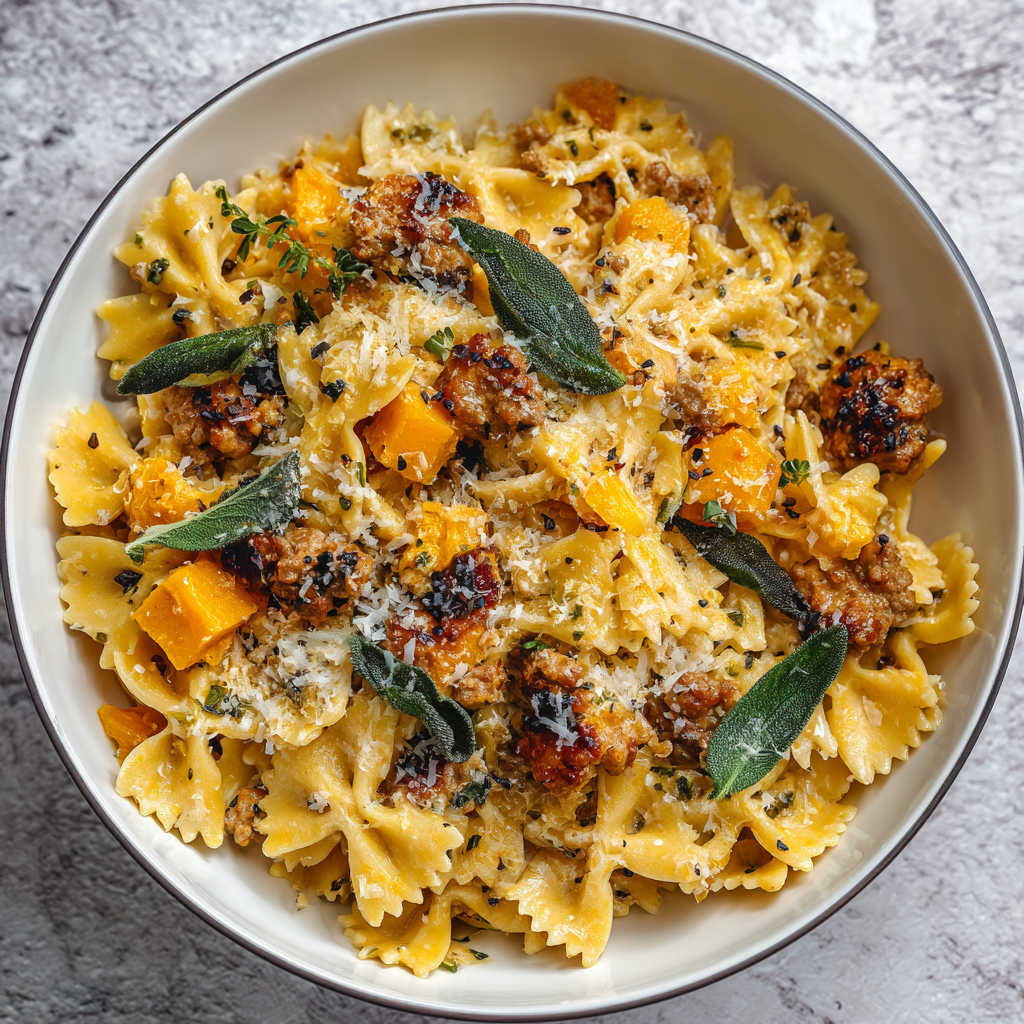
Creamy Butternut Squash Bowtie Pasta with Sage
Ingredients
Equipment
Method
- Preheat your oven to 190°C (170°C fan). Halve the butternut squash lengthways, scoop out the seeds, and score the flesh lightly with a knife. Place it flesh-side up on a baking tray.
- Drizzle the cut garlic head with olive oil, wrap it in foil, and add it to the tray along with the squash. Roast for 45–50 minutes, until the squash is tender. Add the quartered onion to the tray after 25–30 minutes, tossing it in any olive oil on the tray.
- Scoop out the roasted squash flesh and transfer it to a blender along with the roasted onions. Squeeze in the soft, caramelized garlic cloves. Add the heavy cream and blend until silky smooth. Adjust the consistency by adding splashes of pasta cooking water until the sauce reaches a thick but pourable texture. Season generously with salt and pepper.
- Bring a large pot of salted water to a boil. Cook the bowtie pasta until al dente, following package instructions. Remember to reserve some pasta water.
- In a large frying pan, melt butter over medium heat. Add the sage leaves and fry until the butter is golden brown and fragrant, and the sage leaves turn crispy. Remove the crispy sage and set it aside on a paper towel to drain. Pour half the brown butter into a small bowl for later use.
- Return the frying pan to the stove with the remaining brown butter, and toss in the cooked pasta. Stir well to coat the pasta in the butter. Add the butternut squash sauce and most of the Parmesan cheese, stirring until combined. Use reserved pasta water as needed to loosen the sauce.
- Divide the pasta into serving bowls. Top with crispy sage leaves, extra Parmesan, and a drizzle of the reserved brown butter for added richness.