
Whip up this incredibly creamy, dairy-free roasted butternut squash soup. Easy to make, packed with flavor, and perfect for fall and winter.
Why You’ll Love This Recipe
- Unbeatable Flavor: Roasting the butternut squash caramelizes its natural sugars, creating a deep, rich, and slightly sweet flavor profile that boiling simply can’t match. This recipe elevates a simple vegetable into a gourmet experience.
- Velvety Smooth Texture (Without Dairy!): Achieve a luxuriously creamy consistency through the magic of perfectly roasted squash and precise blending. No cream needed!
- Effortless Elegance: While the flavor is complex, the steps are straightforward, making this an ideal dish for weeknight dinners or impressing guests. Minimal active cooking time allows the oven to do the heavy lifting.
- Healthy & Wholesome: Packed with vitamins from the butternut squash and wholesome ingredients, this soup is a nourishing and comforting meal.
- Perfect for the Seasons: This soup is the quintessential taste of fall and winter, bringing warmth and comfort to any table.
Ingredients Needed
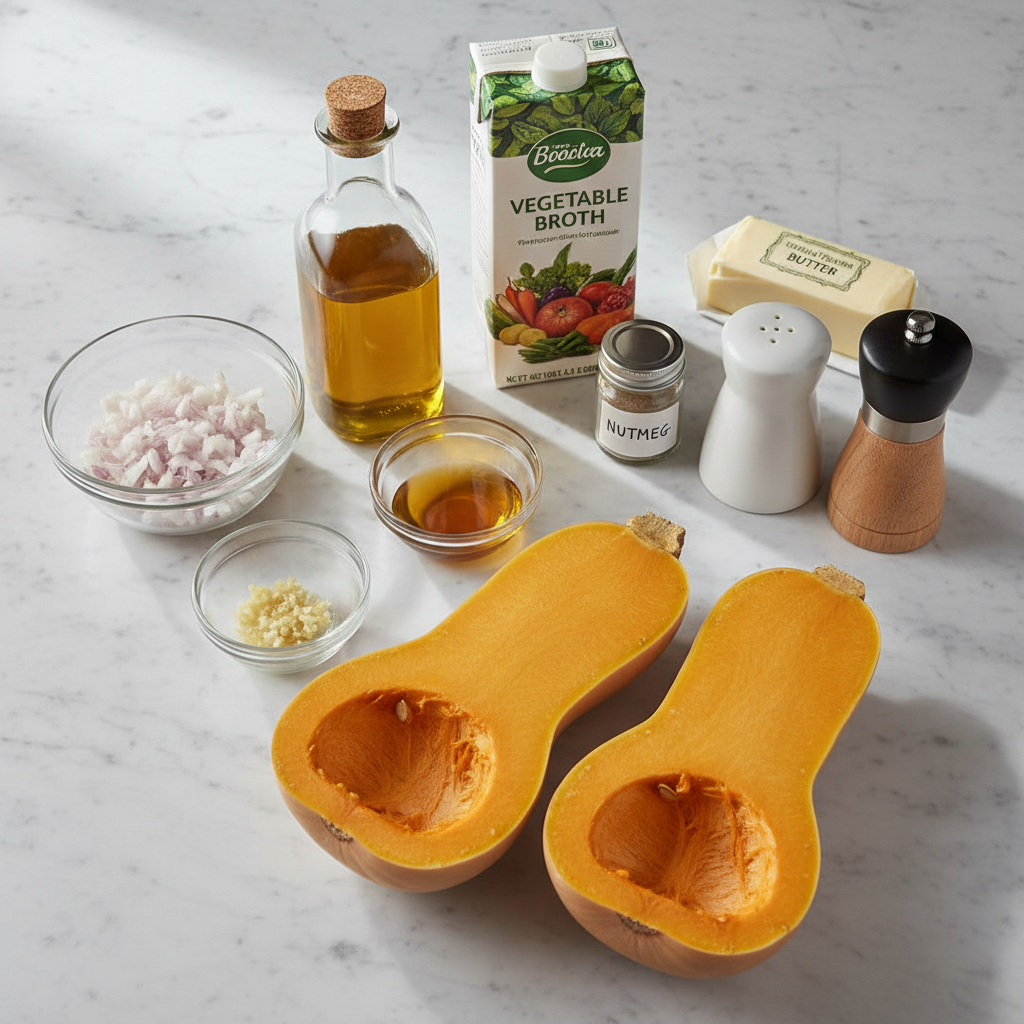
- 1 large butternut squash (about 3 pounds), halved vertically* and seeds removed
- 1 tablespoon olive oil, plus more for drizzling
- ½ cup chopped shallot (about 1 large shallot bulb)
- 1 teaspoon salt
- 4 garlic cloves, pressed or minced
- 1 teaspoon maple syrup
- teaspoon ground nutmeg
- Freshly ground black pepper, to taste
- 3 to 4 cups (24 to 32 ounces) vegetable broth, as needed
- 1 to 2 tablespoons butter, to taste
Ingredient Notes & Substitutions
Choosing Your Squash: Look for a butternut squash that feels heavy for its size, with smooth, firm skin free from bruises or soft spots. A longer neck generally indicates more flesh and fewer seeds.
Fat for Richness: The recipe calls for butter, but for a strictly dairy-free soup, use an equal amount of olive oil or a dairy-free butter substitute. Adding fat at the end helps emulsify the soup and enhances its richness.
Broth Variations: While vegetable broth is recommended for a vegan option, chicken broth can be used if dairy-free is the only restriction and you prefer that flavor.
Sweetness Adjustment: The maple syrup enhances the squash’s natural sweetness. Adjust slightly based on the sweetness of your squash or your preference.
How to Make Creamy Dairy-Free Roasted Butternut Squash Soup
1. Roast the Squash
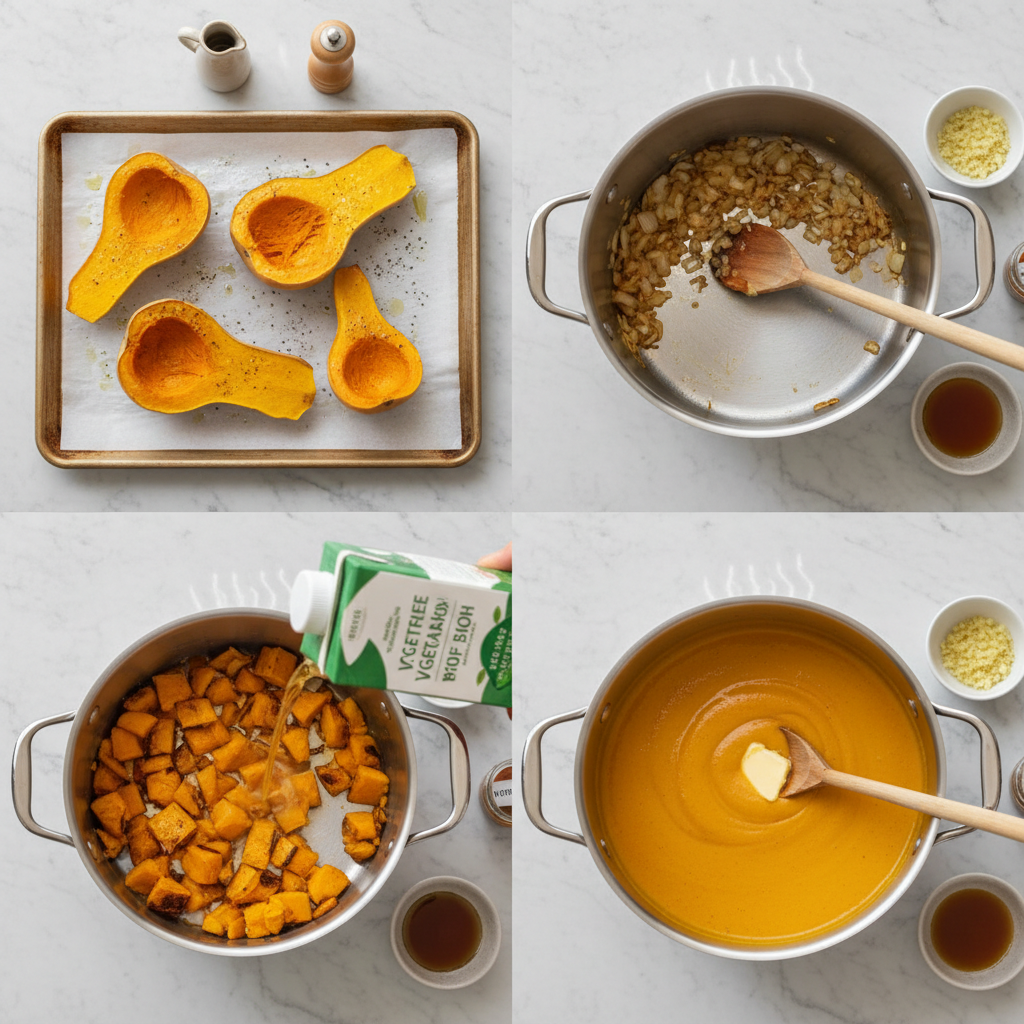
Preheat your oven to 425°F (220°C). Line a baking sheet with parchment paper. Place the halved butternut squash cut-side down on the prepared sheet. Drizzle each half with about ½ teaspoon of olive oil, then rub it over the cut surface. Season generously with salt and pepper. Roast for 40-50 minutes, or until fork-tender and the flesh is deeply colored. Don’t shy away from browning – it’s key to flavor development!
2. Sauté Aromatics
While the squash roasts, heat 1 tablespoon of olive oil in a large soup pot or a medium skillet over medium heat. Add the chopped shallots and 1 teaspoon of salt. Cook, stirring occasionally, until softened and beginning to turn golden brown at the edges (about 3-4 minutes). Add the minced garlic and cook for another minute until fragrant, stirring constantly to prevent burning.
3. Combine & Blend
Once the squash is cool enough to handle, scoop the tender flesh into your blender, discarding the skin. Add the sautéed shallots and garlic from the pot/skillet. Pour in 3 cups of vegetable broth (ensure you don’t overfill the blender – work in batches if needed). Add the maple syrup, nutmeg, and a few grinds of black pepper. Secure the lid tightly, holding it down with a towel if necessary, and blend on high speed until completely smooth and creamy. Be cautious of hot steam.
4. Adjust & Finish
If the soup is too thick, stir in the remaining cup of vegetable broth until your desired consistency is reached. Blend in 1 to 2 tablespoons of butter (or dairy-free alternative/olive oil) for added richness and a smooth finish. Taste and adjust seasonings, adding more salt, pepper, or nutmeg as needed.
5. Serve
If the soup is hot enough from blending, ladle it directly into bowls. Otherwise, return it to the soup pot and gently reheat over medium heat, stirring occasionally, until steaming. Serve hot, optionally garnished with extra black pepper or a drizzle of olive oil.
The Magic of Roasting: Unlocking Squash Flavor
Why Roasting Wins
Roasting butternut squash at a high temperature (like 425°F) caramelizes the natural sugars in the squash. This process creates complex, sweet, and nutty flavor notes that are far more intense and appealing than those developed by boiling or steaming. The browning that occurs during roasting directly contributes to a deeper, richer taste profile.
Beyond Flavor
Roasting also tenderizes the squash flesh beautifully, making it easy to scoop out and blend into a silky smooth soup. This method is integral to achieving that desirable creamy texture without relying on heavy creams.
Pro Tips & Troubleshooting
Expert Tips
- Don’t Fear the Brown: Browning on the squash flesh or skin during roasting is a sign of flavor development, not burning. Embrace it!
- Dish Minimization: If using a blender with a soup setting, consider sautéing the aromatics in a medium skillet. This allows you to transfer them directly to the blender without dirtying a large soup pot.
- Secure Blender Lid: Always ensure your blender lid is securely fastened, especially when blending hot liquids. Place a towel over the lid as an extra precaution against escaping steam.
- Broth for Consistency: Start with the lower amount of broth and add more as needed. It’s easier to thin a soup than to thicken it.
- Season at the End: Taste and adjust salt, pepper, and richness (butter/oil) after blending. This ensures the flavors are perfectly balanced.
Common Mistakes to Avoid
- Under-Roasting: Not roasting the squash long enough results in a watery texture and a less developed, blander flavor. Ensure it’s completely tender.
- Overfilling the Blender: This is a safety hazard with hot liquids. Always blend in batches if necessary, respecting the blender’s maximum fill line.
- Skipping the Final Seasoning: Flavor can meld and change during blending. Always taste and adjust salt and pepper before serving for the best taste.
- Boiling Instead of Roasting: While possible, boiling squash yields a much weaker flavor and a less desirable texture for blending.
Serving & Storage
Serving Ideas
- Garnishes: Elevate your soup with a swirl of extra olive oil, a generous crack of fresh black pepper, or finely chopped fresh herbs like chives or parsley.
- Pairings: This soup pairs wonderfully with crusty bread for dipping, a simple side salad, or even a classic grilled cheese sandwich. For a light and healthy option, consider pairing it with a quinoa salad.
- Spice it Up: For a touch of heat, add a pinch of cayenne pepper or red pepper flakes.
Storage and Make-Ahead
- Refrigeration: Allow the soup to cool completely. Store in an airtight container in the refrigerator for up to 3-4 days.
- Freezing: For longer storage, freeze the cooled soup in airtight containers or freezer bags for up to 3 months. Leave some headspace for expansion.
- Reheating: Reheat gently on the stovetop over medium-low heat, stirring occasionally, until warmed through. You can also reheat individual portions in the microwave.
This creamy dairy-free roasted butternut squash soup is a testament to how simple ingredients and smart techniques can create incredibly flavorful and comforting dishes. The deep, caramelized sweetness from roasting, combined with aromatic spices and a velvety smooth texture, makes this a go-to recipe for a healthy, satisfying, and elegant meal any time of year, especially during the cozy fall and winter months. For other comforting soup ideas, explore our creamy Tuscan white bean soup or the healthy chicken noodle soup.
Frequently Asked Questions
- Can I make this dairy-free butternut squash soup creamier?
- Yes, while this recipe achieves creaminess through blending roasted squash, you can add a splash of full-fat coconut milk or cashew cream (ensure they are unsweetened and plain) during the final blending stage for extra richness. Adjust the amount to your preference.
- How to make butternut squash soup without a blender?
- You can use an immersion blender directly in the soup pot. Alternatively, if you don’t have either, you can press the roasted squash through a fine-mesh sieve for a smoother texture, though it will be more labor-intensive and may not achieve the same level of creaminess.
- What can I use instead of butter in this recipe?
- For a dairy-free option, you can simply use more olive oil or a dairy-free butter substitute. Adding a bit of fat at the end helps emulsify the soup and adds richness.
- How do I store leftover roasted butternut squash soup?
- Let the soup cool completely, then store it in an airtight container in the refrigerator for up to 3-4 days. It can also be frozen for up to 3 months.
- How do I choose the best butternut squash?
- Look for a squash that feels heavy for its size, with firm, smooth skin and no soft spots or bruises. A longer neck usually means more flesh and fewer seeds.
- What spices pair well with butternut squash?
- Nutmeg is classic, but other warming spices like cinnamon, ginger, sage, or a pinch of cayenne pepper also complement butternut squash beautifully. Consider pairing with other seasonal dishes like our cranberry orange glazed turkey breast for a festive meal.
Creamy Dairy-Free Roasted Butternut Squash Soup
Ingredients
Equipment
Method
- Preheat your oven to 425°F (220°C). Line a baking sheet with parchment paper. Place the halved butternut squash cut-side down on the prepared sheet. Drizzle each half with about ½ teaspoon of olive oil, then rub it over the cut surface. Season generously with salt and pepper. Roast for 40-50 minutes, or until fork-tender and the flesh is deeply colored. Don't shy away from browning – it’s key to flavor development!
- While the squash roasts, heat 1 tablespoon of olive oil in a large soup pot or a medium skillet over medium heat. Add the chopped shallots and 1 teaspoon of salt. Cook, stirring occasionally, until softened and beginning to turn golden brown at the edges (about 3-4 minutes). Add the minced garlic and cook for another minute until fragrant, stirring constantly to prevent burning.
- Once the squash is cool enough to handle, scoop the tender flesh into your blender, discarding the skin. Add the sautéed shallots and garlic from the pot/skillet. Pour in 3 cups of vegetable broth (ensure you don't overfill the blender – work in batches if needed). Add the maple syrup, nutmeg, and a few grinds of black pepper. Secure the lid tightly, holding it down with a towel if necessary, and blend on high speed until completely smooth and creamy. Be cautious of hot steam.
- If the soup is too thick, stir in the remaining cup of vegetable broth until your desired consistency is reached. Blend in 1 to 2 tablespoons of butter (or dairy-free alternative/olive oil) for added richness and a smooth finish. Taste and adjust seasonings, adding more salt, pepper, or nutmeg as needed.
- If the soup is hot enough from blending, ladle it directly into bowls. Otherwise, return it to the soup pot and gently reheat over medium heat, stirring occasionally, until steaming. Serve hot, optionally garnished with extra black pepper or a drizzle of olive oil.