
Imagine a bowl of vibrant, velvety smooth soup, its comforting aroma hinting at sweet roasted squash, warm spices, and savory depth. This creamy roasted butternut squash soup (dairy free) is that dream realized – a soul-warming dish perfect for any fall or winter evening. This recipe is designed to be easy enough for a weeknight but impressive enough for guests, delivering a rich and luscious texture without a drop of dairy.
Why You’ll Love This Recipe
- Unbeatable Creaminess, Dairy-Free: Achieves a luxuriously smooth texture using the natural creaminess of roasted squash and a touch of healthy fat, making it perfect for vegan and dairy-free diets.
- Deep, Roasted Flavor: Roasting the butternut squash caramelizes its natural sugars, creating a more complex and satisfying flavor profile than simply boiling.
- Effortless Preparation: Minimal active cooking time, with most of the magic happening in the oven.
- Versatile & Adaptable: Easily customizable with spices or other vegetables, fitting seamlessly into your meal prep or seasonal cooking plans.
- Healthy & Wholesome: Packed with vitamins from the butternut squash and made with simple, nourishing ingredients.
Ingredients Needed
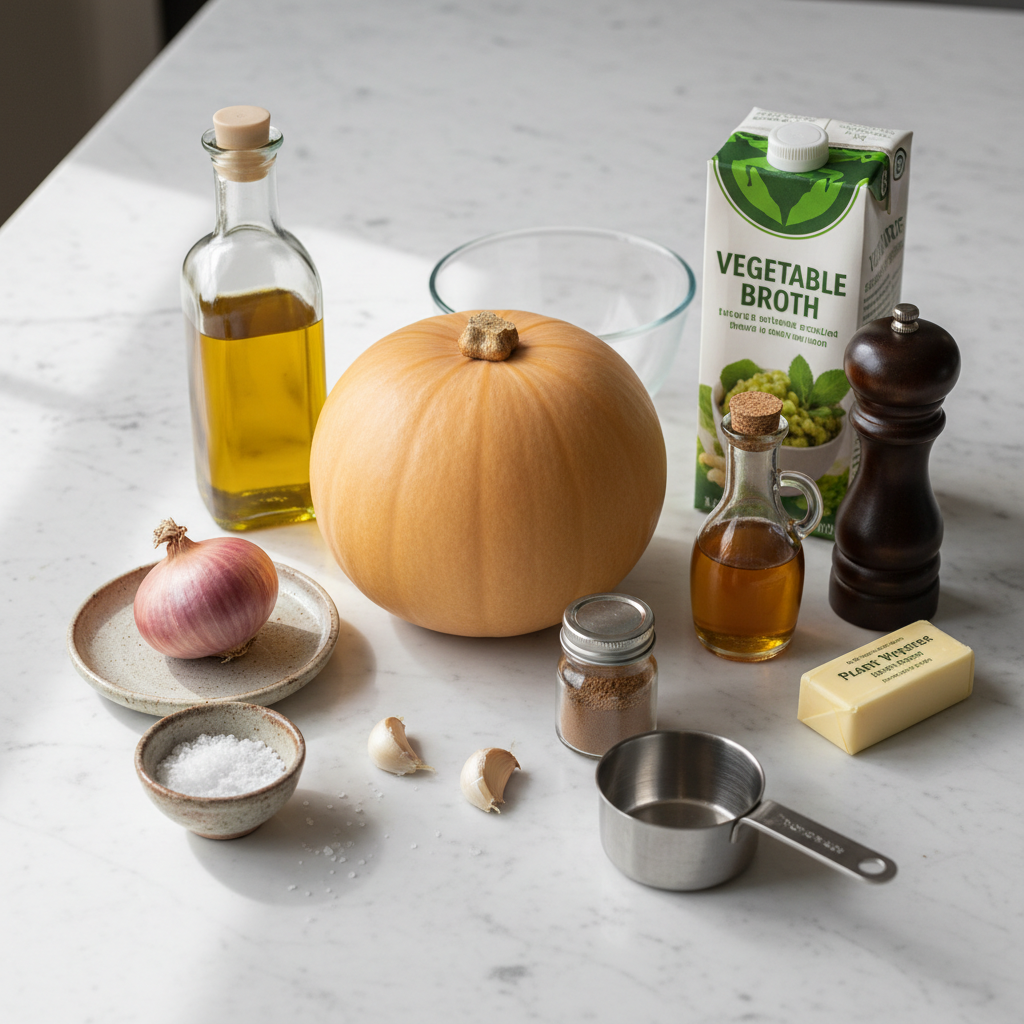
- 1 large butternut squash (about 3 pounds), halved vertically* and seeds removed
- 1 tablespoon olive oil, plus more for drizzling
- ½ cup chopped shallot (about 1 large shallot bulb)
- 1 teaspoon salt
- 4 garlic cloves, pressed or minced
- 1 teaspoon maple syrup
- teaspoon ground nutmeg
- Freshly ground black pepper, to taste
- 3 to 4 cups (24 to 32 ounces) vegetable broth, as needed
- 1 to 2 tablespoons butter, to taste
Ingredient Notes & Substitutions
Choosing Your Squash: Select a butternut squash that feels heavy for its size, with smooth, unblemished skin. A slightly curved neck is ideal for easier slicing and more flesh.
Dairy-Free Creaminess: While the recipe calls for butter for richness, you can substitute it with 1-2 tablespoons of unsalted olive oil, melted coconut oil, or a dairy-free butter alternative. For even more creaminess, consider adding a splash of full-fat coconut milk or cashew cream at the end of blending. For other creamy soup options, try our creamy Tuscan white bean soup or our high-protein broccoli cheddar soup.
Broth Variations: Use a good quality vegetable broth for the best flavor. Chicken broth can be used if not making a vegan soup. For a hearty alternative, consider a hearty ham and potato soup.
How to Make Creamy Dairy-Free Roasted Butternut Squash Soup
1. Roast the Squash for Flavor
Preheat your oven to 425°F (220°C). Line a rimmed baking sheet with parchment paper. Place the halved butternut squash cut-side down on the prepared baking sheet. Drizzle each half with about ½ teaspoon of olive oil, rubbing it gently to coat the flesh. Season generously with salt and pepper. Roast for 40-50 minutes, or until the squash is fork-tender and the edges are caramelized. Browning is good – it means more flavor! Let it cool slightly.
2. Sauté Aromatics
While the squash roasts, warm 1 tablespoon of olive oil in a large soup pot or Dutch oven over medium heat until shimmering. Add the chopped shallot and 1 teaspoon of salt. Cook, stirring occasionally, until the shallots are softened and beginning to turn golden, about 3-4 minutes. Add the minced garlic and cook for another minute until fragrant, stirring constantly to prevent burning.
3. Blend to Velvety Smoothness
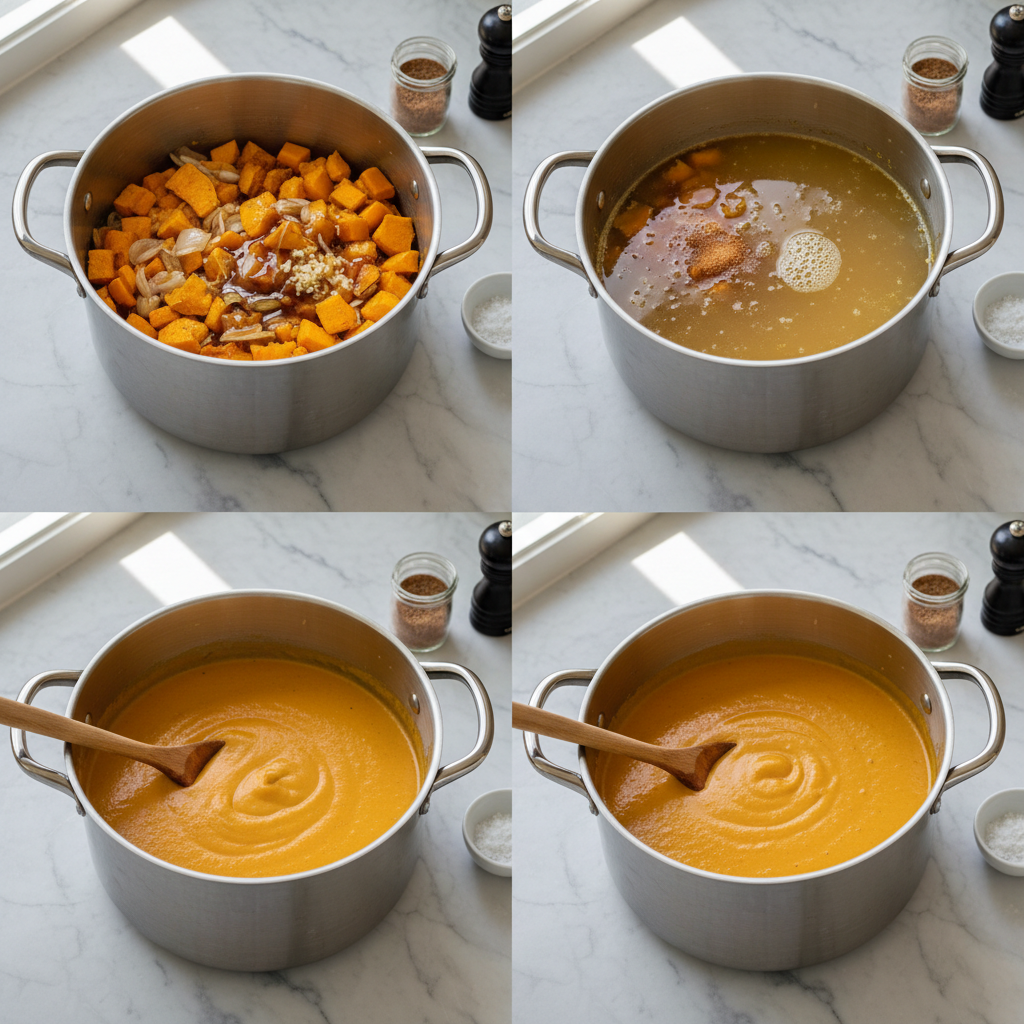
Scoop the roasted butternut squash flesh into your blender, discarding the skin and seeds. Add the sautéed shallots and garlic from the pot to the blender. Stir in the maple syrup, nutmeg, and a few grinds of black pepper. Pour in 3 cups of the vegetable broth. Important: Do not overfill your blender; work in batches if necessary. Secure the lid tightly, ensuring the steam vent is clear or slightly ajar (cover with a kitchen towel for extra safety when blending hot liquids).
4. Achieve Ultimate Creaminess
Blend on high speed until the soup is completely smooth and creamy. This may take 1-2 minutes depending on your blender. If you desire a thinner consistency, gradually stir in the remaining cup of vegetable broth until your desired thickness is reached. For other one-pan meal ideas, check out our easy Mediterranean chicken zucchini bake or the easy Greek sheet pan gnocchi.
5. Enrich and Season
For added richness, stir in 1-2 tablespoons of butter (or your chosen dairy-free alternative) into the blended soup. Blend again briefly until fully incorporated. Taste the soup and adjust seasoning with more salt and pepper as needed. This final taste test is crucial for balancing the flavors.
6. Warm and Serve
If the soup is hot from blending, it can be served immediately. Otherwise, return it to the soup pot and gently warm over medium heat, stirring frequently, until heated through. Ladle into bowls and garnish as desired.
The Science of Roasting & Choosing Squash
Maillard Reaction & Caramelization
Roasting butternut squash at a high temperature (like 425°F) is key to developing its deep, sweet flavor. The Maillard reaction causes browning and creates hundreds of new flavor compounds, while caramelization transforms the squash’s natural sugars into a rich sweetness. This process is what elevates a simple vegetable into a complex, delicious base for soup.
Selecting the Perfect Squash
When choosing your butternut squash, look for one that is firm, heavy for its size, and has a deep tan color with no soft spots or bruises. A uniform shape, especially in the neck, means more edible flesh. Ensure the stem is intact, as this indicates it was likely harvested properly and will store better.
Pro Tips & Troubleshooting
Expert Tips
- Don’t Fear the Brown Bits: The darker, caramelized parts of the roasted squash are flavor gold. Embrace them!
- Immersion Blender Option: If using an immersion blender, blend directly in the pot. Be cautious of splattering hot soup. You may need to blend in stages and ensure the blender is fully submerged.
- Control the Thickness: Adjust the amount of vegetable broth added at the end to achieve your preferred soup consistency, from thick and hearty to lighter and brothy.
- Finishing Touch: A swirl of good quality olive oil or a dollop of dairy-free cream right before serving adds visual appeal and extra richness.
- Roast in Batches: If your squash is too large for one pan, roast in batches to ensure even cooking and caramelization.
Common Mistakes to Avoid
- Under-Roasting: Not roasting the squash long enough results in a less sweet, less complex flavor and can contribute to a watery soup.
- Overfilling the Blender: Hot liquids expand. Never fill your blender more than halfway with hot soup to prevent dangerous pressure build-up and potential burns.
- Skipping the Seasoning Check: Always taste and adjust salt, pepper, and spices at the end. The flavors meld and change during cooking, and a final adjustment makes all the difference.
- Using Water Instead of Broth: While water can be used, vegetable broth adds a significant layer of savory flavor that is essential for a delicious soup. Consider a healthy white bean chicken chili for another flavorful, broth-based option.
Serving & Storage
Serving Ideas
- Garnishes: Top with toasted pumpkin seeds (pepitas), a drizzle of extra olive oil or dairy-free cream, a sprinkle of fresh sage or thyme, or a pinch of red pepper flakes for a hint of heat.
- Dippers: Serve alongside crusty artisan bread, garlic bread, or savory crackers for dipping. If you’re looking for a salad to complement your meal, try this shaved Brussels sprout and pear salad or a honeycrisp apple and feta fall harvest salad.
- Complete Meal: Pair with a light green salad for a balanced and satisfying meal.
Storage and Make-Ahead
- Refrigerator: Cooled soup can be stored in an airtight container in the refrigerator for up to 3-4 days.
- Freezer: Let the soup cool completely, then transfer to freezer-safe containers or bags. It can be frozen for up to 3 months. Thaw overnight in the refrigerator before reheating.
- Reheating: Gently reheat leftovers on the stovetop over medium-low heat, stirring occasionally, until warmed through. Avoid boiling. You may need to add a splash of broth or water if the soup has thickened.
FAQ
What is the best way to cut butternut squash for roasting?
Halve the butternut squash vertically, scoop out the seeds, and then roast cut-side down or cut-side up. Roasting cut-side down can help steam the flesh, making it easier to scoop.
Why is my roasted butternut squash soup watery?
This can happen if the squash is not roasted long enough, or if too much liquid is added. Ensure the squash is very tender and the soup is blended to a thick consistency before adding extra broth to thin it.
Can I make this soup ahead of time?
Yes, this soup can be made a day or two in advance and stored in an airtight container in the refrigerator. Reheat gently on the stovetop.
What can I use instead of butter for a dairy-free option?
You can use an equal amount of olive oil, coconut oil, or a dairy-free butter alternative. Cashew cream or full-fat coconut milk can also add extra creaminess.
How to make butternut squash soup creamy without dairy?
Roasting the squash until very tender and blending it thoroughly creates natural creaminess. Using healthy fats like olive oil or coconut milk/cream at the end also enhances the texture.
Can I use an immersion blender for butternut squash soup?
Yes, an immersion blender works well. Blend directly in the pot, being careful to avoid splattering hot soup. You might need to blend in batches or move the blender around to ensure even texture.
What spices go well with butternut squash soup?
Nutmeg is classic. Other complementary spices include cinnamon, ginger, a pinch of cayenne pepper, sage, thyme, or even curry powder for an Indian twist. For a different soup flavor profile, consider our cozy autumn wild rice soup.
How long does butternut squash soup last in the fridge?
Properly stored in an airtight container, it typically lasts for 3-4 days in the refrigerator.
Creamy Dairy-Free Roasted Butternut Squash Soup
Ingredients
Equipment
Method
- Preheat your oven to 425°F (220°C). Line a rimmed baking sheet with parchment paper. Place the halved butternut squash cut-side down on the prepared baking sheet. Drizzle each half with about ½ teaspoon of olive oil, rubbing it gently to coat the flesh. Season generously with salt and pepper. Roast for 40-50 minutes, or until the squash is fork-tender and the edges are caramelized. Let it cool slightly.
- While the squash roasts, warm 1 tablespoon of olive oil in a large soup pot or Dutch oven over medium heat until shimmering. Add the chopped shallot and 1 teaspoon of salt. Cook, stirring occasionally, until the shallots are softened and beginning to turn golden, about 3-4 minutes. Add the minced garlic and cook for another minute until fragrant, stirring constantly to prevent burning.
- Scoop the roasted butternut squash flesh into your blender, discarding the skin and seeds. Add the sautéed shallots and garlic from the pot to the blender. Stir in the maple syrup, nutmeg, and a few grinds of black pepper. Pour in 3 cups of the vegetable broth. Do not overfill your blender; work in batches if necessary. Secure the lid tightly, ensuring the steam vent is clear or slightly ajar.
- Blend on high speed until the soup is completely smooth and creamy. This may take 1-2 minutes depending on your blender. If you desire a thinner consistency, gradually stir in the remaining cup of vegetable broth until your desired thickness is reached.
- For added richness, stir in 1-2 tablespoons of butter (or your chosen dairy-free alternative) into the blended soup. Blend again briefly until fully incorporated. Taste the soup and adjust seasoning with more salt and pepper as needed. This final taste test is crucial for balancing the flavors.
- If the soup is hot from blending, it can be served immediately. Otherwise, return it to the soup pot and gently warm over medium heat, stirring frequently, until heated through. Ladle into bowls and garnish as desired.