
Imagine a bowl brimming with rustic charm: tender chickpeas swimming in a savory, herb-infused broth, with wilted greens adding a vibrant touch. This Tuscan Chickpea Soup with Rosemary is more than just a meal; it’s a comforting hug in a bowl, perfect for a nourishing weeknight dinner or a cozy weekend lunch. We’ll guide you through creating this hearty, Italian-inspired classic that’s surprisingly simple to make, packed with flavor, and adaptable to your liking. Get ready to unlock the secret to authentic Tuscan comfort food.
Why You’ll Love This Tuscan Chickpea Soup
- Incredible Flavor Depth: Built on a foundation of sautéed aromatics and infused with the unmistakable essence of rosemary and bay leaves, every spoonful is rich and satisfying.
- Hearty & Filling: Packed with chickpeas and greens, this soup is a complete meal that will keep you satisfied.
- Simple Ingredients, Big Taste: It proves that delicious, authentic Italian-inspired food doesn’t require complicated techniques or exotic ingredients.
- Naturally Vegan & Vegetarian: A wholesome dish that caters to plant-based diets without compromising on taste.
- Quick Preparation: From pot to table in under an hour, making it perfect for busy evenings.
- Customizable: Easily adaptable with the suggested variations to suit your pantry and preferences.
Ingredients Needed for Tuscan Chickpea Soup
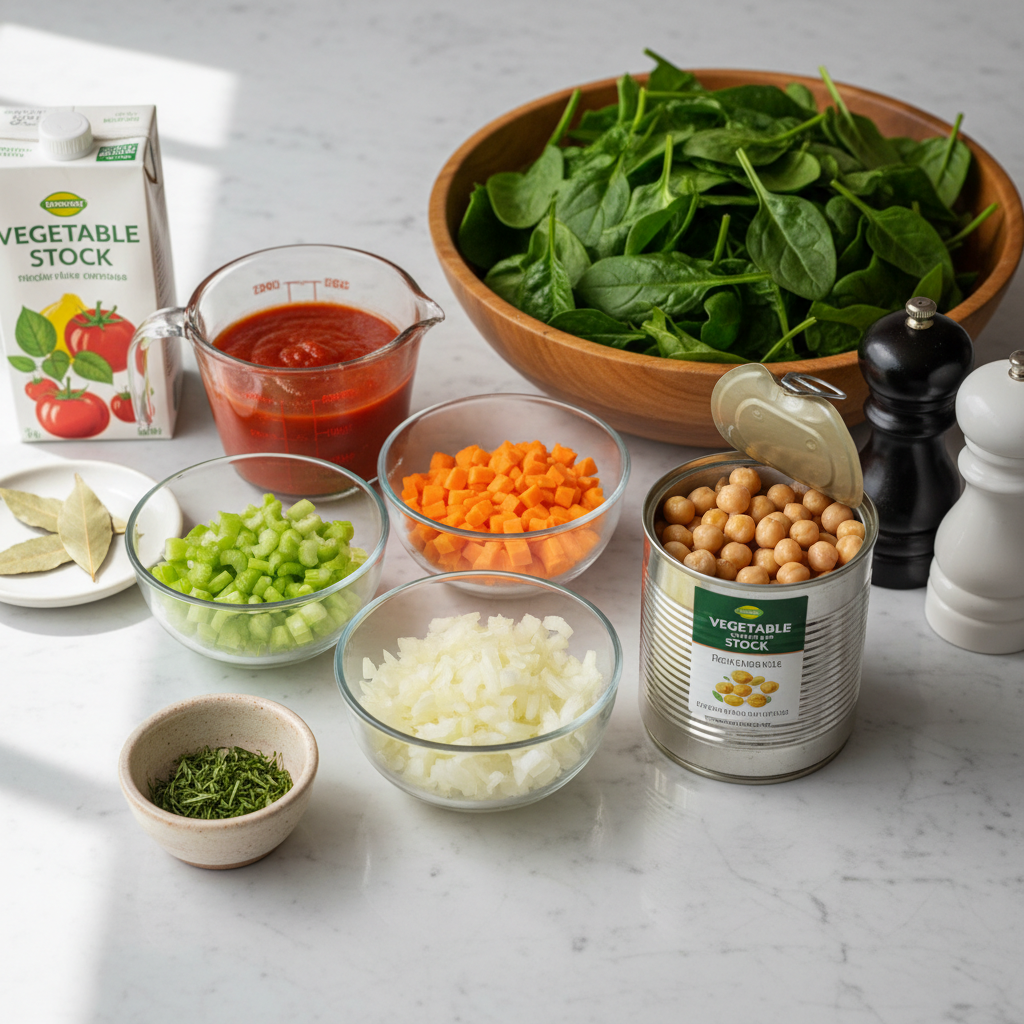
- 1 tbsp olive oil
- ½ onion
- 1 carrot
- 1 celery rib
- 2 cloves garlic
- 2 sprigs fresh rosemary (or ½ tsp dried rosemary)
- 125ml/½ cup tomato passata/crushed tomatoes
- 1 litre/4 cups vegetable stock
- 2 bay leaves
- 800g/28oz canned chickpeas (drained)
- 60g/2 cups spinach or kale (fresh or frozen)
- Salt and pepper to taste
- Top with fried rosemary and flavoured oil (optional)
Ingredient Notes & Substitutions
Olive Oil: Opt for a good quality extra virgin olive oil for the best flavor. Its fruity notes are key to Tuscan cooking.
Rosemary: Fresh rosemary offers a brighter, more pungent aroma. If using dried, use less (about ½ teaspoon) as its flavor is more concentrated.
Stock: Vegetable stock keeps this soup vegan. For a richer, non-vegetarian version, chicken stock can be used. Consider adding a Parmesan rind to the simmering stock for an umami boost. For a similar hearty and healthy base, explore options like healthy chicken noodle soup.
Chickpeas: Ensure the canned chickpeas are well-drained and rinsed to remove excess salt and starchy liquid.
Greens: Spinach wilts quickly and adds a delicate flavor. Kale is heartier and holds its texture better; chop it finely if using. For other ways to incorporate greens, consider a Mediterranean pasta salad or a Mediterranean quinoa bowl.
How to Make Tuscan Chickpea Soup with Rosemary
Follow these steps for a perfectly flavorful and textured soup:
1. Build the Flavor Base
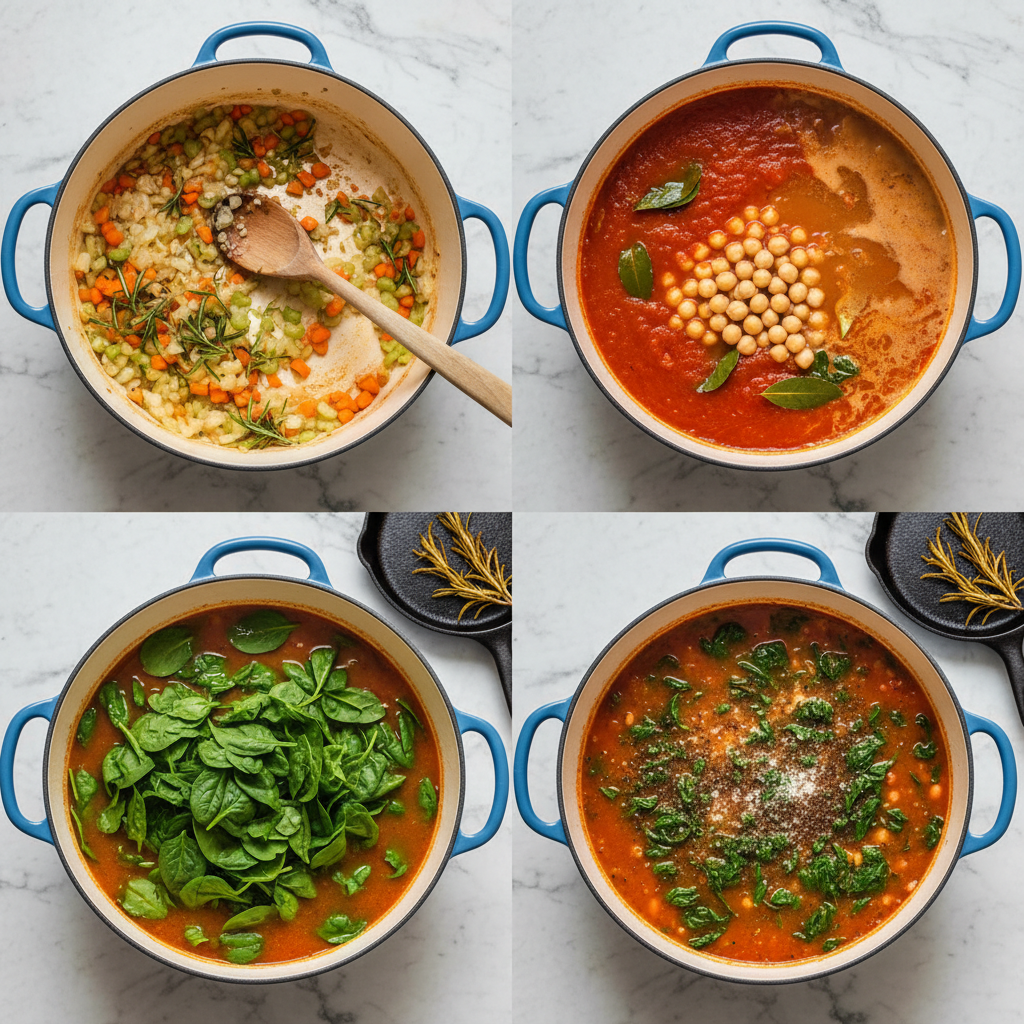
Heat the olive oil in a large pot or Dutch oven over medium heat. Add the finely chopped onion, carrot, and celery. Sauté gently for 7-10 minutes until the vegetables have softened and are beginning to turn translucent – this slow sauté is crucial for developing sweetness and depth (the beginning of the Maillard reaction!). Add the chopped fresh rosemary and cook for another minute until fragrant. Stir in the minced garlic and cook for just 30 seconds more until aromatic, being careful not to burn it.
2. Simmer to Perfection
Pour in the tomato passata, vegetable stock, and the drained canned chickpeas. Add the bay leaves. Bring the mixture to a boil, then reduce the heat to low, cover, and simmer for 20-25 minutes. This allows the flavors to meld beautifully.
For a Thicker Soup: If you prefer a creamier, thicker consistency, carefully remove about one-third of the soup (including some chickpeas and broth) and process it in a blender until smooth. Return the puréed soup to the pot and stir well to combine. For other creamy delights, you might enjoy this creamy Tuscan white bean soup or a comforting creamy potato leek soup.
3. Wilt the Greens & Season
Stir in the spinach or kale. Cook for just 2-3 minutes more, until the greens are wilted and tender. Remove the bay leaves. Season generously with salt and freshly ground black pepper to taste. Adjust seasonings as needed.
4. Optional Garnish (Highly Recommended!)
While the soup simmers, you can prepare the optional fried rosemary. Heat 3 tablespoons of olive oil in a small pan over medium heat. Add a couple of fresh rosemary sprigs and fry for 1-2 minutes until crisp and fragrant. Carefully remove the rosemary sprigs and set aside on a paper towel. Drizzle the infused rosemary oil over individual bowls of soup just before serving for an extra layer of herbaceous aroma and flavor.
Unlocking Tuscan Flavor: The Role of Herbs & Broth
This soup’s “Tuscan” character comes from a harmonious blend of simple, high-quality ingredients and aromatic herbs. Rosemary, with its piney, slightly peppery notes, is a quintessential herb in Tuscan cuisine, instantly evoking the rustic flavors of the Italian countryside. Bay leaves contribute a subtle, savory depth that rounds out the broth, working in tandem with the rosemary to build complexity. The combination of these aromatics with good quality olive oil and simple vegetables creates a flavor profile that is both comforting and distinctly Italian. Using a flavorful vegetable stock (or chicken stock for a richer taste) as the soup’s base further enhances these rustic elements, creating a hearty and satisfying dish.
Pro Tips & Troubleshooting
Expert Tips for Success:
- Don’t Rush the Sauté: Allow the onion, carrot, and celery to soften and sweeten properly for at least 7-10 minutes. This builds the essential flavor foundation.
- Quality Ingredients Matter: Use a good quality olive oil and fresh herbs for the most vibrant taste.
- Drain Chickpeas Well: Properly draining and rinsing canned chickpeas prevents a starchy, watery soup.
- Taste and Adjust: Seasoning is key! Taste the soup throughout the cooking process and adjust salt and pepper as needed.
- Blend for Creaminess: For a thicker, creamier texture without adding dairy, blending a portion of the soup is a game-changer.
- Fresh vs. Dried Rosemary: Fresh rosemary provides a brighter flavor; use dried sparingly as a substitute.
Common Mistakes to Avoid:
- Under-Sautéing Aromatics: Skipping or rushing this step leads to a bland, underdeveloped base flavor.
- Burning Garlic: Adding minced garlic too early or cooking it too high can result in a bitter taste.
- Overcooking Greens: Adding spinach or kale too soon will make them mushy and lose their bright color.
- Adding Too Much Liquid Initially: It’s easier to thin a thick soup than to thicken a watery one. Start with the recommended amount of stock.
- Skipping Seasoning: Insufficient salt and pepper can leave the soup tasting flat.
Serving & Storage
Serving Ideas:
- Crusty Bread: Essential for dipping into the flavorful broth. A rustic sourdough or ciabatta works perfectly.
- Fresh Herbs: Garnish with extra fresh parsley or basil for a pop of color and freshness.
- Drizzle of Olive Oil: A final swirl of high-quality extra virgin olive oil enhances the aroma and richness.
- Pesto or Yogurt: A dollop of pesto adds an herbaceous punch, while plain Greek yogurt or sour cream offers a creamy counterpoint (if not keeping it vegan). For a refreshing yogurt option, check out this Greek yogurt protein bowl.
- Parmesan Cheese: A sprinkle of grated Parmesan cheese adds a salty, umami finish (omit for vegan).
Storage and Make-Ahead:
- Refrigeration: Leftover Tuscan chickpea soup can be stored in an airtight container in the refrigerator for up to 3-4 days. The flavors often deepen and improve overnight.
- Freezing: For longer storage, cool the soup completely and transfer it to freezer-safe containers or bags. It can be frozen for up to 3 months.
- Reheating: Gently reheat leftovers on the stovetop over medium-low heat, adding a splash more stock or water if needed to reach your desired consistency. Avoid boiling vigorously.
Conclusion
This Tuscan Chickpea Soup with Rosemary is a testament to the beauty of simple, flavorful cooking. Its hearty texture, aromatic profile, and rustic charm make it a go-to recipe for a satisfying and wholesome meal. Whether you’re a seasoned cook or just starting, this straightforward recipe delivers authentic Italian-inspired comfort every time. Enjoy this nourishing bowl of goodness!
Frequently Asked Questions
What makes this soup ‘Tuscan’?
The ‘Tuscan’ style often emphasizes simple, fresh ingredients, hearty beans, and aromatic herbs like rosemary. This soup captures that rustic, flavorful essence.
Can I make this soup ahead of time?
Yes, this soup can be made ahead of time. The flavors often meld and improve overnight. Reheat gently on the stovetop.
How do I store leftovers?
Store leftover soup in an airtight container in the refrigerator for up to 3-4 days. It can also be frozen for longer storage.
What kind of stock is best?
Vegetable stock is traditional, but a good quality chicken stock can also be used for a richer flavor if not keeping it vegetarian.
How do I make this soup thicker?
To achieve a thicker soup, you can carefully process about one-third of the soup (including some chickpeas and broth) in a blender until smooth, then return it to the pot and stir to combine.
Can I use dried rosemary instead of fresh?
Yes, you can use dried rosemary. Use about ½ teaspoon of dried rosemary for every 2 sprigs of fresh rosemary, as dried herbs are more potent.
Is Tuscan chickpea soup healthy?
Yes, this soup is packed with fiber from the chickpeas and nutrients from the vegetables, making it a very healthy and nourishing choice, especially when prepared with vegetable stock for a vegan option. If you’re looking for other nutrient-dense options, explore the health benefits of quinoa or try incorporating it into dishes like an easy Mediterranean quinoa bowl.
What can I serve with Tuscan chickpea soup?
It’s delicious served with crusty bread for dipping, a side salad, or a sprinkle of fresh parsley and a drizzle of olive oil. For a heartier meal, consider pairing it with a protein-rich option like Mediterranean chicken plate or turkey lettuce cups.
Tuscan Chickpea Soup with Rosemary
Ingredients
Equipment
Method
- Heat 1 tbsp olive oil in a large pot or Dutch oven over medium heat. Add the finely chopped onion, carrot, and celery. Sauté gently for 7-10 minutes until the vegetables have softened and are beginning to turn translucent. Add the chopped fresh rosemary and cook for another minute until fragrant. Stir in the minced garlic and cook for just 30 seconds more until aromatic, being careful not to burn it.
- Pour in the tomato passata, vegetable stock, and the drained canned chickpeas. Add the bay leaves. Bring the mixture to a boil, then reduce the heat to low, cover, and simmer for 20-25 minutes. This allows the flavors to meld beautifully.
- Stir in the spinach or kale. Cook for just 2-3 minutes more, until the greens are wilted and tender. Remove the bay leaves. Season generously with salt and freshly ground black pepper to taste. Adjust seasonings as needed.
- While the soup simmers, prepare the optional fried rosemary. Heat 3 tablespoons of olive oil in a small pan over medium heat. Add a couple of fresh rosemary sprigs and fry for 1-2 minutes until crisp and fragrant. Carefully remove the rosemary sprigs and set aside on a paper towel. Drizzle the infused rosemary oil over individual bowls of soup just before serving for an extra layer of herbaceous aroma and flavor.