
Introduction
This cottage cheese Alfredo blends cottage cheese, Parmesan, milk, and garlic into a smooth sauce for chicken and lupini penne. Blend until no curds remain, then warm the sauce gently. The recipe serves four, takes 25 minutes, and estimates 45 grams of protein per serving.
Imagine diving into a bowl of rich, velvety garlic-parmesan pasta without the heavy cream guilt. This High-Protein Cottage Cheese Alfredo transforms humble dairy curds into an ultra-smooth, luxurious sauce that completely redefines healthy comfort food.
Designed as a practical, step-by-step recipe that delivers restaurant-quality flavor with a massive nutritional boost, you will learn how blending cottage cheese creates a magic cream base, how to sear chicken to golden perfection, and how to master this macro-friendly healthy pasta dinner.
Why You’ll Love This Recipe
- Flavor & Texture: Delivers the comforting, savory garlic-parm taste of traditional alfredo with a surprisingly silky mouthfeel.
- Nutritional Win: Packed with protein from both the blended base and high-protein alternative noodles like Brami lupini penne.
- Quick & Easy: Comes together in the time it takes to boil a pot of pasta, making it ideal for busy weeknights.
- Reliable Results: Uses simple kitchen techniques like room-temperature dairy and reserved pasta water to guarantee a smooth, non-grainy sauce every single time.
Ingredients Needed
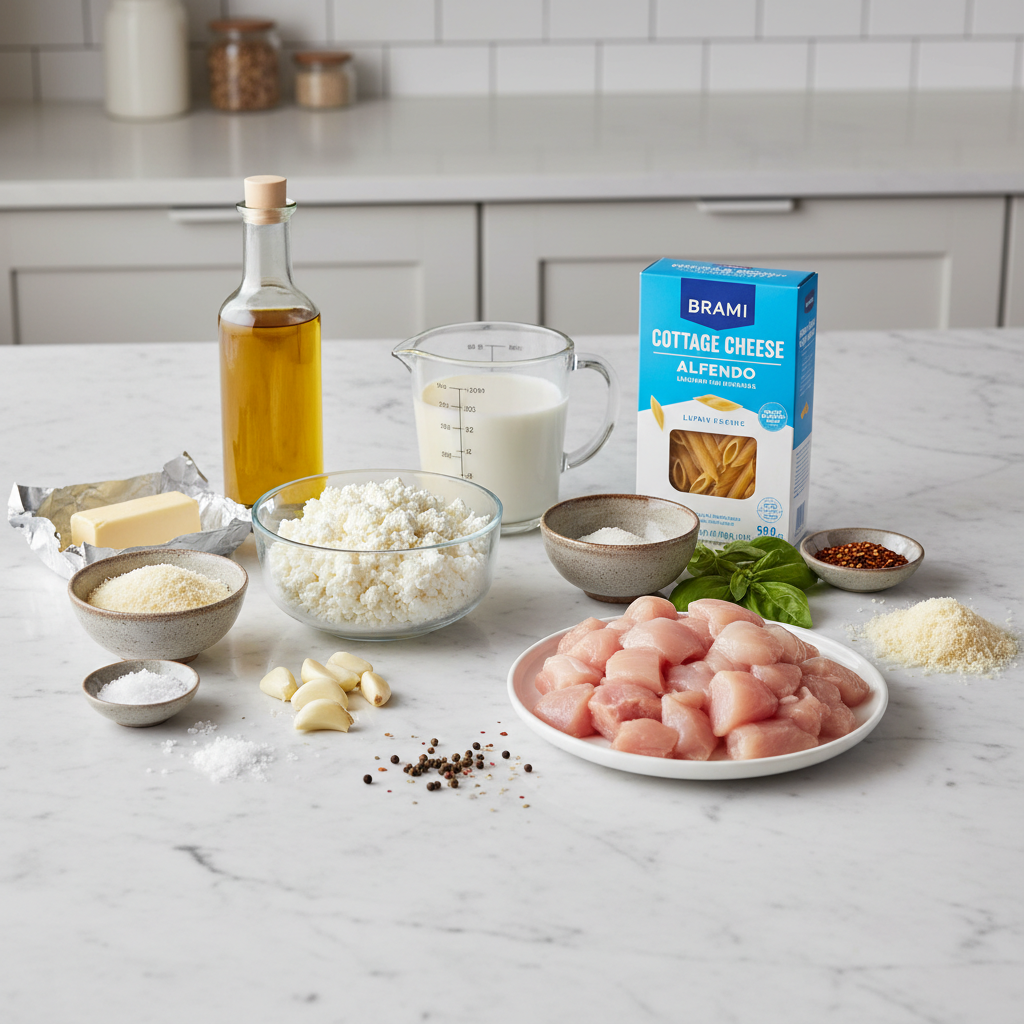
- 2 cups cottage cheese (2% or full fat)
- ½ cup freshly grated parmesan, plus more for serving
- ½ cup milk
- 2 cloves garlic
- ½ tsp salt
- ½ tsp black pepper
- 12 oz Brami lupini penne (or your preferred higher-protein pasta)
- 1 to 1½ lbs chicken breast, diced
- 1 tsp salt
- 1/2 tsp pepper
- 1 tbsp olive oil
- 1 tbsp butter
- ¼ cup fresh basil or parsley
- Red pepper flakes, cracked black pepper, and extra parmesan for serving
Ingredient Notes & Substitutions
Cottage Cheese Fat Percentage: 2% or full-fat cottage cheese provides the best mouthfeel and stability. Fat-free options can sometimes yield a watery or chalky texture.
Cheese Selection: Use freshly grated Parmigiano-Reggiano rather than pre-shredded or canned parmesan to ensure a smooth melt and superior umami flavor.
Pasta Choices: Highlight options like Brami lupini penne, chickpea pasta, or red lentil pasta to boost the nutritional profile of this high-protein pasta dish.
How to Make High-Protein Cottage Cheese Alfredo
Step 1 (The Blend)
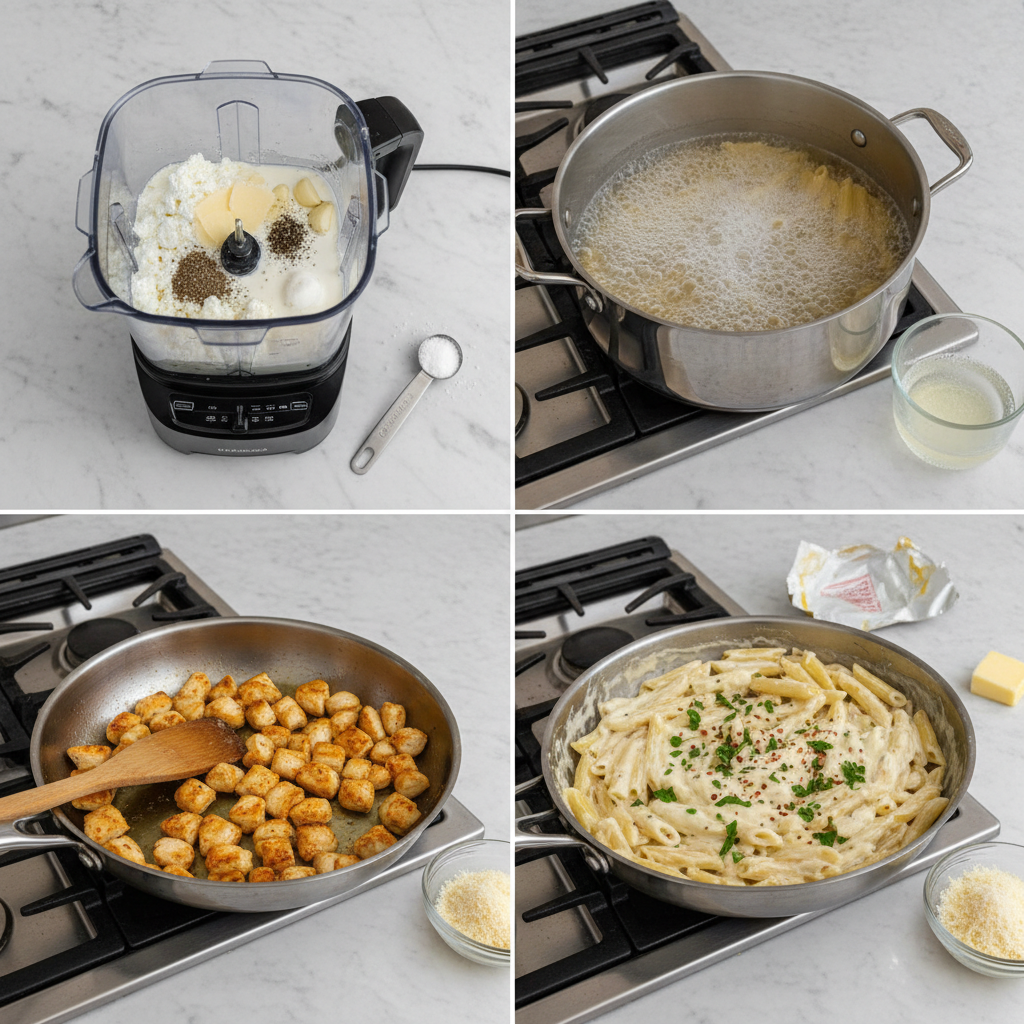
Add cottage cheese, parmesan, milk, garlic, salt, and pepper to a blender. Blend until completely smooth and velvety.
Step 2 (The Pasta & Water)
Cook pasta in well-salted water according to package directions. Before draining, scoop out about a cup of pasta water in a heat-safe cup and set it aside to adjust the sauce consistency at the end.
Step 3 (The Chicken Sear)
Season diced chicken with salt and pepper. Heat olive oil in a large skillet over medium-high heat and sear chicken until golden and cooked through, giving it time without stirring in order to get some good browning on the chicken pieces.
Step 4 (The Sauce Integration)
Once the chicken is cooked through, add a tablespoon of butter to the same pan over medium low heat and let it melt, then pour the blended sauce into the pan and turn the heat to low.
Step 5 (Deglazing)
Scrape up all the browned bits on the bottom of the pan to add flavor to the sauce.
Step 6 (Tossing & Adjusting)
Add in the pasta. The sauce does thicken once the pasta goes in, so if it seems a bit thin, never fear. But, if it is too thick, add in some of the extra pasta water 1/4 cup at a time until you get your desired consistency.
Step 7 (Garnishing)
Finish with freshly grated parmesan, fresh herbs, and a pinch of red pepper flakes if you like a little heat.
The Magic of Blended Cottage Cheese & Nutrition Breakdown
The Chemistry of Blended Cottage Cheese
Mechanical blending physically breaks down the casein protein curd structure in cottage cheese, transforming lumpy dairy into a high-protein emulsification. This creates a rich, creamy consistency without needing heavy cream or a traditional butter-heavy roux.
Nutrition Comparison: Traditional vs. High-Protein Alfredo
This version uses blended cottage cheese and lupini penne instead of a heavy-cream sauce. The recipe card lists estimated nutrition for its ingredients and serving size; compare labels and portions if you are tracking calories, fat, or protein.
Pro Tips & Troubleshooting
Pro Tips
Let the cottage cheese and milk reach room temperature before blending to guarantee a silkier texture without graininess.
Always reserve starchy pasta water because the starches help emulsify the dairy-based sauce and cling tightly to alternative protein noodles.
Use a high-speed blender or food processor to completely eliminate any remaining curd texture.
Infuse the sauce with roasted garlic cloves instead of raw garlic for a sweeter, more mellow garlic flavor profile.
Common Mistakes to Avoid
Boiling the Sauce: Never boil the cottage cheese sauce at high heat, as high temperatures cause dairy proteins to separate and create a grainy or watery texture.
Skipping the Sear: Don’t rush the chicken searing step, because missing out on the pan’s fond means losing valuable flavor depth for your healthy chicken alfredo.
Using Pre-Grated Cheese: Avoid pre-grated parmesan, which contains anti-caking agents that prevent a smooth sauce emulsion.
Forgetting Pasta Water: Forgetting to save starchy pasta water before draining makes it difficult to adjust the sauce if it thickens too much.
Serving & Storage
Serving Ideas
Serve hot with an extra dusting of freshly grated parmesan and a crack of black pepper.
Pair alongside a crisp, acidic green salad dressed in a lemon vinaigrette to cut through the rich alfredo sauce.
Garnish with chopped fresh parsley or basil and a sprinkle of crushed red pepper flakes for vibrant color and subtle heat.
Swap out chicken breast for sautéed shrimp or sliced grilled steak for variety.
Storage and Make-Ahead
Refrigerator Storage: Store leftovers in an airtight container in the refrigerator for up to 3-4 days.
Reheating Instructions: Reheat gently on the stovetop over low heat with a splash of milk or water to restore the creamy sauce consistency. High-protein dairy sauces behave poorly in the microwave, where intense, uneven heat causes the proteins to seize, separate, and turn grainy.
Conclusion
Enjoying a rich, comforting bowl of alfredo doesn’t have to derail your fitness goals. With a quick spin in the blender and a hot skillet, you can master this protein-packed dinner tonight.
FAQ
-
Q: Does cottage cheese alfredo taste like regular alfredo?
A: When blended completely smooth with garlic, parmesan, salt, and pepper, cottage cheese transforms into a rich, savory cream base that mimics traditional alfredo sauce remarkably well while offering a massive protein boost.
-
Q: How do I prevent my cottage cheese sauce from curdling?
A: Keep your stovetop heat on low once the blended sauce is added to the pan. High heat causes dairy proteins to seize and curdle. Also, ensuring your cottage cheese and milk are at room temperature helps.
-
Q: Can I make this recipe without a blender?
A: A high-speed blender or food processor is necessary to completely break down the curd structure of the cottage cheese and achieve a velvety, silky alfredo texture.
-
Q: How should I store and reheat leftovers?
A: Store leftovers in an airtight container in the refrigerator for up to 3-4 days. Reheat gently on the stovetop over low heat with a splash of milk or water to restore the creamy sauce consistency, as high microwave power can cause separation.
-
Q: What is the best high-protein pasta to use for alfredo sauce?
A: Lupini-based pastas like Brami penne, chickpea pasta, or red lentil pasta pair exceptionally well because their hearty texture holds onto the creamy sauce while adding extra plant-based protein.
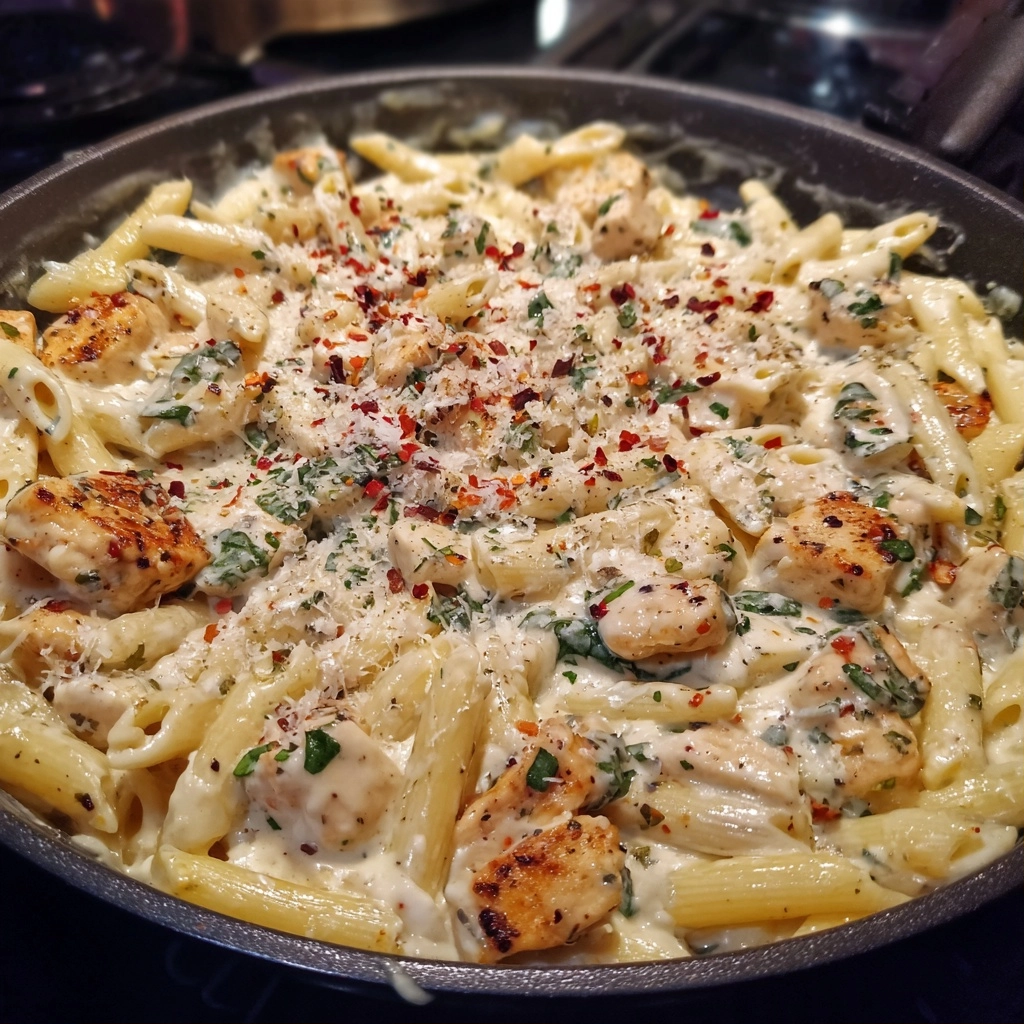
High-Protein Cottage Cheese Alfredo
Ingredients
Equipment
Method
- Add cottage cheese, parmesan, milk, garlic, salt, and pepper to a blender. Blend until completely smooth and velvety.
- Cook pasta in well-salted water according to package directions. Before draining, scoop out about a cup of pasta water in a heat-safe cup and set it aside.
- Season diced chicken with salt and pepper. Heat olive oil in a large skillet over medium-high heat and sear chicken until golden and cooked through, allowing it to brown without stirring constantly.
- Once the chicken is cooked through, add a tablespoon of butter to the same pan over medium-low heat and let it melt, then pour the blended sauce into the pan and turn the heat to low.
- Scrape up all the browned bits on the bottom of the pan to incorporate flavor into the sauce.
- Add in the cooked pasta. If the sauce is too thick, add some reserved pasta water a quarter cup at a time until you reach your desired consistency.
- Finish with freshly grated parmesan, fresh herbs, and a pinch of red pepper flakes before serving.
Nutrition
Notes
Tried this recipe?
Let us know how it was!More Cottage Cheese Recipes
Want another way to use cottage cheese? Explore these recipes, then browse our Healthy Dinner recipes or the Gut Health collection for more nutrition reading.
- Savory Cottage Cheese Breakfast Bowl
- Healthy Cottage Cheese Cookie Dough
- Warm Cottage Cheese Taco Dip
- 2-Ingredient Cottage Cheese Bagels