
Introduction
Start your day with a burst of Mediterranean flavor! This Mediterranean egg scramble with spinach and feta is a vibrant, protein-packed breakfast that’s as delicious as it is healthy. Imagine tender, perfectly cooked eggs mingling with fresh, wilted spinach and salty crumbles of feta cheese, all brought together with a hint of spice. This recipe is your shortcut to a satisfying and quick meal, perfect for busy mornings or a light, wholesome lunch.
Why You’ll Love This Recipe
- Incredibly Quick & Easy: Ready in under 15 minutes, making it ideal for busy weekday mornings.
- Flavor Explosion: The salty feta, earthy spinach, and creamy eggs create a harmonious and delicious taste.
- Healthy & Nutritious: Packed with protein from eggs and vitamins from spinach, supporting a healthy lifestyle.
- Versatile: Easily adaptable with your favorite add-ins and seasonings.
- Reliably Delicious: Simple steps ensure a perfect, creamy scramble every time, avoiding common pitfalls like dry or rubbery eggs.
Ingredients Needed
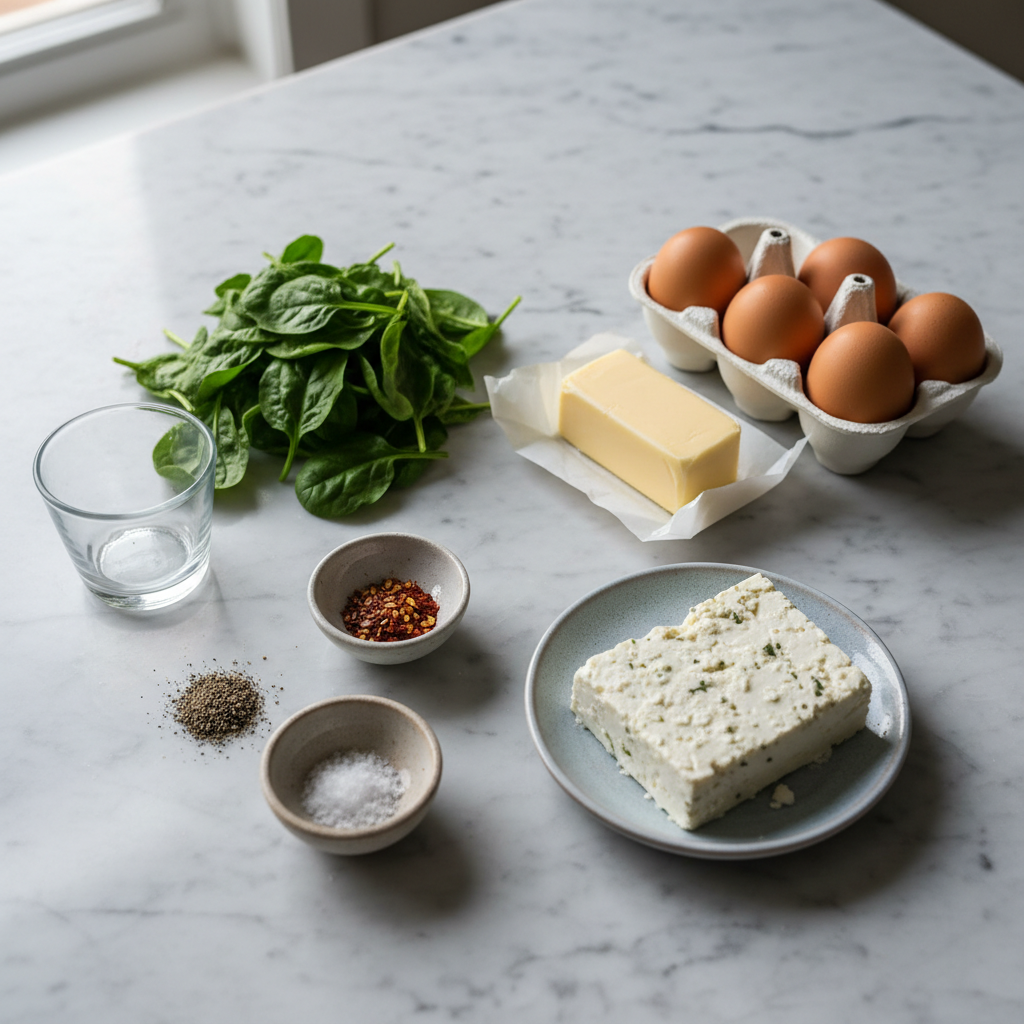
- 4 oz. fresh spinach
- 4 large eggs
- 1 Tbsp butter
- 1 oz. feta
- 1 pinch crushed red pepper
- 1 pinch freshly cracked black pepper
- 1 pinch salt
Ingredient Notes & Substitutions
Spinach: You can use baby spinach or mature spinach. If using mature spinach, ensure it’s well-rinsed and stems removed if tough. For a finer texture, chop it finely as suggested in the instructions.
Feta Cheese: Crumbled feta is standard. You can use full-fat or a reduced-fat version. For a milder flavor, use less; for more tang, add a little extra.
Eggs: Large eggs are standard. For a richer scramble, you can add a splash of milk or cream (though this recipe focuses on achieving creaminess through technique).
Butter: Olive oil can be substituted for butter, aligning with Mediterranean flavors.
How to Make Mediterranean Egg Scramble with Spinach and Feta
Prepare the Spinach
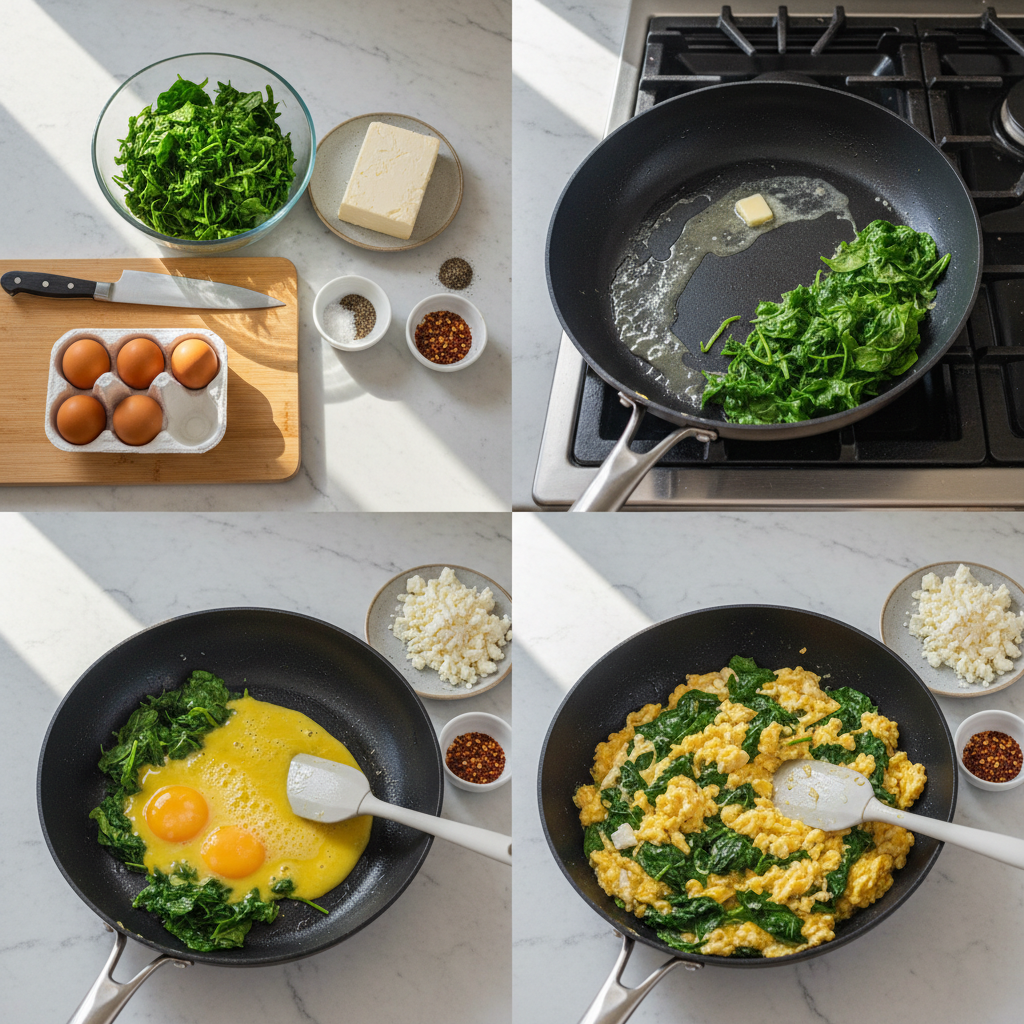
Roughly chop the fresh spinach into smaller, bite-sized pieces (about 1-inch). This optional step ensures the spinach integrates seamlessly and prevents stringy bits, leading to a more pleasant texture.
Whisk the Eggs
Crack the 4 large eggs into a bowl. Add a pinch of salt. Whisk the eggs until the whites and yolks form ribbons of color – this technique contributes to a richer texture. Alternatively, whisk until fully uniform for a quicker preparation.
Sauté the Spinach
Melt 1 tablespoon of butter in a large non-stick skillet over medium heat until shimmering. Add the chopped spinach and sauté for 2-3 minutes, just until it wilts and softens. The goal is to release its moisture and tenderize it without overcooking.
Cook the Eggs
Push the wilted spinach to the edges of the skillet. Pour the whisked eggs into the cleared center. As the eggs begin to set on the bottom, use a spatula to gently push and fold them towards the center. Continue this gentle folding motion until the eggs are about 75% cooked – they should still look slightly wet and glossy.
Combine and Finish
Fold the partially cooked eggs into the sautéed spinach. Immediately turn off the heat. The residual heat from the pan will continue to cook the eggs to a creamy, perfect consistency without making them dry or rubbery.
Season and Serve
Top the scramble with crumbled feta cheese, a pinch of freshly cracked black pepper, and a pinch of crushed red pepper for a subtle kick. Serve immediately.
Mastering the Mediterranean Scramble: Tips for Creamy Eggs & Perfect Spinach
The Science of Creamy Scrambled Eggs
Achieving creamy scrambled eggs is all about gentle cooking and managing heat. By folding the eggs as they cook and removing them from the heat *before* they are fully set, you allow the residual heat to finish the process. This low-and-slow approach (relative to high-heat scrambling) prevents the egg proteins from seizing up too quickly, which leads to a dry, rubbery texture. The “folding” technique creates soft curds rather than a solid, uniform mass.
Choosing the Right Pan
A good non-stick skillet is crucial for scrambled eggs. Its surface ensures the eggs don’t stick and allows for easy folding and cleanup. A skillet with sloped sides (like a sauté pan) is ideal, as it facilitates the folding motion and helps distribute heat evenly. For this recipe, a 10-inch non-stick skillet works perfectly.
Optimal Sautéing and Cooking Temperatures
For sautéing spinach, medium heat is ideal. You want the spinach to wilt quickly without releasing too much excess water. For cooking the eggs, starting on medium heat and then reducing to low or even turning off the heat during the final folding stage is key. This controlled temperature management prevents overcooking and ensures a creamy outcome.
Pro Tips & Troubleshooting
Expert Tips
- Fine Chop for Spinach: Chopping spinach finely prevents it from becoming stringy and makes it easier to incorporate.
- Whisking Technique: Whisk eggs to ribbons of white and yellow for a preferred texture, or whisk until uniform for speed.
- Gentle Folding is Key: Cook eggs gently and fold them to achieve a creamy texture.
- Use Residual Heat: Turn off the heat while folding eggs into spinach; the pan’s residual heat finishes cooking without overcooking.
- Don’t Overcrowd the Pan: Use a skillet large enough to allow ingredients to cook evenly.
- Seasoning Timing: Add salt after whisking eggs to prevent toughness, and other seasonings at the end.
Common Mistakes to Avoid
- Not Chopping Spinach: Leaving spinach leaves whole can lead to long, stringy pieces.
- Overcooking Eggs: Resulting in a dry, rubbery texture. Remove from heat when slightly underdone.
- Adding Feta Too Early: Feta can melt excessively and become oily if added during the initial cooking of the eggs.
- Using a Pan That Sticks: Leads to broken curds and a messy scramble.
- High Heat Cooking: Causes eggs to cook too quickly and become tough.
- Not Preheating Pan: Prevents even cooking and can lead to sticking.
Serving & Storage
Serving Ideas
- With Toast: Serve alongside toasted whole-grain bread or crusty sourdough.
- Fresh Sides: Pair with sliced avocado, fresh fruit salad, or a small side of berries.
- Mediterranean Flair: Add a sprinkle of fresh dill or parsley before serving.
- Light Meal: Enjoy on its own for a light lunch or dinner.
- Heartier Breakfast: Serve with a side of home fries or roasted sweet potatoes.
Storage and Make-Ahead
Refrigeration: Leftovers can be stored in an airtight container in the refrigerator for up to 2 days. The texture may change slightly upon reheating.
Reheating: Gently reheat in a non-stick skillet over low heat, adding a tiny splash of water or milk if needed to restore moisture. Avoid microwaving, as it can make the eggs rubbery.
Make-Ahead Prep: You can chop the spinach and whisk the eggs the night before and store them separately in the refrigerator. This saves a few minutes in the morning.
Conclusion
This Mediterranean egg scramble with spinach and feta is a testament to how simple ingredients can create an exceptionally flavorful and satisfying meal. With its quick preparation, healthy profile, and delightful taste, it’s destined to become a go-to recipe for breakfast, brunch, or even a light dinner. Enjoy this easy, elegant, and energy-boosting dish!
FAQ
Q: Why chop the spinach for scrambled eggs?
A: Chopping the spinach into smaller pieces, about 1-inch, helps prevent the leaves from becoming stringy and more easily integrates them into the eggs during cooking.
Q: How do I get creamy scrambled eggs?
A: To achieve creamy scrambled eggs, gently fold them as they cook and remove them from the heat when they are about 75% solid. The residual heat will finish cooking them, preventing overcooking and maintaining a tender texture.
Q: Can I add other ingredients to this scramble?
A: Yes, this scramble is very versatile. You can add sautéed onions, garlic, bell peppers, mushrooms, or tomatoes along with the spinach. Cooked proteins like diced ham or chicken can also be incorporated. For a variety of protein options, consider recipes like our easy chicken and rice recipe or explore dishes like Mediterranean chicken thighs.
Q: When should I add the feta cheese?
A: It’s best to add the crumbled feta cheese at the very end, topping the cooked eggs. This allows the cheese to warm through and become slightly melty without overcooking or becoming oily.
Q: How long does it take to cook spinach and feta scrambled eggs?
A: This recipe is very quick, typically taking about 10-15 minutes from start to finish.
Q: What temperature should I cook scrambled eggs on?
A: It’s best to cook scrambled eggs over medium to medium-low heat, finishing with residual heat, to ensure a creamy texture and prevent overcooking.
Q: How to prevent spinach from getting stringy in scrambled eggs?
A: Chopping the spinach into smaller pieces before sautéing helps prevent it from becoming stringy. Ensure you sauté it just until wilted.
Q: Is feta cheese good in scrambled eggs?
A: Yes, feta cheese is excellent in scrambled eggs! Its salty, tangy flavor complements the creamy eggs and other ingredients beautifully. For other flavorful egg dishes, you might enjoy our high-protein broccoli cheddar soup, which offers a different but equally delicious flavor profile.
Mediterranean Egg Scramble with Spinach and Feta
Ingredients
Equipment
Method
- Roughly chop the fresh spinach into smaller, bite-sized pieces (about 1-inch). This optional step ensures the spinach integrates seamlessly and prevents stringy bits, leading to a more pleasant texture.
- Crack the 4 large eggs into a bowl. Add a pinch of salt. Whisk the eggs until the whites and yolks form ribbons of color – this technique contributes to a richer texture. Alternatively, whisk until fully uniform for a quicker preparation.
- Melt 1 tablespoon of butter in a large non-stick skillet over medium heat until shimmering. Add the chopped spinach and sauté for 2-3 minutes, just until it wilts and softens. The goal is to release its moisture and tenderize it without overcooking.
- Push the wilted spinach to the edges of the skillet. Pour the whisked eggs into the cleared center. As the eggs begin to set on the bottom, use a spatula to gently push and fold them towards the center. Continue this gentle folding motion until the eggs are about 75% cooked – they should still look slightly wet and glossy.
- Fold the partially cooked eggs into the sautéed spinach. Immediately turn off the heat. The residual heat from the pan will continue to cook the eggs to a creamy, perfect consistency without making them dry or rubbery.
- Top the scramble with crumbled feta cheese, a pinch of freshly cracked black pepper, and a pinch of crushed red pepper for a subtle kick. Serve immediately.