
This easy sheet pan salmon with asparagus and cherry tomatoes recipe is perfect for a quick and healthy weeknight meal. Minimal cleanup required!
Why You’ll Love This Recipe
- Effortless One-Pan Meal: From prep to plate, everything cooks on a single sheet pan, making cleanup a breeze. Perfect for busy weeknights!
- Flavor Explosion: Tender, flaky salmon meets sweet roasted cherry tomatoes and crisp-tender asparagus, all coated in a vibrant lemon-garlic butter sauce with a hint of chili spice.
- Healthy & Nutritious: Packed with lean protein from the salmon and essential vitamins from the fresh vegetables, this is a guilt-free, satisfying dinner.
- Quick Preparation: Get a delicious, restaurant-quality meal on the table in about 30 minutes, from start to finish.
- Visually Stunning: The bright colors of the cherry tomatoes and asparagus make this dish as beautiful as it is delicious.
Ingredients Needed
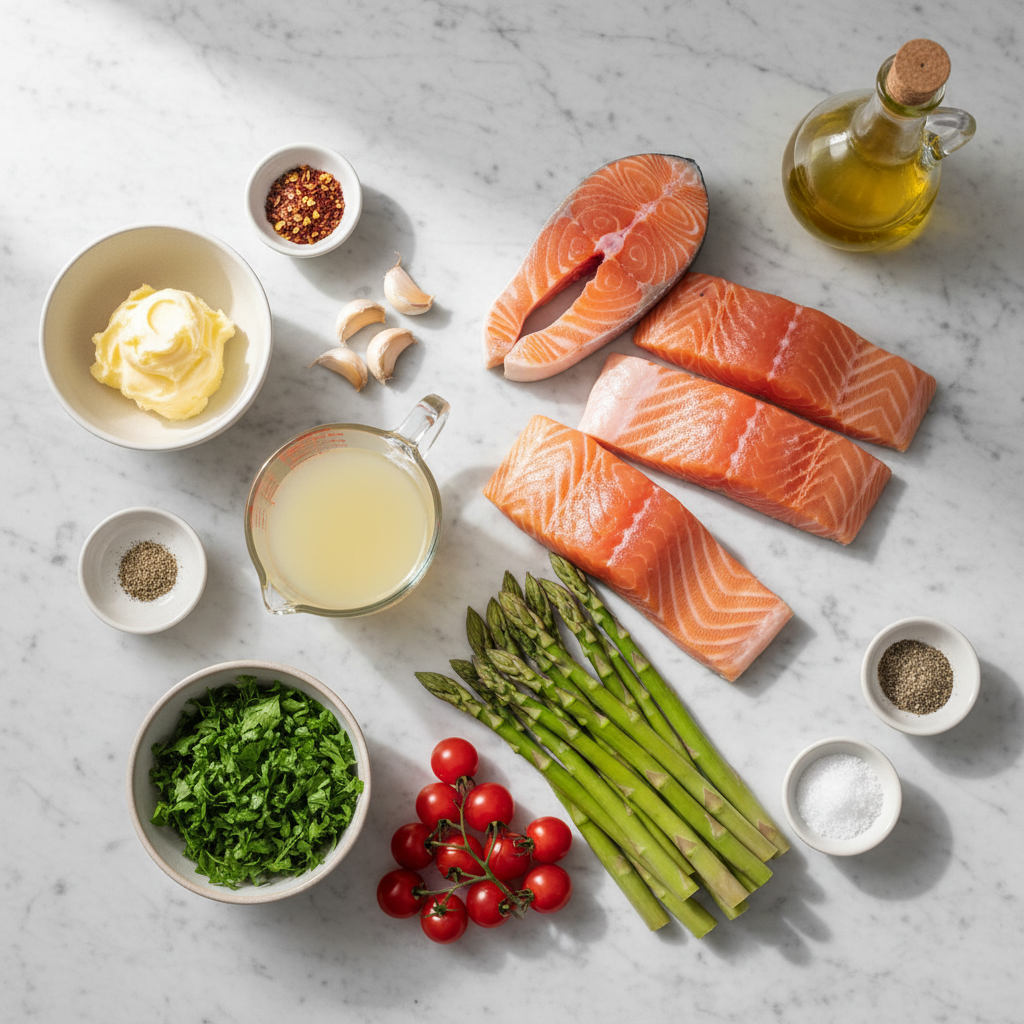
- 8 tbsp Butter (softened)
- ½ tsp Chili Flakes (more or less to taste)
- 6 cloves Garlic (minced)
- ⅓ cup Lemon Juice (about 2 lemons)
- ⅓ cup Fresh Italian Parsley (washed and finely chopped)
- 6 Salmon Filets (about 2 pounds)
- 2 lb Fresh Asparagus (washed and trimmed)
- 1 pint Cherry Tomatoes
- 1 tbsp Olive Oil
- 1 ½ tsp Salt (divided)
- ½ tsp Pepper
Ingredient Notes & Substitutions
Salmon: Aim for filets that are roughly the same thickness to ensure even cooking. For thicker cuts (1.5 inches+), you may need to adjust cooking time slightly. Guidance on selecting quality salmon filets can help ensure the best texture and flavor.
Vegetables: While asparagus and cherry tomatoes are perfect, feel free to add other quick-roasting vegetables like bell peppers, zucchini, or red onion. Ensure they are cut to a size that will cook in the same time as the salmon.
Herbs & Spices: Fresh dill or thyme can be used as alternatives or additions to parsley. Adjust chili flakes to your heat preference.
Fat: For the butter mixture, ensuring it’s softened is key for creating a smooth paste.
How to Make Sheet Pan Salmon with Asparagus and Cherry Tomatoes
Step 1: Preheat & Prep Pan
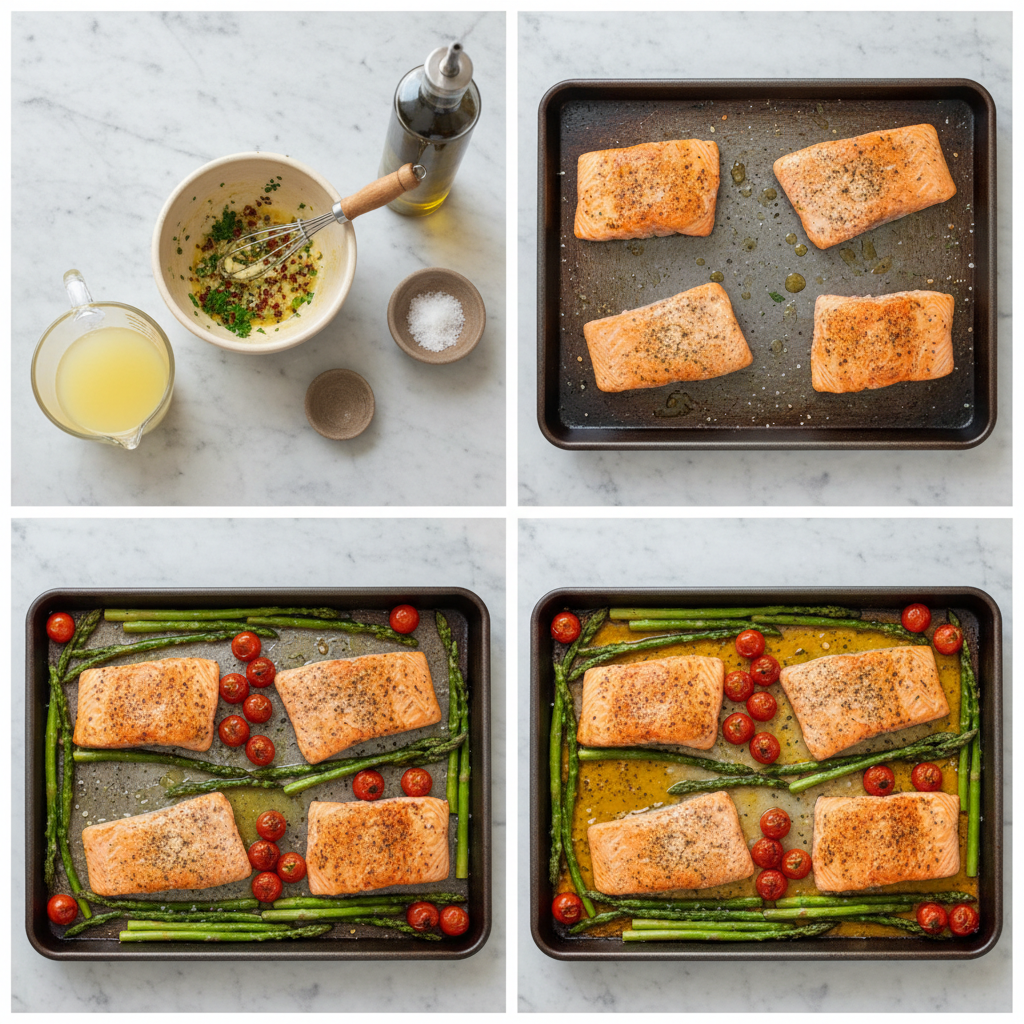
Grease a large sheet pan. Place it in the center of your oven and preheat the oven to 400°F (200°C). Preheating the pan helps to create a better sear on the salmon.
Step 2: Make Lemon-Garlic Butter
While the oven and pan are preheating, combine the softened butter, chili flakes, minced garlic, ½ teaspoon of salt, and chopped parsley in a small bowl. Stir vigorously to create a flavorful paste.
Step 3: Season the Salmon
Pat the salmon filets completely dry with paper towels – this is crucial for achieving a nice crust. Generously rub the prepared lemon-garlic butter mixture all over the top of each salmon filet.
Step 4: Arrange Salmon
Carefully remove the preheated sheet pan from the oven (use oven mitts!). Place the salmon filets, skin-side down, onto the hot pan. Ensure there’s about 1 inch of space between each filet to allow for proper roasting instead of steaming.
Step 5: Add Vegetables & Season
Arrange the trimmed asparagus and cherry tomatoes on the sheet pan around the salmon. Drizzle the vegetables with olive oil and sprinkle them evenly with the remaining 1 teaspoon of salt and ½ teaspoon of pepper. Slowly and evenly pour the lemon juice over both the salmon and the vegetables. This dish pairs wonderfully with Mediterranean orzo salad.
Step 6: Roast to Perfection
Return the sheet pan to the preheated oven. Bake for 16-20 minutes. The salmon is ready when it flakes easily with a fork and reaches an internal temperature of 145°F (63°C). The asparagus should be tender-crisp, and the tomatoes slightly blistered.
Step 7: Rest & Serve
Allow the salmon to rest on the pan for 3-5 minutes before serving. This allows the juices to redistribute, resulting in a moister fish.
The Science and Art of Sheet Pan Salmon
Why Preheating Matters: Preheating your sheet pan, especially a metal one, is key to achieving that desirable Maillard reaction on the salmon’s surface. This process creates a delicious browned crust and enhances the overall flavor profile, preventing the salmon from simply steaming.
Achieving Perfect Salmon Doneness: The 145°F internal temperature is the FDA recommendation for safely cooked fish. However, for a more tender, flaky texture often preferred in recipes, many aim for 130-140°F, allowing carryover cooking during the rest period. Understanding salmon’s specific temperature needs ensures it’s cooked through but not dry. If you’re looking for other quick salmon ideas, consider this salmon pasta recipe.
Crisp Asparagus Secrets: To prevent asparagus from becoming mushy, ensure it’s not overcrowded on the pan and is exposed to the hot oven air. Trimming the woody ends properly is also essential for a pleasant texture.
Pro Tips & Troubleshooting
Expert Tips for Success
- Pat Salmon Dry: This cannot be stressed enough – dry salmon equals a better sear and crust.
- Don’t Crowd the Pan: Ensure adequate space between ingredients for even roasting and browning.
- Use a Metal Pan: While glass or ceramic works, metal pans (like aluminum or steel) conduct heat more efficiently for superior roasting results.
- Uniform Vegetable Size: Cut thicker asparagus spears in half lengthwise to ensure they cook at the same rate as the salmon and thinner spears.
- Taste and Adjust: Seasoning is personal. Taste your lemon juice and adjust salt and pepper as needed before pouring over everything.
- Fresh is Best: Use fresh parsley for the brightest flavor in the butter mixture.
- Hot Oven, Quick Cook: A properly preheated 400°F oven is essential for this quick-cooking method.
Common Mistakes to Avoid
- Overcooking Salmon: This is the most common pitfall, leading to dry, chalky fish. Use a thermometer for accuracy.
- Not Trimming Asparagus: Leaving the tough, woody ends on asparagus makes it unpleasant to eat.
- Overcrowding the Pan: This leads to steaming rather than roasting, resulting in soggy vegetables and less flavorful salmon.
- Using a Cold Pan: Starting with a cold pan prevents the initial sear and can lead to sticking.
- Skipping the Pat-Dry Step: Wet salmon will steam, not roast, and won’t develop a nice crust.
- Uneven Slices: Cutting vegetables or salmon unevenly can lead to some pieces being perfectly cooked while others are under- or over-cooked.
Serving & Storage
Serving Ideas
As a Complete Meal: This sheet pan dish is perfectly balanced on its own. For a heartier meal, consider adding a side of Mediterranean rice.
With Grains: Serve alongside fluffy quinoa, couscous, or white rice to soak up the delicious pan juices.
With Salad: A simple green salad with a light vinaigrette complements the richness of the salmon. For a more robust salad, try our Mediterranean salad with toasted orzo.
Garnishes: Add extra fresh parsley, lemon wedges, or a sprinkle of flaky sea salt just before serving.
Storage and Make-Ahead
Refrigerator: Store leftovers in an airtight container in the refrigerator for up to 2-3 days. The cooked salmon and vegetables can be stored together.
Reheating: Gently reheat leftovers in a covered skillet over low heat with a splash of water or lemon juice, or briefly in the microwave. Avoid over-reheating, which can dry out the salmon.
Make-Ahead Prep: The lemon-garlic butter mixture can be made a day in advance and stored in the refrigerator. Wash and trim vegetables ahead of time to speed up weeknight assembly.
Conclusion
This Sheet Pan Salmon with Asparagus and Cherry Tomatoes is a testament to how simple ingredients and a straightforward cooking method can yield an incredibly flavorful and satisfying meal. Enjoy the ease of one-pan cooking and the vibrant, healthy flavors that come together beautifully in your oven. For more weeknight dinner inspiration, explore our collection of Mediterranean pasta dishes.
Frequently Asked Questions
Is it better to bake salmon in a glass or metal pan?
Metal pans generally conduct heat more efficiently and can lead to a better sear on the salmon. However, glass or ceramic pans can also be used successfully.
How long does it take to bake salmon in the oven at 400°F?
Salmon typically bakes for 12-20 minutes at 400°F, depending on the thickness of the filets. It’s done when it flakes easily with a fork or reaches an internal temperature of 145°F.
What is the best way to prepare asparagus for sheet pan cooking?
Wash the asparagus and snap or cut off the woody ends. Thicker spears might benefit from being halved lengthwise if they are very thick, to ensure even cooking with the salmon.
How do I ensure the vegetables and salmon cook at the same rate?
Cut denser vegetables to be smaller than the salmon thickness. Asparagus and cherry tomatoes generally cook relatively quickly and complement salmon well at the recommended temperature and time. Ensure salmon filets are of similar thickness.
What internal temperature should salmon reach?
The USDA recommends an internal temperature of 145°F (63°C) for safely cooked salmon. For a more tender result, many prefer to cook to 130-140°F and let carryover cooking finish the job during resting.
Can I use frozen salmon for sheet pan recipes?
It’s best to use fresh or fully thawed salmon for sheet pan meals to ensure even cooking. Thawing frozen salmon completely before cooking is essential.
How do I prevent salmon from sticking to the sheet pan?
Ensure the pan is well-greased or lined with parchment paper. Patting the salmon dry and using a preheated pan also helps significantly.
Sheet Pan Salmon with Asparagus and Cherry Tomatoes
Ingredients
Equipment
Method
- Grease a large sheet pan. Place it in the center of your oven and preheat the oven to 400°F (200°C). Preheating the pan helps to create a better sear on the salmon.
- While the oven and pan are preheating, combine the softened butter, chili flakes, minced garlic, ½ teaspoon of salt, and chopped parsley in a small bowl. Stir vigorously to create a flavorful paste.
- Pat the salmon filets completely dry with paper towels – this is crucial for achieving a nice crust. Generously rub the prepared lemon-garlic butter mixture all over the top of each salmon filet.
- Carefully remove the preheated sheet pan from the oven (use oven mitts!). Place the salmon filets, skin-side down, onto the hot pan. Ensure there’s about 1 inch of space between each filet to allow for proper roasting instead of steaming.
- Arrange the trimmed asparagus and cherry tomatoes on the sheet pan around the salmon. Drizzle the vegetables with olive oil and sprinkle them evenly with the remaining 1 teaspoon of salt and ½ teaspoon of pepper. Slowly and evenly pour the lemon juice over both the salmon and the vegetables.
- Return the sheet pan to the preheated oven. Bake for 16-20 minutes. The salmon is ready when it flakes easily with a fork and reaches an internal temperature of 145°F (63°C). The asparagus should be tender-crisp, and the tomatoes slightly blistered.
- Allow the salmon to rest on the pan for 3-5 minutes before serving. This allows the juices to redistribute, resulting in a moister fish.