
1. Introduction
Imagine a perfectly flaky salmon fillet, crowned with a crunchy, golden-brown crust of toasted walnuts, all drizzled with a vibrant lemon dill sauce. This isn’t just a meal; it’s an experience.
This recipe for walnut crusted salmon with lemon dill sauce is designed to be your new go-to for a healthy, impressive, yet incredibly simple dinner.
Whether you’re a seasoned home cook or just starting, this guide will walk you through creating a restaurant-quality dish right in your own kitchen.
We’ll cover everything from selecting the best salmon to achieving that perfect nutty crust and serving it up with flair, ensuring a delicious outcome every time.
2. Why You’ll Love This Walnut Crusted Salmon
- Flavor Sensation: The savory, slightly sweet walnut crust contrasts beautifully with the rich salmon, while the bright lemon dill sauce cuts through the richness for a perfectly balanced bite.
- Irresistible Texture: Experience the satisfying crunch of the walnut topping giving way to tender, flaky salmon – a textural delight.
- Effortless Elegance: Despite its sophisticated flavor profile, this recipe is surprisingly quick and easy, making it ideal for busy weeknights or casual entertaining.
- Healthy & Wholesome: Packed with protein and healthy fats, this easy salmon recipe is a nutritious choice for a healthy salmon dinner.
- Reliable Results: Follow these simple steps, and you’re guaranteed a delicious, perfectly cooked dish.
3. Ingredients Needed
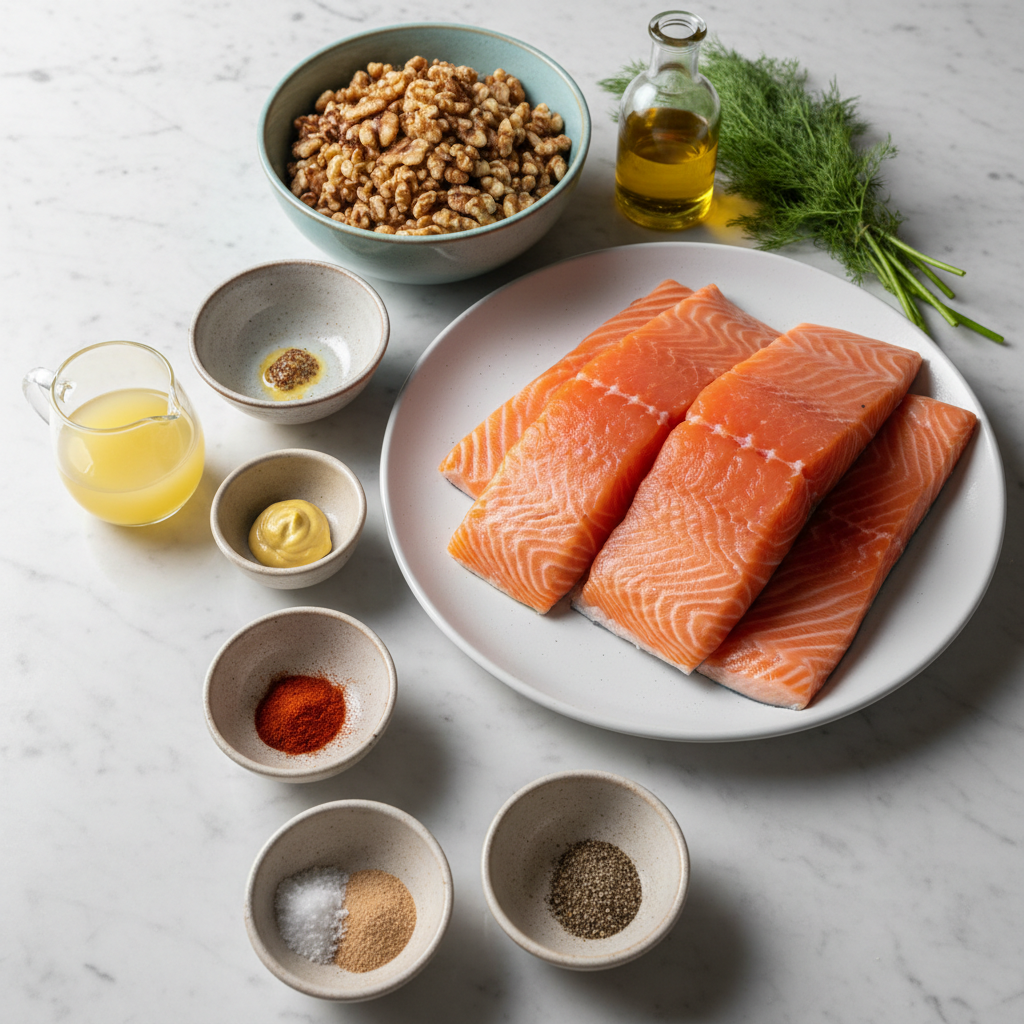
- 4 salmon filets (boneless)
- 2 tbsp dijon mustard
- Lemon juice (for garnish)
- 1/2 cup chopped walnuts
- 2 tbsp chopped fresh dill
- 1 tbsp extra virgin olive oil
- 1/2 tsp paprika
- 1/2 tsp onion powder
- 1/2 tsp sea salt
- 1/4 tsp ground black pepper
Ingredient Notes & Substitutions
Salmon: For best results, choose boneless salmon filets that are roughly the same thickness to ensure even cooking. Wild-caught or farm-raised are both suitable.
Walnuts: Ensure your walnuts are finely chopped for an even, adhering crust. Pecans or almonds can be used as substitutions.
Dijon Mustard: This acts as both a binder for the crust and a flavor enhancer. High-quality Dijon mustard will yield the best taste.
Fresh Dill: While fresh is best for bright flavor, you can substitute dried dill (use 1/3 the amount).
4. How to Make Walnut Crusted Salmon
Step 1: Prep the Oven and Salmon
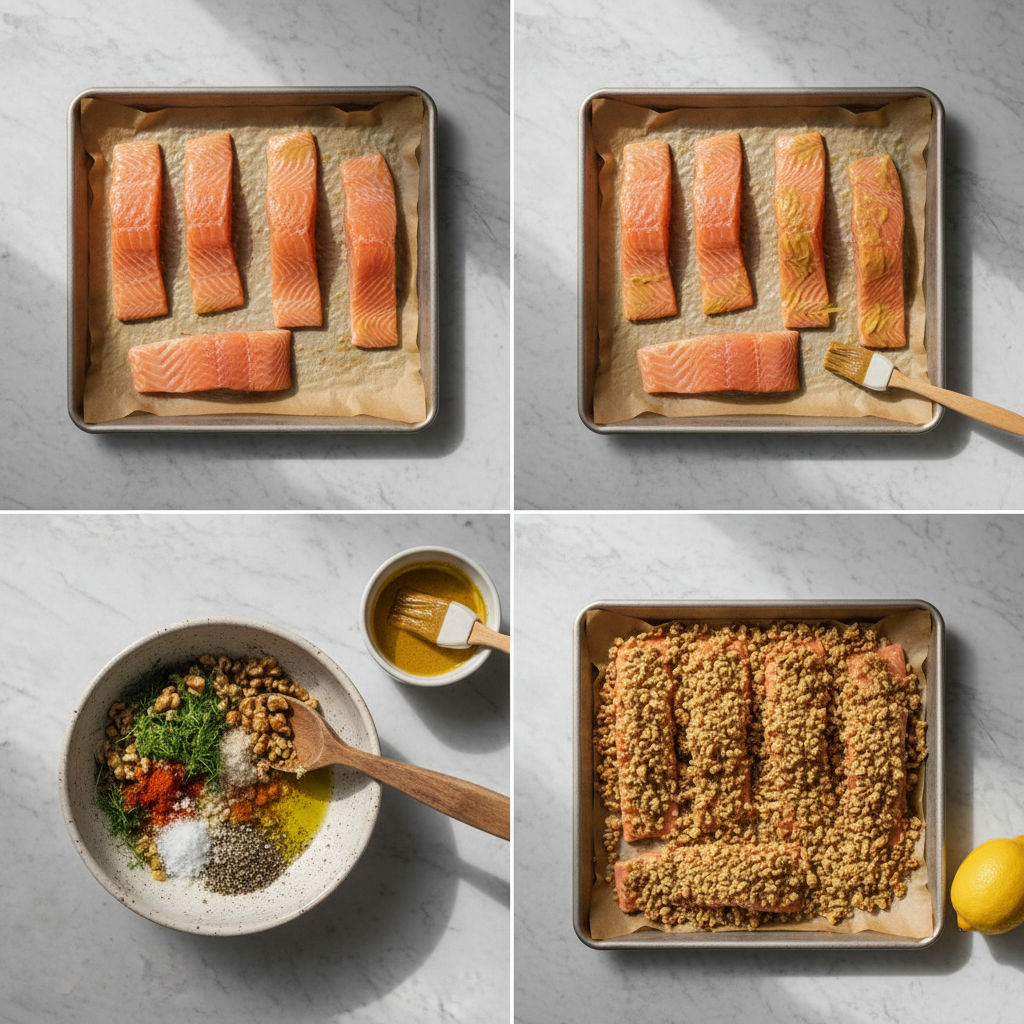
Preheat your oven to 400 degrees F. Line a baking sheet with parchment paper for easy cleanup. Thoroughly pat dry the salmon filets with paper towels – this is crucial for crust adhesion. Arrange the salmon filets on the prepared baking sheet, skin-side down.
Step 2: Apply the Binder
Generously brush the tops of each salmon filet with the Dijon mustard. Ensure an even coating.
Step 3: Create the Walnut Crust
In a small bowl, combine the chopped walnuts, fresh dill, extra virgin olive oil, paprika, onion powder, sea salt, and black pepper. Mix well until the walnuts are evenly coated with the oil and seasonings.
Step 4: Crust the Salmon
Gently press the walnut mixture onto the mustard-coated salmon filets. The mustard will act as the ‘glue’ to help the crust stick.
Step 5: Bake to Perfection
Place the baking sheet in the preheated oven. Bake for 12-15 minutes. The exact time will depend on the thickness of your salmon. The salmon is done when it is opaque and flakes easily with a fork, indicating it’s cooked through but still moist. Avoid overcooking.
Step 6: Finish and Serve
Once baked, remove the salmon from the oven. Squeeze fresh lemon juice over the crust just before serving for an extra burst of brightness.
5. Understanding the Perfect Walnut Crust
The Maillard Reaction Magic
The browning of the walnuts in the crust is a result of the Maillard reaction, a complex chemical process that occurs when food is heated. It’s responsible for creating deep, savory flavors and an appealing golden-brown color, enhancing the overall taste and aroma of your walnut crusted salmon.
The Role of Dijon Mustard
As highlighted, Dijon mustard is key. Beyond just helping the crust adhere, its tangy flavor profile complements the walnuts and salmon beautifully. It also adds a slight moisture barrier, allowing the crust to crisp rather than steam.
Achieving Optimal Crispness
Proper preparation is vital. Patting the salmon dry ensures moisture doesn’t interfere with the crust’s crisping process. Baking at the correct temperature (400 degree oven) is also essential for achieving that desirable crunchy texture. If you enjoy oven-baked dishes, consider trying our Whole30 Pumpkin Turkey Chili for another comforting meal.
6. Pro Tips & Troubleshooting
Expert Tips for Success
- Finely Chop Walnuts: Ensure walnuts are uniformly chopped for an even crust that adheres well.
- Don’t Overcook: Salmon cooks quickly. Aim for flaky and moist, not dry. Use a fork to test for flakiness.
- High-Quality Mustard: Use a good quality Dijon mustard for superior flavor.
- Even Thickness: Select salmon filets of similar thickness for consistent cooking times.
- Don’t Crowd the Pan: Give the salmon space on the baking sheet to allow heat to circulate for optimal roasting.
- Fresh Herbs Shine: Use fresh dill whenever possible for the brightest flavor profile.
- Adjust Bake Time: Be prepared to adjust baking time based on salmon thickness and your oven’s calibration.
Common Mistakes to Avoid
- Skipping the Pat-Dry Step: Leads to soggy crust and poor adhesion.
- Using Whole or Large Walnut Pieces: Results in an uneven, difficult-to-manage crust.
- Overcrowding the Baking Sheet: Causes steaming, preventing the crust from crisping.
- Overbaking the Salmon: The most common mistake, leading to dry, unappetizing fish.
- Not Pressing the Crust Firmly: May cause the topping to fall off during cooking or serving.
- Relying Solely on Time: Oven variations mean visual cues (flakiness, opacity) are more reliable than strict timing.
7. Serving & Storage
Serving Ideas
Classic Pairings: Serve with roasted asparagus, steamed green beans, or a simple side salad for a complete meal. For another healthy and flavorful side, consider our Grilled Vegetable Skewers.
Hearty Sides: Quinoa, wild rice pilaf, or lemon-herb roasted potatoes complement the salmon beautifully.
Garnish: A fresh wedge of lemon and an extra sprinkle of fresh dill elevate the presentation and flavor.
Wine Pairing: A crisp Sauvignon Blanc or a light-bodied Pinot Noir works well.
Storage and Make-Ahead
Leftovers: Store leftover walnut crusted salmon in an airtight container in the refrigerator for up to 2-3 days.
Reheating: Gently reheat in a low oven (around 300°F or 150°C) for a few minutes to warm through without drying out the fish. Alternatively, reheat in a skillet over low heat.
Make-Ahead Crust: The walnut crust mixture can be prepared up to a day in advance and stored in an airtight container in the fridge. Add to salmon just before baking for best results.
8. Frequently Asked Questions
Why pat salmon dry before crusting?
Patting the salmon dry removes surface moisture, which allows the Dijon mustard to adhere better to the fish and helps the walnut crust to crisp up during baking, rather than becoming soggy.
Can I make the walnut crust ahead of time?
Yes, you can prepare the walnut crust mixture a day in advance and store it in an airtight container in the refrigerator. However, it’s best to add it to the salmon just before baking for optimal crispness.
How do I know when the salmon is cooked?
The salmon is cooked when it is opaque and flakes easily with a fork. The internal temperature should reach 145°F (63°C) at the thickest part. The cooking time will vary based on the thickness of the filets.
What if I don’t have fresh dill?
You can substitute dried dill, using about one-third the amount of fresh dill (e.g., 2 teaspoons of dried dill for 2 tablespoons of fresh). However, fresh dill provides a brighter flavor. For more herbaceous dishes, try our Delicious Chinese Cabbage Stir-Fry.
Walnut Crusted Salmon with Lemon Dill Sauce
Ingredients
Equipment
Method
- Preheat your oven to 400 degrees F. Line a baking sheet with parchment paper for easy cleanup. Thoroughly pat dry the salmon filets with paper towels – this is crucial for crust adhesion. Arrange the salmon filets on the prepared baking sheet, skin-side down.
- Generously brush the tops of each salmon filet with the Dijon mustard. Ensure an even coating.
- In a small bowl, combine the chopped walnuts, fresh dill, extra virgin olive oil, paprika, onion powder, sea salt, and black pepper. Mix well until the walnuts are evenly coated with the oil and seasonings.
- Gently press the walnut mixture onto the mustard-coated salmon filets. The mustard will act as the 'glue' to help the crust stick.
- Place the baking sheet in the preheated oven. Bake for 12-15 minutes. The exact time will depend on the thickness of your salmon. The salmon is done when it is opaque and flakes easily with a fork, indicating it's cooked through but still moist. Avoid overcooking.
- Once baked, remove the salmon from the oven. Squeeze fresh lemon juice over the crust just before serving for an extra burst of brightness.