Introduction
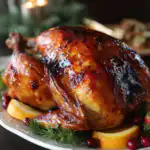
Get ready to impress your family and friends with a show-stopping easy lemon herb roasted turkey that’s incredibly simple to prepare yet bursting with bright, savory flavors. This recipe focuses on achieving a perfectly juicy turkey with delightfully crispy skin, all with minimal fuss. You’ll learn the straightforward steps to create a moist and flavorful centerpiece that will become a go-to for holiday roasts and beyond. Say goodbye to dry, bland turkey and hello to your new favorite method!
Why You’ll Love This Recipe
- Unbeatable Flavor: The combination of fresh lemon, aromatic herbs, and rich butter creates a deeply satisfying taste that permeates every bite.
- Perfectly Juicy & Crispy: Our method ensures the breast meat stays moist while the skin achieves a beautiful golden-brown crispness.
- Effortless Preparation: Designed for home cooks, the steps are clear and manageable, making roasting a whole turkey less intimidating.
- Reliable Results: We’ve incorporated foolproof techniques (like using a thermometer!) to ensure success every time, even for beginners.
- Sensory Delight: Imagine the aroma filling your kitchen and the visual appeal of a perfectly roasted bird – it’s a feast for the senses!
Ingredients Needed
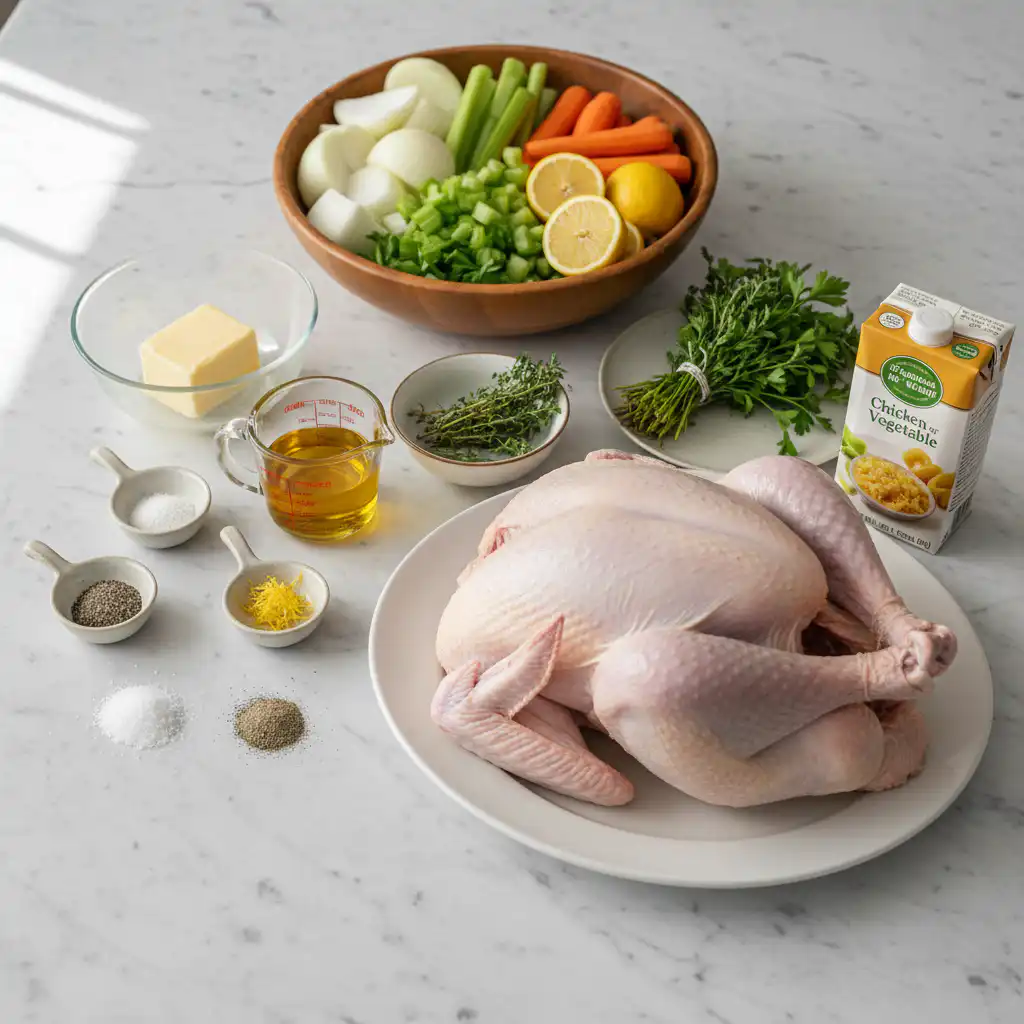
Here’s exactly what you’ll need to create this delightful lemon herb turkey:
- 1 cup softened unsalted butter
- 1 tsp kosher salt
- 1/2 tsp ground pepper
- 2 tbsp minced shallot (about 1 small shallot)
- zest from 1 lemon
- 2 tbsp extra virgin olive oil
- Leaves from 10 sprigs of fresh thyme
- 1 whole fresh turkey, 12-14lbs
- 1 cup chicken or vegetable broth
- 1 yellow onion, cut into 8 pieces
- 2 celery stalks, chopped into 8 pieces
- 2 carrots, chopped into 8 pieces
- 1/2 lemon, cut into 4 pieces
- Handful of fresh thyme & parsley
Ingredient Notes & Substitutions
Butter: While unsalted butter is specified for controlled saltiness, salted butter can be used in a pinch; just reduce the added kosher salt slightly.
Herbs: Don’t hesitate to swap or add herbs like rosemary or sage to the butter for a different aromatic profile. The provided recipe uses thyme and parsley, which are classic choices.
Citrus: While lemon is key for brightness, you could experiment with orange or lime zest and juice for a twist.
Broth: Chicken broth offers a richer flavor, but vegetable broth works well for a lighter taste or vegetarian guests.
Aromatics: The onion, celery, carrots, and lemon in the roasting pan are crucial for creating a flavorful base for gravy and adding moisture to the pan environment.
How to Make This Easy Lemon Herb Roasted Turkey
Follow these steps precisely for a foolproof roasted turkey.
Prepare the Herb Butter
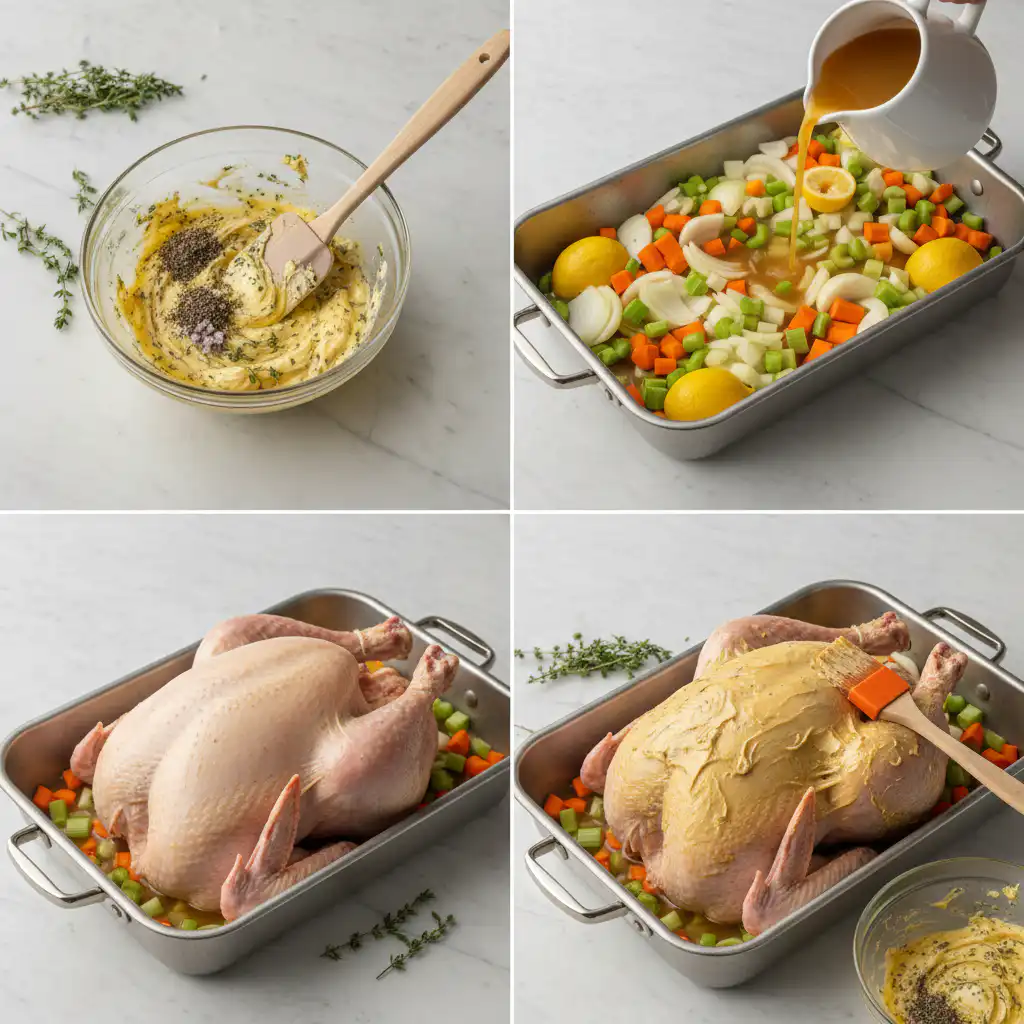
In a small bowl, stir together the softened butter, kosher salt, ground pepper, minced shallot, lemon zest, olive oil, and fresh thyme leaves until well combined. This mixture is the key to our flavorful herb butter turkey.
Temper the Turkey
Remove the turkey from the refrigerator approximately 90 minutes before you plan to roast it. Allowing it to come to room temperature promotes even cooking. While it rests, remove the neck and giblet bag from the turkey cavity and pat the entire bird thoroughly dry with paper towels – this is crucial for achieving crispy skin.
Preheat the Oven
Set your oven to 325°F (160°C). Ensure your oven rack is in the lower-middle position.
Prepare the Roasting Pan
Pour the chicken or vegetable broth into the bottom of your roasting pan. Add 4 pieces of the chopped yellow onion, the chopped celery, chopped carrots, and 2 pieces of the lemon.
Season and Stuff the Cavity
Lightly season the inside cavity of the turkey with salt and pepper. Then, stuff it with the remaining onion pieces, the other 2 lemon pieces, and the handfuls of fresh thyme and parsley. These aromatics infuse the turkey from the inside out.
Truss and Position
Ensure the turkey is patted dry one last time. Tie the legs together snugly with kitchen twine. Place the prepared turkey breast-side up in the roasting pan on top of the vegetables and broth.
Apply the Herb Butter
Gently use your fingers to spread the prepared herb butter evenly all over the outside of the turkey, getting under the skin where possible for maximum flavor infusion. If the butter is too firm, briefly microwave it for 20-30 seconds until spreadable, or use a basting brush.
Baste During Roasting
Approximately 3-4 times during the cooking process, carefully spoon or baste the pan juices over the turkey. This adds moisture and helps create a beautiful glaze.
Manage Browning
About halfway through the estimated cooking time, check the color of the turkey skin. If it’s browning too quickly, loosely tent the breast area with aluminum foil to prevent overcooking and burning.
Roast to Perfection & Rest
Continue roasting until a meat thermometer inserted into the thickest part of the thigh (without touching the bone) registers 165°F (74°C). A general guideline is 13-15 minutes per pound for a 12-14lb bird, but always rely on your thermometer. Once done, remove the turkey from the oven and let it rest, loosely tented with foil, for at least 20 minutes before carving. This resting period is vital for a juicy bird.
Unlocking the Secrets to a Perfect Roast
The Science Behind Crispy, Flavorful Skin
The herb butter isn’t just for show! The fat in the butter helps to crisp the skin, while the herbs, lemon zest, and shallot infuse it with aromatic flavor. Patting the turkey thoroughly dry beforehand is non-negotiable; moisture is the enemy of crispiness. The olive oil in the butter also aids in achieving that desirable golden-brown hue.
Leveraging Your Roasting Pan Aromatics
The chopped onion, celery, carrots, and lemon pieces in the bottom of the roasting pan do more than just elevate the turkey. They release moisture and flavor during cooking, creating a rich foundation for pan drippings. These drippings, combined with the broth, are essential for basting and later creating a delicious gravy. The lemon, in particular, adds a subtle brightness to the steam that circulates around the bird.
Pro Tips & Troubleshooting
Expert Tips for Success
- Thermometer is Key: Always use an instant-read meat thermometer. It’s the only way to guarantee your turkey is safely cooked and not overdone.
- Don’t Skip Resting: Resting the turkey is as crucial as roasting it. It allows the juices to redistribute, ensuring a moist and tender bird.
- Room Temperature Bird: Bringing the turkey to room temperature before roasting helps it cook more evenly, preventing the outside from drying out before the inside is cooked.
- Trussing for Even Cooking: Tying the legs together (trussing) helps the turkey cook more uniformly and presents a neater appearance.
- Basting for Moisture: While the herb butter adds a lot, occasional basting with pan juices helps keep the breast meat moist.
- Adjust for Turkey Size: While we provide guidelines, cooking times vary. Adjust based on your specific turkey’s weight and your oven’s calibration.
Common Mistakes to Avoid
- Crowding the Pan: Ensure adequate space around the turkey in the roasting pan for even heat circulation.
- Not Patting Dry: Skipping the pat-down step is a primary cause of pale, flabby skin.
- Opening Oven Door Too Often: Frequent peeking lowers the oven temperature, extending cooking time and potentially affecting results.
- Undercooking: Relying solely on time and not a thermometer can lead to undercooked, unsafe meat.
- Overcooking: The most common mistake, resulting in dry, tough turkey. Use that thermometer!
- Not Letting it Rest: Carving too soon allows all the delicious juices to run out onto the cutting board.
Serving & Storage
Serving Ideas
This lemon herb roasted turkey is a versatile centerpiece. Serve it with classic Thanksgiving turkey sides such as:
- Creamy Mashed Potatoes
- Homemade Gravy (made from the pan drippings!)
- Savory Bread Stuffing
- Cranberry Sauce
- Roasted Root Vegetables
- Green Bean Casserole
A crisp white wine or a light-bodied red pairs beautifully with the lemon and herb notes. For more flavorful dishes, explore our Mediterranean rice recipe.
Storage and Make-Ahead
Make-Ahead Herb Butter: The herb butter can be prepared up to 2 days in advance and stored in an airtight container in the refrigerator. Let it soften slightly before using.
Leftovers: Store leftover cooked turkey tightly wrapped or in an airtight container in the refrigerator for up to 3-4 days.
Reheating: Reheat slices gently in the oven (covered with foil and a splash of broth) at a low temperature (around 300°F / 150°C) until warmed through to maintain moisture.
Conclusion
This easy lemon herb roasted turkey recipe proves that impressive holiday meals don’t have to be complicated. With its bright flavors, incredibly moist meat, and perfectly crisp skin, this method delivers a foolproof and delicious centerpiece. Enjoy the simplified process and the spectacular results that will have everyone asking for seconds!
Frequently Asked Questions
- Q: What is the best temperature for roasting an easy lemon herb turkey?
- A: The recommended oven temperature for this recipe is 325°F (160°C). This moderate temperature allows the turkey to cook through evenly without drying out.
- Q: How long will a 12-14lb turkey take to roast?
- A: You can estimate about 13-15 minutes per pound. For a 12-14lb bird, this would be approximately 3 to 3.5 hours. However, always rely on a meat thermometer for accuracy – the final temperature is what matters most.
- Q: How do I know when the turkey is done cooking?
- A: The turkey is done when the internal temperature reaches 165°F (74°C) in the thickest part of the thigh, without touching the bone. Using a meat thermometer is the most reliable method.
- Q: Why should I let the turkey rest?
- A: Resting the turkey allows the juices to redistribute throughout the meat after cooking, resulting in a more moist and tender bird when carved. Tent it loosely with foil for at least 20 minutes.
- Q: Can I make the lemon herb butter ahead of time?
- A: Yes, the herb butter can be made a day in advance and stored in the refrigerator. Let it soften at room temperature or gently warm it before applying to the turkey for easier spreading.
- Q: What can I put inside the turkey cavity for flavor?
- A: For this recipe, we stuff the cavity with onion pieces, lemon pieces, and fresh thyme and parsley sprigs. These aromatics add depth to the turkey’s flavor as it roasts. For other flavorful options, consider recipes like our Mediterranean Crockpot Lemon Herb Chicken.
- Q: How do I keep my turkey moist when roasting?
- A: Key steps include letting the turkey come to room temperature before roasting, generously applying the herb butter, basting with pan juices, and importantly, not overcooking it. Always use a meat thermometer to ensure it’s cooked perfectly to 165°F.
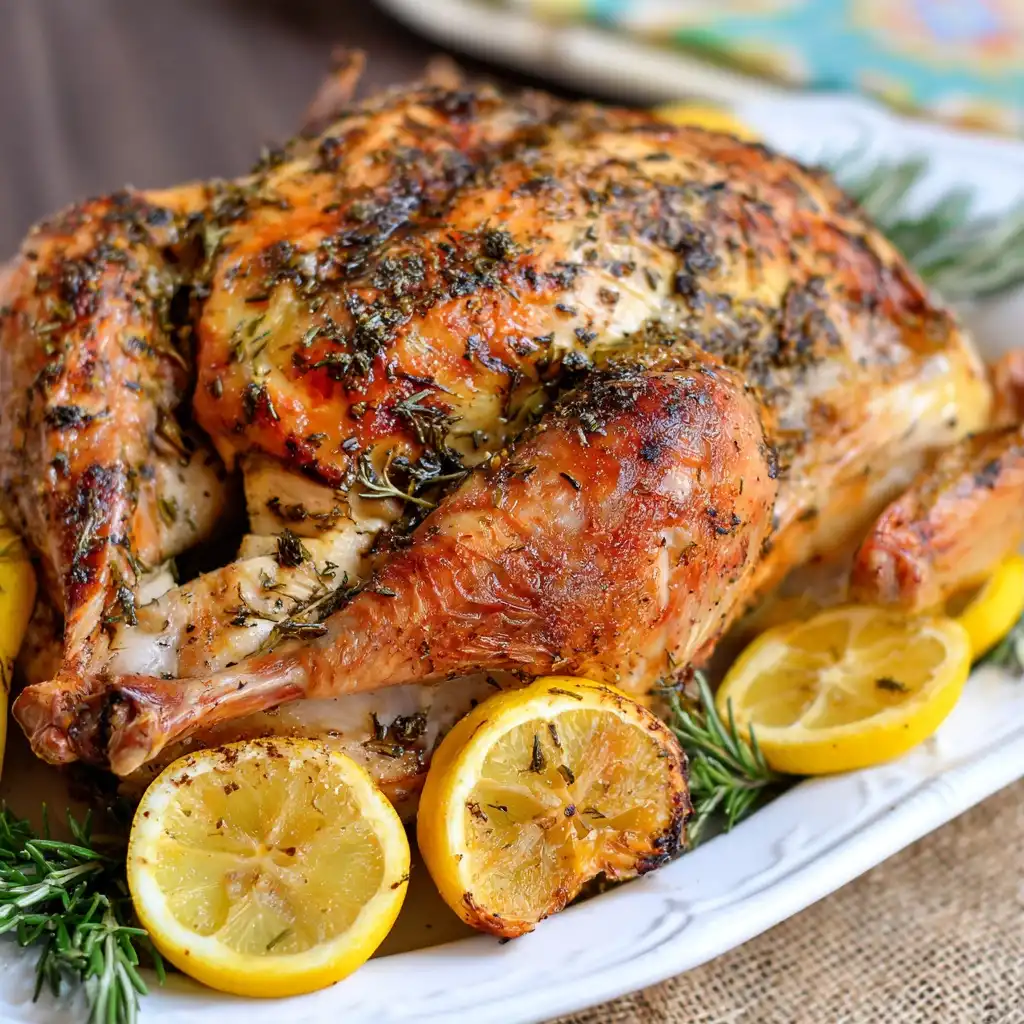
Easy Lemon Herb Roasted Turkey
Ingredients
Equipment
Method
- In a small bowl, stir together the softened butter, kosher salt, ground pepper, minced shallot, lemon zest, olive oil, and fresh thyme leaves until well combined.
- Remove the turkey from the refrigerator approximately 90 minutes before you plan to roast it. Allowing it to come to room temperature promotes even cooking. While it rests, remove the neck and giblet bag from the turkey cavity and pat the entire bird thoroughly dry with paper towels – this is crucial for achieving crispy skin.
- Set your oven to 325°F (160°C). Ensure your oven rack is in the lower-middle position.
- Pour the chicken or vegetable broth into the bottom of your roasting pan. Add 4 pieces of the chopped yellow onion, the chopped celery, chopped carrots, and 2 pieces of the lemon.
- Lightly season the inside cavity of the turkey with salt and pepper. Then, stuff it with the remaining onion pieces, the other 2 lemon pieces, and the handfuls of fresh thyme and parsley. These aromatics infuse the turkey from the inside out.
- Ensure the turkey is patted dry one last time. Tie the legs together snugly with kitchen twine. Place the prepared turkey breast-side up in the roasting pan on top of the vegetables and broth.
- Gently use your fingers to spread the prepared herb butter evenly all over the outside of the turkey, getting under the skin where possible for maximum flavor infusion. If the butter is too firm, briefly microwave it for 20-30 seconds until spreadable, or use a basting brush.
- Approximately 3-4 times during the cooking process, carefully spoon or baste the pan juices over the turkey. This adds moisture and helps create a beautiful glaze.
- About halfway through the estimated cooking time, check the color of the turkey skin. If it's browning too quickly, loosely tent the breast area with aluminum foil to prevent overcooking and burning.
- Continue roasting until a meat thermometer inserted into the thickest part of the thigh (without touching the bone) registers 165°F (74°C). A general guideline is 13-15 minutes per pound for a 12-14lb bird, but always rely on your thermometer. Once done, remove the turkey from the oven and let it rest, loosely tented with foil, for at least 20 minutes before carving. This resting period is vital for a juicy bird.