
This stunning Herb Crusted Rack of Lamb is the perfect centerpiece for your Thanksgiving dinner. It’s an elegant yet approachable dish that delivers incredible flavor and a memorable dining experience.
Why You’ll Love This Recipe
- Impressive Presentation: A frenched rack of lamb is a showstopper, perfect for holiday gatherings.
- Flavor Explosion: The savory herb crust combined with tender, juicy lamb creates an unforgettable taste.
- Perfectly Cooked Every Time: This recipe guides you through searing, roasting, and resting for foolproof results.
- Holiday Ready: An elegant yet approachable main course that elevates your Thanksgiving table.
- Quick & Easy: Despite its sophisticated appearance, this dish comes together efficiently, freeing you up for other holiday preparations.
Ingredients Needed
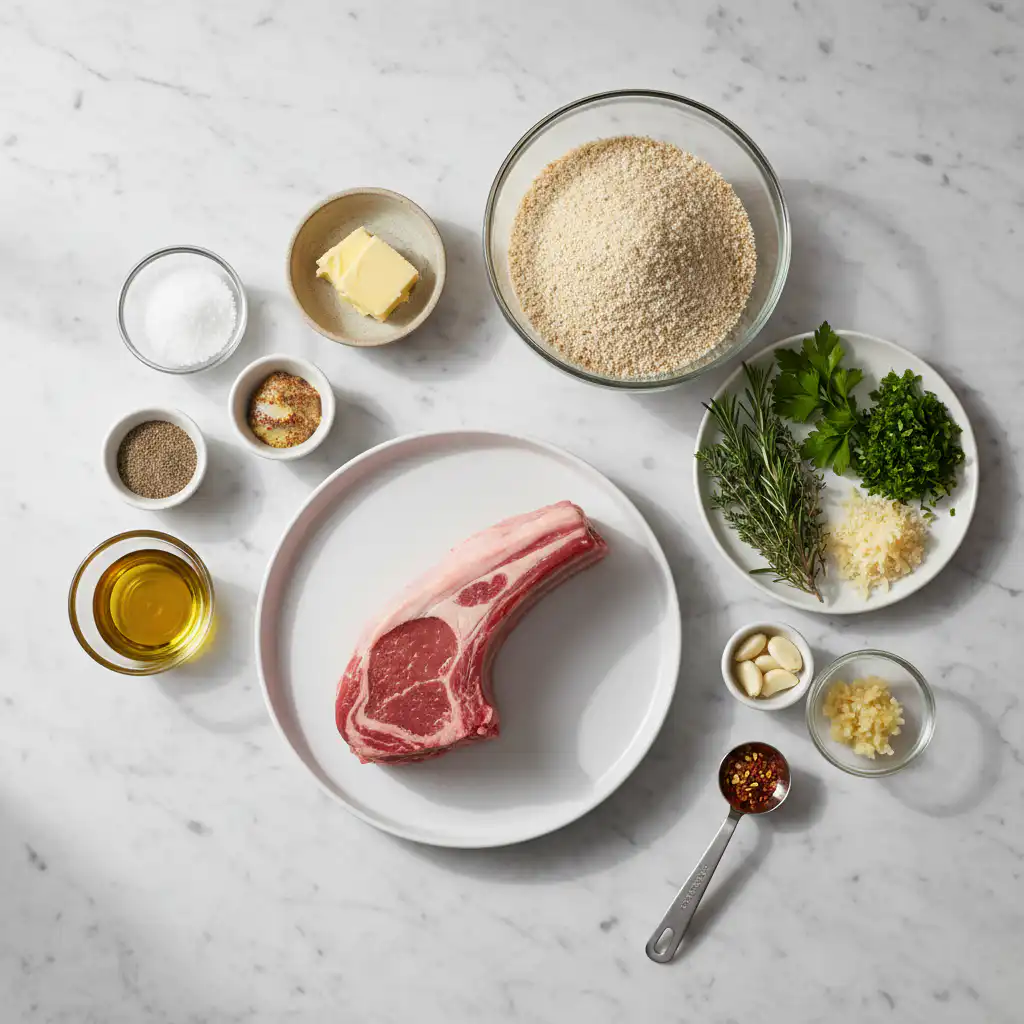
- 1 rack of lamb, frenched with fat cap removed
- 2 tsp. salt
- 1 tsp. pepper
- 1 Tbsp. Olive oil
- 2 Tbsp. unsalted butter
- 2 Tbsp. Dijon mustard
- 1 cup Panko breadcrumbs
- 2 sprigs fresh rosemary (stems removed)
- 2 sprigs fresh thyme (stems removed)
- 2 Tbsp. parsley, fresh, chopped
- 2 Tbsp. freshly grated Parmesan
- 2 cloves garlic
- 1 tsp. olive oil (just enough for the crust to come together a little bit)
- optional: pinch of red pepper chili flakes
Ingredient Notes & Substitutions
Frenched Lamb: Ensure your rack of lamb is frenched for an elegant presentation and easier handling. If yours isn’t, you can ask your butcher to do it, or learn to french it yourself (see gap-filling section).
Herbs: While rosemary and thyme are classic, feel free to experiment with other fresh herbs like chives or marjoram for a unique twist.
Breadcrumbs: Panko breadcrumbs provide a delightful crispness. Regular breadcrumbs can be used for a finer texture.
Mustard: Dijon mustard acts as the perfect binder for the herb crust. If you prefer a different flavor, whole grain mustard can be substituted.
How to Make Herb Crusted Rack of Lamb for Thanksgiving
Preheat Oven & Prep Lamb
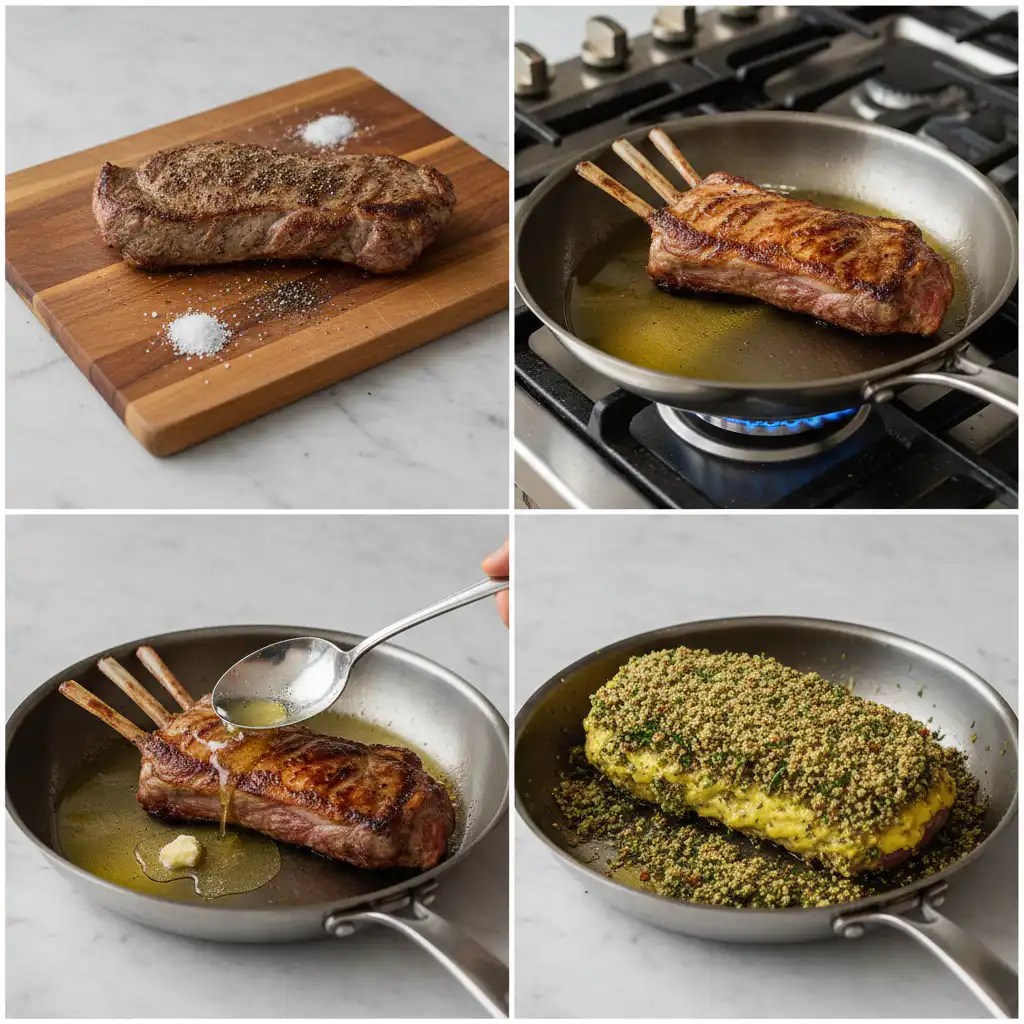
Preheat your oven to 425 degrees F (220°C). Generously season all sides of the rack of lamb with salt and pepper. Don’t be shy; good seasoning is key!
Sear the Lamb
In an oven-safe skillet, heat 1 Tbsp. olive oil over medium-high heat until shimmering. Carefully place the seasoned lamb rack, fat-side down, into the hot skillet. Sear each side for about 1-2 minutes until a beautiful golden-brown crust forms. Keep a close eye on it to prevent burning.
Baste with Butter
As you sear the lamb, add the 2 Tbsp. of unsalted butter to the skillet. Tilt the pan and use a spoon to baste the melting butter over the lamb. This adds richness and helps with browning.
Initial Roast
Transfer the oven-safe skillet with the seared lamb directly into the preheated oven. Roast for 10-12 minutes.
Prepare the Herb Crust
While the lamb is roasting, quickly prepare the herb crust. In a food processor, combine the Panko breadcrumbs, fresh rosemary leaves, fresh thyme leaves, chopped parsley, grated Parmesan cheese, minced garlic, and the additional 1 tsp. olive oil. Add the optional red pepper chili flakes if desired. Pulse until the mixture is crumbly and well combined. Be careful not to process; it should not be wet.
Apply Dijon Binder
Remove the lamb from the oven. Using a pastry brush, generously coat the herb-crusted side (the top) of the lamb with the 2 Tbsp. of Dijon mustard. This ensures the crust adheres beautifully.
Crust the Lamb
Evenly press the prepared herb crust mixture onto the Dijon-coated side of the lamb rack, creating a thick, even layer.
Final Roast
Carefully place the herb-crusted lamb back into the oven. Roast for an additional 8-10 minutes, or until an instant-read thermometer inserted into the thickest part of the meat (avoiding bone) registers 135-140°F (57-60°C) for medium-rare to medium. Remember, the internal temperature will rise during resting.
Rest the Lamb
Transfer the roasted lamb rack to a cutting board. Tent loosely with foil and let it rest for at least 10 minutes. This crucial step allows the juices to redistribute, ensuring a tender and moist result. The internal temperature will continue to rise to the final desired 145°F (63°C).
Slice and Serve
After resting, slice the rack of lamb between the bones into individual chops and serve immediately. For a complete Thanksgiving meal, consider pairing it with mediterranean roasted vegetables or a hearty high-protein soup.
Mastering Your Herb Crusted Rack of Lamb
The Art of Frenched Lamb and Fat Cap Management
Why Frenched is Preferred: Frenched lamb racks expose the ends of the bones, offering a clean, elegant presentation that’s easy to handle and carve at the table. It’s a classic touch for holiday meals.
How to French (If Necessary): If your rack isn’t frenched, you can do it yourself. Carefully use a sharp boning knife to scrape the meat and connective tissue away from the top 2-3 inches of each rib bone, creating a clean “handle.” This requires a steady hand and a sharp knife.
Fat Cap Considerations: While removing the thick fat cap can prevent excess grease, leaving a thin, even layer can add flavor and moisture during roasting. Score the remaining fat cap lightly in a crosshatch pattern to help it render without making the crust slide off.
Perfecting the Sear and Baste
Achieving the Sear: Ensure your skillet is hot before adding the lamb. A good sear creates the Maillard reaction, developing a deep, savory flavor base and beautiful color.
The Power of Basting: Basting the lamb with the melting butter during searing not only adds richness but also helps achieve an even golden-brown hue across the surface.
Visual Cues: Look for a deep, golden-brown color on all seared sides. This indicates good flavor development and a nice textural contrast to the tender interior.
Pro Tips & Troubleshooting
Expert Tips for Success
- Crust Consistency: The herb crust mixture should be crumbly, not wet. If it seems too moist, add a few more Panko breadcrumbs.
- Even Coating: Press the herb crust gently but firmly onto the Dijon-coated lamb to ensure it adheres well and creates a solid crust.
- Herb Vibrancy: Use fresh herbs for the brightest flavor and aroma in your crust.
- Don’t Overcrowd: If cooking multiple racks, ensure they have enough space in the oven for even cooking and browning.
- Temperature is Key: Use a reliable meat thermometer to ensure your lamb reaches the desired doneness. Pull it out slightly before your target temperature as it will continue cooking while resting.
Common Mistakes to Avoid
- Skipping the Sear: Failing to sear the lamb properly results in a pale exterior and less developed flavor.
- Overcooking: Be vigilant with the roasting times. Overcooked lamb becomes dry and tough.
- Forgetting to Rest: Resting is non-negotiable for a juicy rack of lamb. Skipping it means losing all the precious juices onto the cutting board.
- Wet Crust: A crust mixture that’s too wet won’t adhere properly or crisp up during cooking.
- Uneven Thickness: Racks of lamb can vary in thickness. Adjust cooking times accordingly, using a thermometer as your guide.
Serving & Storage
Thanksgiving Serving Ideas
Classic Sides: Complement the rich lamb with creamy mashed potatoes, roasted root vegetables (like carrots and parsnips), or Brussels sprouts. For lighter options, consider a mediterranean bean salad.
Sauces: A red wine reduction sauce, a classic mint sauce, or a simple pan jus enhances the lamb beautifully.
Greens: Offer a vibrant green side like asparagus or green beans almondine. A mediterranean soup could also be a delightful starter.
Wine Pairings: Consider a medium-bodied red wine like Pinot Noir or a Bordeaux blend, which complement the richness of the lamb without overpowering it.
Storage and Make-Ahead
Make-Ahead Crust: The herb crust mixture can be prepared up to 1 day in advance and stored in an airtight container in the refrigerator. You may need to add a tiny bit more olive oil to loosen it before applying.
Leftovers: Store leftover cooked rack of lamb in an airtight container in the refrigerator for up to 3 days. Reheat gently in a moderate oven (around 300°F/150°C) to maintain moisture.
Conclusion
This Herb Crusted Rack of Lamb is more than just a recipe; it’s a guaranteed way to impress your guests and create a memorable centerpiece for your Thanksgiving feast. With its stunning presentation, incredible flavor, and foolproof method, it’s destined to become a holiday favorite. For those seeking lighter but still satisfying holiday options, explore recipes like healthy mediterranean chicken orzo or a flavorful mediterranean cod.
Frequently Asked Questions
What is the internal temperature for medium-rare, medium, and well-done rack of lamb?
For medium-rare, aim for 130-135°F (54-57°C). Medium is 135-140°F (57-60°C). For medium-well, aim for 140-145°F (60-63°C). Remember that the temperature will rise 5-10 degrees during resting.
How do I ensure the herb crust sticks to the lamb?
Applying a binder like Dijon mustard after searing and before coating with the herb crust is key. Gently press the crust onto the lamb to help it adhere.
Can I prepare the herb crust in advance?
Yes, the herb crust mixture can be made a day ahead and stored in an airtight container in the refrigerator. You may need to add a touch more olive oil to moisten it slightly before applying.
Why is resting the lamb so important?
Resting allows the muscle fibers to relax, redistributing the juices throughout the meat. Skipping this step will result in the juices running out when you slice the lamb, making it drier.
How long does it take to cook a rack of lamb?
The total cooking time is approximately 20-25 minutes (10-12 minutes initial roast + 8-10 minutes final roast), plus resting time. This can vary based on the thickness of the rack and your oven.
What temperature should lamb be cooked to for Thanksgiving?
For Thanksgiving, a medium to medium-rare (135-140°F or 57-60°C) is generally preferred for optimal tenderness and juiciness. Always allow for carryover cooking during the resting period.
How do you make herb crust for lamb?
You combine fresh herbs (like rosemary, thyme, parsley), Panko breadcrumbs, Parmesan cheese, garlic, and a little olive oil in a food processor and pulse until crumbly.
How to prevent herb crust from falling off lamb?
Ensure the lamb is properly seared, apply a binder like Dijon mustard to the seared surface, and gently but firmly press the herb crust onto the mustard layer.
Herb Crusted Rack of Lamb for Thanksgiving
Ingredients
Equipment
Method
- Preheat your oven to 425 degrees F (220°C). Generously season all sides of the rack of lamb with salt and pepper. Don't be shy; good seasoning is key!
- In an oven-safe skillet, heat 1 Tbsp. olive oil over medium-high heat until shimmering. Carefully place the seasoned lamb rack, fat-side down, into the hot skillet. Sear each side for about 1-2 minutes until a beautiful golden-brown crust forms. Keep a close eye on it to prevent burning.
- As you sear the lamb, add the 2 Tbsp. of unsalted butter to the skillet. Tilt the pan and use a spoon to baste the melting butter over the lamb. This adds richness and helps with browning.
- Transfer the oven-safe skillet with the seared lamb directly into the preheated oven. Roast for 10-12 minutes.
- While the lamb is roasting, quickly prepare the herb crust. In a food processor, combine the Panko breadcrumbs, fresh rosemary leaves, fresh thyme leaves, chopped parsley, grated Parmesan cheese, minced garlic, and the additional 1 tsp. olive oil. Add the optional red pepper chili flakes if desired. Pulse until the mixture is crumbly and well combined. Be careful not to process; it should not be wet.
- Remove the lamb from the oven. Using a pastry brush, generously coat the herb-crusted side (the top) of the lamb with the 2 Tbsp. of Dijon mustard. This ensures the crust adheres beautifully.
- Evenly press the prepared herb crust mixture onto the Dijon-coated side of the lamb rack, creating a thick, even layer.
- Carefully place the herb-crusted lamb back into the oven. Roast for an additional 8-10 minutes, or until an instant-read thermometer inserted into the thickest part of the meat (avoiding bone) registers 135-140°F (57-60°C) for medium-rare to medium. Remember, the internal temperature will rise during resting.
- Transfer the roasted lamb rack to a cutting board. Tent loosely with foil and let it rest for at least 10 minutes. This crucial step allows the juices to redistribute, ensuring a tender and moist result. The internal temperature will continue to rise to the final desired 145°F (63°C).
- After resting, slice the rack of lamb between the bones into individual chops and serve immediately. For a complete Thanksgiving meal, consider pairing it with mediterranean roasted vegetables or a hearty high-protein soup.