
This recipe delivers meltingly tender, fall-off-the-bone braised short ribs with a rich, deeply flavored sauce, making it a show-stopping main course for your Thanksgiving dinner. We’ll guide you through every step to ensure a delicious and stress-free holiday meal.
Why You’ll Love This Thanksgiving Braised Short Ribs Recipe
- Unbeatable Flavor & Texture: Experience the magic of slow braising, where the beef becomes incredibly tender and absorbs all the complex flavors of the red wine and beef stock. The Maillard reaction during searing creates a rich, caramelized exterior.
- Hands-Off Cooking: Once seared and prepped, this recipe requires minimal attention, allowing you to focus on other Thanksgiving preparations.
- Make-Ahead Magic: This dish is perfect for preparing a day or two in advance, making your Thanksgiving Day less hectic and allowing flavors to meld even further.
- Impressive Holiday Main: Elevate your holiday table with a sophisticated yet comforting dish that is sure to wow your guests.
- Adaptable: While designed for a Dutch oven, this recipe can be adapted for a slow cooker.
Ingredients Needed for Braised Short Ribs
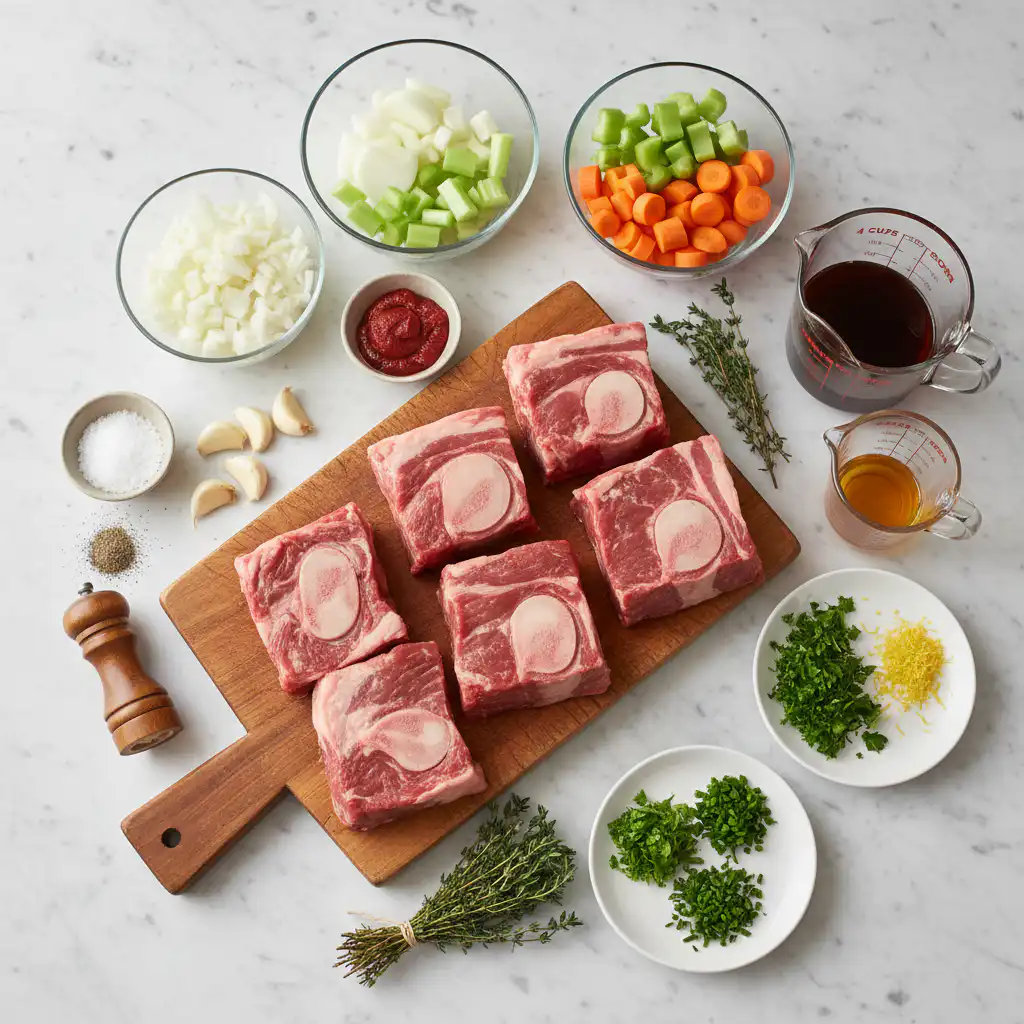
- 2 tablespoons vegetable oil
- 5 pounds bone-in short ribs, at least 1 ½ inches thick
- Kosher salt and freshly ground pepper
- 2 large heads garlic, halved crosswise
- 1 medium onion (about 10 ounces), chopped
- 4 ribs celery (about 8 ounces, chopped)
- 2 medium carrots (about 6 ounces), chopped
- 3 tablespoons tomato paste
- 2 cups dry red wine (about half a bottle)
- 2 cups beef stock or bone broth (use beef bouillon dissolved in water if unavailable; chicken stock will work in a pinch), plus more as needed
- 4 sprigs thyme
- 1 cup parsley, coarsely chopped
- ½ cup finely chopped chives
- 1 tablespoon finely grated lemon zest
Ingredient Notes & Substitutions
Choosing Short Ribs: For the best results, select thick, meaty bone-in short ribs. They will shrink during cooking, so starting with a generous amount is key.
Braising Liquid: While dry red wine like Cabernet Sauvignon, Merlot, or Pinot Noir is recommended for depth, you can use other braising liquids if needed. If red wine is not an option, consider using additional beef stock with a splash of balsamic vinegar or red wine vinegar for acidity.
Beef Stock: High-quality beef stock or bone broth is ideal. If unavailable, dissolve beef bouillon in hot water according to package directions. Chicken stock can be used in a pinch, but will alter the flavor profile.
How to Make Thanksgiving Braised Short Ribs
Preheat & Sear the Ribs
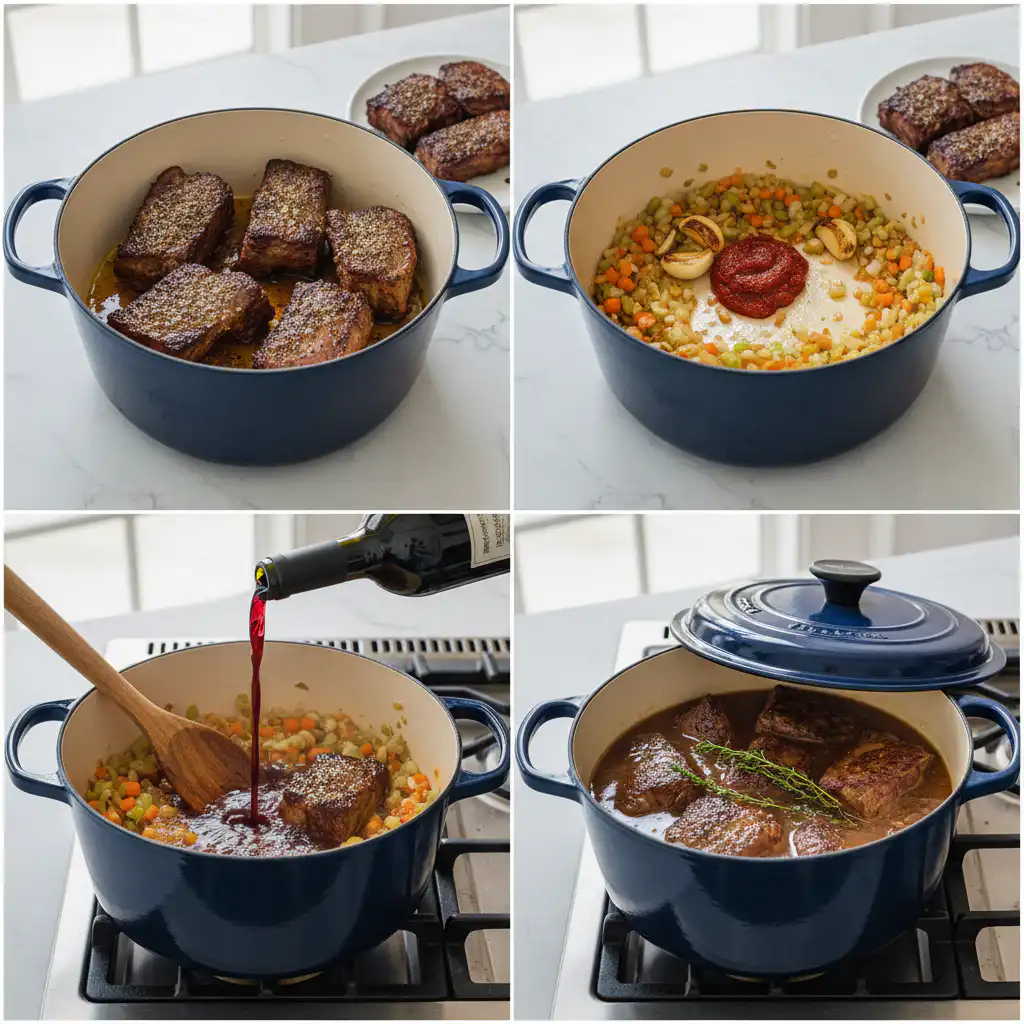
Preheat your oven to 275°F (135°C). Heat vegetable oil in a large Dutch oven over medium-high heat. Generously season the short ribs with kosher salt and freshly ground pepper. Working in batches to avoid overcrowding the pot (which causes steaming instead of searing), sear the short ribs on all sides until deeply and evenly browned, about 6 to 8 minutes per batch. Transfer the seared ribs to a large plate.
Sauté Aromatics & Develop Flavor
Pour off all but 2 tablespoons of the rendered fat from the Dutch oven, leaving the flavorful browned bits (fond) behind. Reduce the heat to medium. Add the garlic halves, cut-side down, and cook undisturbed until golden brown, about 1 to 2 minutes. Add the chopped onion, celery, and carrots, and season with salt and pepper. Sauté, tossing occasionally, until the vegetables are softened but not yet browned, about 5 to 10 minutes. Stir in the tomato paste, ensuring it coats the vegetables. Continue to cook, stirring, for another 2 to 3 minutes until the tomato paste begins to caramelize slightly at the bottom of the pot.
Deglaze & Build the Braising Liquid
Pour in the red wine. Using a wooden spoon, scrape up any browned bits stuck to the bottom of the pot – this is crucial for flavor! Let the wine simmer and reduce slightly for 2 to 3 minutes to cook off some of the alcohol. Stir in the beef stock and thyme sprigs.
Braise the Short Ribs
Return the seared short ribs to the Dutch oven, along with any accumulated juices from the plate. Nestle the ribs into the liquid, ensuring they are mostly submerged. If needed, add a little more beef stock or water to cover. Bring the liquid to a gentle simmer on the stovetop, then cover the Dutch oven tightly and transfer it to the preheated oven.
Cook Until Tender
Braise undisturbed for 3½ to 4 hours, or until the short ribs are meltingly tender and the meat easily shreds with a fork, practically falling off the bone.
Finish & Serve
Carefully remove the short ribs from the pot using tongs and transfer them to a serving platter, being mindful not to dislodge the bones if presentation is key. At this point, you can strain the braising liquid to remove the cooked vegetables for a smoother sauce, or serve as is. Skim any excess fat from the surface of the sauce. Stir in the fresh parsley, chives, and lemon zest. Taste and adjust seasoning with salt and pepper. Spoon the rich sauce over the short ribs.
The Science Behind Perfect Braised Short Ribs
Braising is a cooking technique that relies on time and moisture to transform tougher cuts of meat into something incredibly tender and flavorful. The magic happens through two primary scientific processes:
- The Maillard Reaction: This is the browning reaction that occurs when searing the short ribs. It’s responsible for creating hundreds of new flavor compounds, resulting in that deep, savory, and slightly sweet taste you associate with perfectly cooked meat. Proper searing is non-negotiable for maximum flavor.
- Collagen Breakdown: Tougher cuts like short ribs contain a lot of connective tissue, primarily collagen. During the long, slow braising process in a moist environment, this collagen breaks down into gelatin. Gelatin adds richness and body to the braising liquid and contributes to the meltingly tender texture of the meat. Ensuring the ribs are submerged in liquid is key for this breakdown to occur evenly.
Pro Tips & Troubleshooting
Expert Tips for Success
- Thick Ribs are Best: Opt for the thickest, meatiest short ribs you can find. They have more meat to yield after shrinkage during cooking.
- Don’t Crowd the Pan: Searing in batches is crucial. Overcrowding lowers the pan temperature, causing the meat to steam rather than brown, significantly impacting flavor development.
- Scrape Up the Fond: The browned bits stuck to the bottom of the pot after searing (fond) are packed with flavor. Deglazing with wine is essential to incorporate them into your sauce.
- Submerge for Even Cooking: Ensure the ribs are well-submerged in the braising liquid. If they aren’t fully covered, add more liquid (stock or water) as needed. Bone-side up can help keep the meat submerged.
- Patience is Key: Resist the urge to rush the braising process. Low and slow is the name of the game for achieving that signature fork-tender texture.
- Fat Separation: For a cleaner sauce, chill the braising liquid after cooking. The fat will solidify on top and can be easily skimmed off before reheating.
Common Mistakes to Avoid
- Skipping the Sear: Not searing the ribs properly leads to a lack of deep flavor and a less appealing color.
- Under-Braising: Not cooking long enough will result in tough, chewy meat because the collagen hasn’t had time to break down.
- Over-Braising: While less common, cooking for excessively long periods can cause the meat to become stringy or mushy.
- Insufficient Liquid: Ribs not submerged will cook unevenly, leading to some dry or tough pieces.
- Not Deglazing: Leaving the fond behind means missing out on a significant layer of flavor for your sauce.
Serving & Storage
Serving Ideas
Classic Sides: Braised short ribs are magnificent served over creamy mashed potatoes, polenta, or egg noodles, allowing the rich sauce to be soaked up. For a lighter, yet flavorful option, consider quinoa.
Thanksgiving Pairings: Complement the richness with traditional Thanksgiving sides like roasted vegetables, garlic-herb roasted root vegetables, or a simple green bean casserole.
Garnish: A sprinkle of fresh parsley, chives, and a touch of lemon zest brightens the dish beautifully.
Wine Pairing: A robust red wine like the one used in braising (e.g., Merlot, Cabernet Sauvignon) or a Pinot Noir pairs wonderfully.
Storage and Make-Ahead Instructions
Make-Ahead: Braised short ribs are ideal for making ahead. Cook them completely 1-3 days before your event. Let them cool in their braising liquid, then refrigerate in an airtight container. The solidified fat can be easily removed before reheating.
Reheating: Gently reheat the short ribs and sauce on the stovetop over low heat, or in a low oven (around 250°F/120°C), until warmed through. You may need to add a splash of beef stock or water if the sauce has thickened too much.
Freezing: Braised short ribs freeze exceptionally well. Cool completely, portion into airtight containers or freezer bags, and freeze for up to 3 months. Thaw overnight in the refrigerator before reheating.
Frequently Asked Questions (FAQ)
What’s the best way to sear short ribs for braising?
Ensure your Dutch oven is hot over medium-high heat with sufficient oil. Season the ribs generously with salt and pepper. Sear in batches, without overcrowding, for 6-8 minutes per side until deeply browned. This Maillard reaction is crucial for developing rich flavor.
Can braised short ribs be made ahead for Thanksgiving?
Absolutely! Braised short ribs are ideal for making ahead. Cook them a day or two in advance, let them cool completely in the braising liquid, then refrigerate. Skim off the solidified fat before reheating gently on the stovetop or in the oven.
What sides pair well with braised short ribs for Thanksgiving?
Classic Thanksgiving sides like creamy mashed potatoes, roasted root vegetables, or a simple green bean casserole complement the richness of braised short ribs perfectly. The sauce can be spooned over mashed potatoes or rice. For a lighter option, consider a vegetable-forward dish.
Why are my braised short ribs dry or tough?
Toughness usually indicates undercooking or insufficient braising liquid. Ensure the ribs are fully submerged and cooked until fork-tender (3.5-4 hours at 275°F). Dryness can occur if too much liquid evaporates; cover tightly and add more liquid if needed.
How do I thicken the sauce for braised short ribs?
The provided recipe suggests straining the sauce. For a thicker sauce, you can simmer the strained liquid uncovered to reduce it further, or whisk in a cornstarch slurry (1 tbsp cornstarch mixed with 2 tbsp cold water) and simmer until thickened.
What are the best short ribs for braising?
Bone-in short ribs, at least 1 ½ inches thick, are ideal. They contain more connective tissue and fat, which breaks down during braising to create a tender texture and rich flavor.
How long should I braise short ribs?
Typically, braised short ribs require 3½ to 4 hours in a 275°F oven until they are fork-tender and falling off the bone.
What kind of wine should I use for braising short ribs?
A dry red wine such as Merlot, Cabernet Sauvignon, or Pinot Noir is recommended for its flavor depth. Ensure it’s a wine you would enjoy drinking. For a lighter, alcohol-free option, consider using a good quality broth like bone broth.
Can I use a slow cooker for braised short ribs?
Yes, you can adapt this recipe for a slow cooker. After searing the ribs and sautéing the vegetables, transfer everything to the slow cooker along with the liquids and herbs. Cook on low for 6-8 hours or on high for 3-4 hours, until tender.
The Ultimate Braised Short Ribs for Your Thanksgiving Feast
Ingredients
Equipment
Method
- Preheat your oven to 275°F (135°C). Heat vegetable oil in a large Dutch oven over medium-high heat. Generously season the short ribs with kosher salt and freshly ground pepper. Working in batches to avoid overcrowding the pot (which causes steaming instead of searing), sear the short ribs on all sides until deeply and evenly browned, about 6 to 8 minutes per batch. Transfer the seared ribs to a large plate.
- Pour off all but 2 tablespoons of the rendered fat from the Dutch oven, leaving the flavorful browned bits (fond) behind. Reduce the heat to medium. Add the garlic halves, cut-side down, and cook undisturbed until golden brown, about 1 to 2 minutes. Add the chopped onion, celery, and carrots, and season with salt and pepper. Sauté, tossing occasionally, until the vegetables are softened but not yet browned, about 5 to 10 minutes. Stir in the tomato paste, ensuring it coats the vegetables. Continue to cook, stirring, for another 2 to 3 minutes until the tomato paste begins to caramelize slightly at the bottom of the pot.
- Pour in the red wine. Using a wooden spoon, scrape up any browned bits stuck to the bottom of the pot – this is crucial for flavor! Let the wine simmer and reduce slightly for 2 to 3 minutes to cook off some of the alcohol. Stir in the beef stock and thyme sprigs.
- Return the seared short ribs to the Dutch oven, along with any accumulated juices from the plate. Nestle the ribs into the liquid, ensuring they are mostly submerged. If needed, add a little more beef stock or water to cover. Bring the liquid to a gentle simmer on the stovetop, then cover the Dutch oven tightly and transfer it to the preheated oven.
- Braise undisturbed for 3½ to 4 hours, or until the short ribs are meltingly tender and the meat easily shreds with a fork, practically falling off the bone.
- Carefully remove the short ribs from the pot using tongs and transfer them to a serving platter, being mindful not to dislodge the bones if presentation is key. At this point, you can strain the braising liquid to remove the cooked vegetables for a smoother sauce, or serve as is. Skim any excess fat from the surface of the sauce. Stir in the fresh parsley, chives, and lemon zest. Taste and adjust seasoning with salt and pepper. Spoon the rich sauce over the short ribs.