
Whip up this vibrant lemon chicken orzo soup with dill for a comforting and easy weeknight dinner. Packed with flavor, this one-pot wonder is a family favorite! I’ll guide you through making this delightful dish, perfect for any occasion, from a quick weeknight dinner to a comforting lunch.
Why You’ll Love This Recipe
- Bursting with Flavor: The zesty lemon, aromatic dill, tender chicken, and perfectly cooked orzo create a delightful sensory experience that’s both bright and satisfying.
- Incredibly Easy: This is a true one-pot wonder with straightforward steps, making it accessible for cooks of all levels. It’s truly an easy soup recipe.
- Quick & Convenient: Perfect for busy weeknights, this recipe comes together quickly. You can even use rotisserie chicken for even faster preparation.
- Comforting & Nourishing: It’s a hearty yet bright meal that feels incredibly nourishing. It’s the ultimate comfort food.
- Reliably Delicious: Follow these simple steps, and you’re guaranteed a fantastic outcome every time.
Ingredients Needed
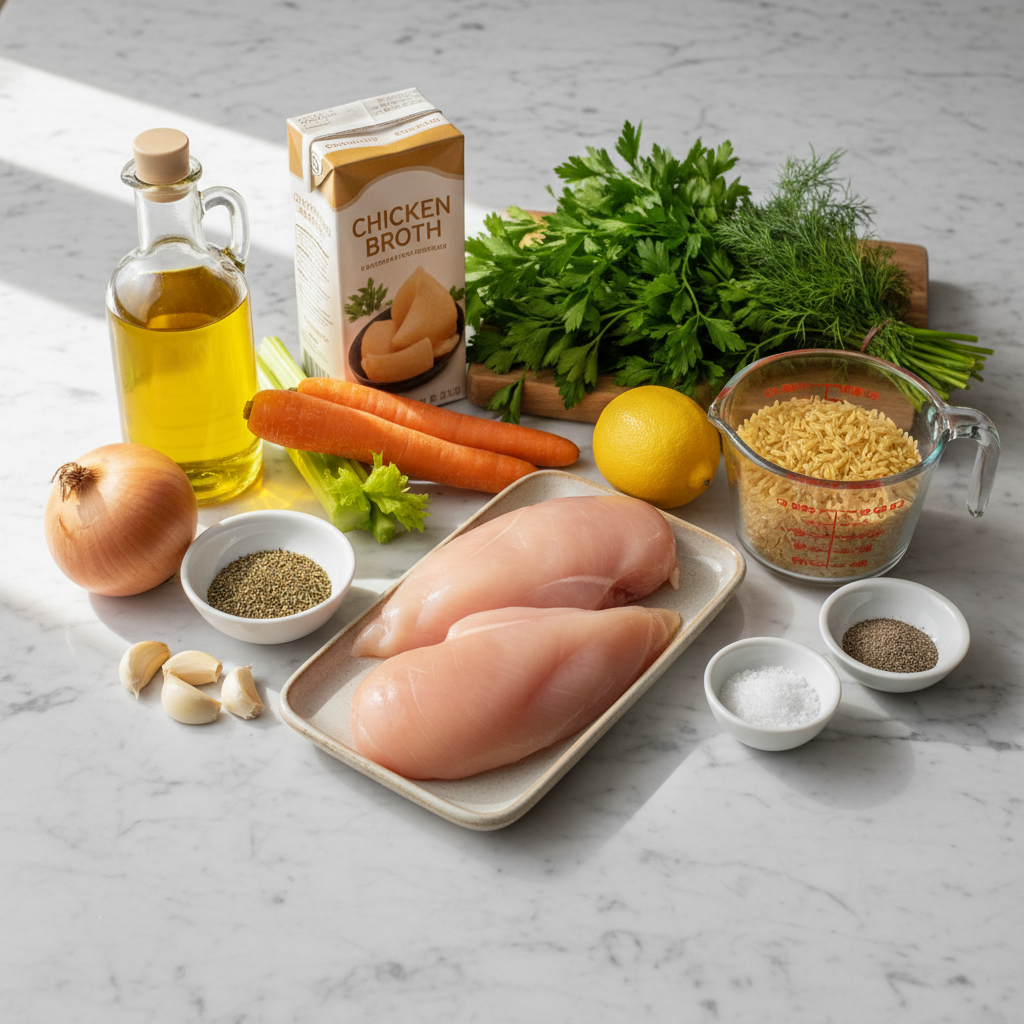
- 1 tablespoon Olive Oil
- 1 large Onion (diced (about 2 cups))
- 2 large Carrots (thinly sliced (about 2 cups))
- 2 ribs Celery (diced (about 1 cup))
- 3 cloves Garlic (minced)
- 1 teaspoon Italian Seasoning
- 8 cups Chicken Broth (or 4 cups broth + 4 cups water)
- 2 Boneless Skinless Chicken Breasts (or 3 cups rotisserie chicken)
- 1 cup Uncooked Orzo Pasta
- 1 large Lemon (zested and juiced)
- 1 teaspoon Salt
- 1/2 teaspoon Black Pepper
- Fresh Parsley and Fresh Dill (chopped)
Ingredient Notes & Substitutions
Chicken: I love using boneless, skinless chicken breasts for this recipe as they cook quickly and stay tender. For an even faster meal, feel free to substitute with 3 cups of shredded rotisserie chicken. Just add it in step 7 to heat through.
Broth: I typically use 8 cups of chicken broth, but if you’re concerned about saltiness or want to stretch the broth, you can use 4 cups of broth and 4 cups of water. This is a great tip for any chicken soup recipe.
Lemon: Using both fresh lemon zest and juice is key here. The zest adds a wonderful aromatic oil, while the juice provides that signature bright tang. This combination really brings out the Mediterranean flavors.
Herbs: Fresh dill is essential for that classic flavor, but don’t hesitate to add fresh parsley for extra color and a complementary herbal note. A pinch of thyme could also be lovely.
How to Make Lemon Chicken Orzo Soup with Dill
1. Sauté Aromatics
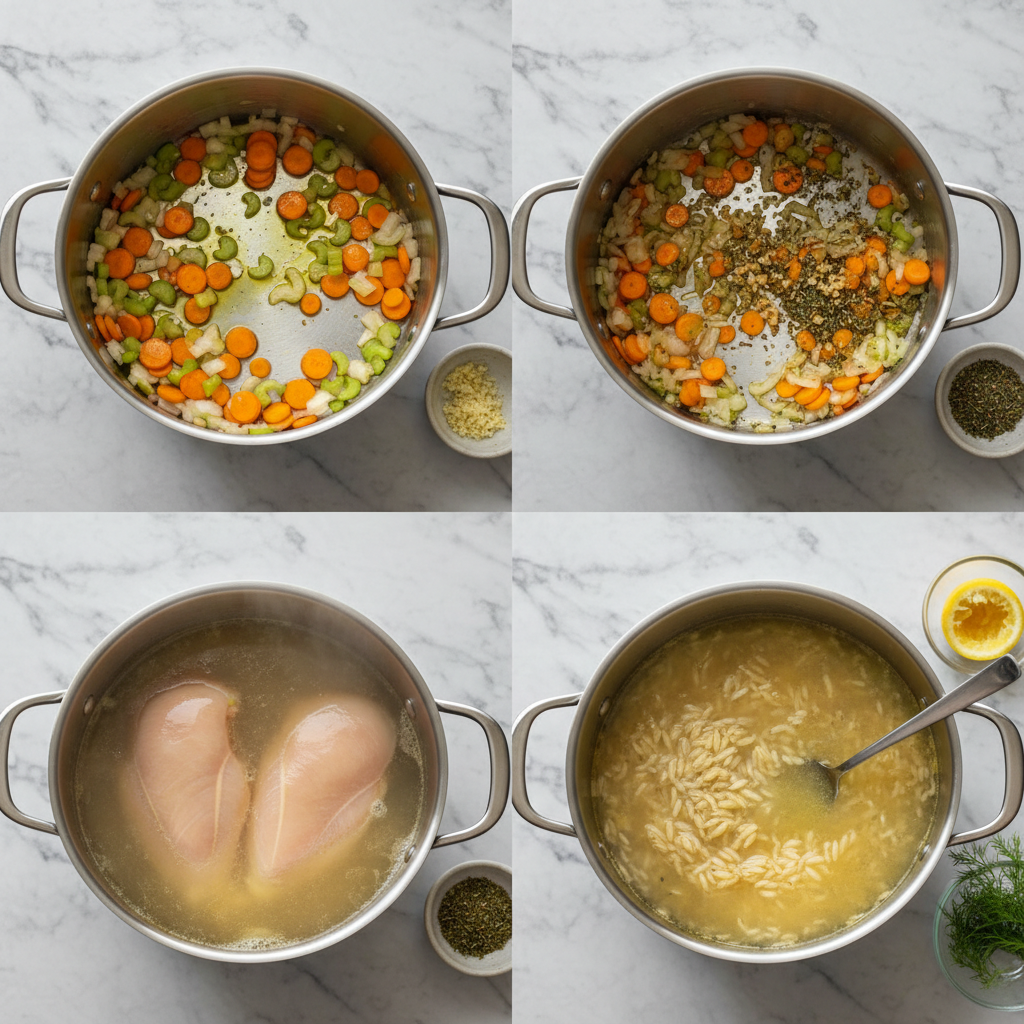
Heat a 4.5-quart soup pot over medium heat. Add the olive oil and let it heat until it shimmers, indicating it’s ready. Add the diced onion, thinly sliced carrots, and diced celery. Sauté for about 5–7 minutes, stirring occasionally, until the vegetables begin to soften and release their fragrance. Stir in the minced garlic and cook for just 30 seconds more until fragrant. Be careful not to burn the garlic.
2. Bloom Spices
Add the Italian seasoning to the pot. Stir constantly for another minute. This simple step, known as blooming, awakens the dried herbs’ flavors and adds a deeper layer of complexity to the soup’s base.
3. Simmer Chicken
Pour in the chicken broth (and water, if you’re using it). Increase the heat to bring the liquid to a rolling boil. Carefully add the whole boneless, skinless chicken breasts to the pot. Once the broth returns to a boil, reduce the heat to maintain a gentle simmer. Cook until the chicken reaches an internal temperature of 160°F when checked with an instant-read thermometer.
4. Rest & Shred Chicken
As soon as the chicken reaches temperature, use clean tongs to carefully transfer the cooked chicken breasts to a separate plate or shallow bowl. Loosely cover the chicken and let it rest for about 5 minutes. This resting period allows the juices to redistribute throughout the meat, ensuring your shredded chicken will be incredibly moist and tender. It will reach the safe internal temperature of 165°F through carryover cooking.
5. Cook Orzo
While the chicken is resting, stir the uncooked orzo pasta into the simmering broth. Cook for 8–10 minutes, stirring occasionally to prevent the orzo from sticking to the bottom of the pot. You’re looking for the orzo to be tender but still hold its shape (al dente).
6. Add Brightness
Stir in the fresh lemon juice and lemon zest. I like to add these at the end to preserve their vibrant citrus notes and ensure the brightest possible flavor.
7. Finish & Combine
Shred the rested chicken using two forks or even your hands. Return the shredded chicken to the pot. Allow the soup to simmer for just a few more minutes to ensure the chicken is heated through.
8. Season & Serve
Taste the soup and season with salt and freshly ground black pepper as needed. Ladle the hot lemon chicken orzo soup into bowls. Garnish generously with chopped fresh parsley and dill.
Unlocking the Zesty Goodness: Key Aspects of This Soup
The Magic of Lemon at the End
Adding lemon juice and zest right at the end of cooking is crucial for this lemon soup. This technique preserves the bright, fresh, and zesty flavor of the lemon. If you add lemon juice too early in the cooking process, especially during a long simmer, its delicate flavor can diminish and sometimes even turn slightly bitter. This ensures that signature pop of freshness in every spoonful.
Health Benefits of Ingredients
This soup is a powerhouse of nourishment. The chicken provides lean protein, essential for muscle repair and satiety. Carrots, celery, and onion offer a good dose of vitamins and fiber. The orzo adds complex carbohydrates for sustained energy. It’s a truly healthy soup that doesn’t compromise on flavor. For other healthy meal ideas, consider exploring a rheumatoid arthritis diet plan or a Mediterranean chickpeas salad.
Achieving the Perfect Broth Consistency
If you prefer a thicker broth, there are a couple of easy ways to achieve it. You can gently mash some of the cooked carrots and celery against the side of the pot with your spoon; this will release their starches and naturally thicken the broth. Alternatively, you can create a simple slurry: whisk together 1 tablespoon of cornstarch or flour with 2 tablespoons of cold water until smooth, then stir this mixture into the simmering soup until it thickens to your liking.
Pro Tips & Troubleshooting
Expert Tips for Success
- Rotisserie Chicken Shortcut: For an incredibly fast meal, use pre-cooked rotisserie chicken. Simply shred it and add it in step 7 to heat through.
- Flavorful Foundation: Don’t rush the sautéing of the vegetables (onion, carrots, celery). This step builds the crucial flavor base for the entire soup.
- Bloom Your Herbs: Toasting the Italian seasoning for a minute before adding liquid really deepens its flavor.
- Chicken Safety First: Always use a thermometer to ensure your chicken reaches a safe internal temperature of 165°F.
- Taste and Adjust: Broth brands can vary in saltiness. Always taste and adjust salt and pepper at the end of cooking.
- Don’t Overcook Orzo: Keep a close eye on the orzo. It cooks quickly and can become mushy if overcooked. Stir and test for tenderness at the lower end of the cooking time.
Common Mistakes to Avoid
- Mushy Orzo: Overcooking the pasta is a frequent issue. Stir occasionally and test for doneness around the 8-minute mark.
- Uneven Chicken Texture: Not shredding the chicken properly or adding it back into the soup too early can lead to tough or unevenly cooked pieces.
- Bitter Lemon Flavor: Adding lemon juice too early in the cooking process can diminish its brightness and introduce bitterness.
- Watery or Bland Soup: Insufficient sautéing of vegetables or using a low-quality broth can result in a less flavorful soup.
- Forgetting to Rest Chicken: Skipping the chicken resting step leads to drier, less tender chicken.
Serving & Storage
Serving Ideas
This soup is wonderful on its own, but serving it with warm, crusty bread for dipping makes it even more satisfying. For an extra touch, top with a little more fresh dill or parsley. It also makes a fantastic starter for a larger meal or a light, yet fulfilling lunch. Consider pairing it with a refreshing pomegranate drink.
Storage and Make-Ahead
Refrigeration: Once cooled, store any leftover soup in an airtight container in the refrigerator for up to 3-4 days. Keep in mind that the orzo may absorb more liquid upon standing, making the soup thicker.
Freezing: While it’s possible to freeze this soup, the texture of the orzo can sometimes become softer upon reheating. If you plan to freeze, cool completely, store in freezer-safe containers, and be prepared for a slightly different texture.
Make-Ahead Tip: To save time on busy nights, you can chop all your vegetables and measure out your seasonings a day in advance. Store them separately. You can also cook the soup fully and then reheat it, adding the lemon juice and fresh herbs just before serving to maintain their bright flavor. For other make-ahead meal ideas, try autumn harvest grain bowls or zucchini lasagna.
Conclusion
This lemon chicken orzo soup with dill is a true winner in my kitchen. It’s incredibly comforting, packed with bright, zesty flavors, and so simple to prepare. Its one-pot nature and delicious results make it a perfect addition to any home cook’s repertoire. If you’re exploring gut health, understanding the microbiome can provide insights into how nutrient-rich foods impact your well-being.
Frequently Asked Questions
- Why add lemon juice at the end of the recipe?
Adding lemon juice at the end preserves its bright, fresh flavor and prevents it from becoming bitter during a long simmer.
- Can I use pre-cooked chicken in this soup?
Yes, rotisserie chicken or other pre-cooked chicken can be used. Add it towards the end of cooking (step 7) to heat through, after the orzo is tender.
- How can I make this soup thicker?
To thicken the soup, you can mash some of the cooked vegetables against the side of the pot, or create a slurry with a tablespoon of cornstarch or flour mixed with a little cold water and stir it into the simmering soup.
- How do you store leftover lemon chicken orzo soup?
Store cooled soup in an airtight container in the refrigerator for up to 3-4 days. The orzo may absorb liquid and become softer upon reheating.
- What kind of chicken is best for this soup?
Boneless, skinless chicken breasts are ideal for quick cooking and tender results. Rotisserie chicken is a convenient alternative.
- How long does it take to cook orzo in soup?
Orzo typically cooks in about 8-10 minutes in simmering soup. Check for tenderness.
- What other vegetables can I add?
Feel free to add peas, spinach, zucchini, or corn. Add heartier vegetables earlier with the carrots and celery, and delicate greens like spinach near the end.
- Is lemon chicken orzo soup healthy?
Yes, this soup is generally considered healthy, providing lean protein, vegetables, and whole grains (if using whole wheat orzo). It’s a balanced and nourishing meal. For more insights into healthy eating, check out our post on kombucha vs water kefir or a recipe for baked feta eggs.
Lemon Chicken Orzo Soup with Dill
Ingredients
Equipment
Method
- Heat a 4.5-quart soup pot over medium heat. Add the olive oil and let it heat until it shimmers. Add the diced onion, thinly sliced carrots, and diced celery. Sauté for about 5–7 minutes, stirring occasionally, until the vegetables begin to soften. Stir in the minced garlic and cook for 30 seconds more until fragrant.
- Add the Italian seasoning to the pot. Stir constantly for another minute.
- Pour in the chicken broth (and water, if using). Increase heat to bring to a boil. Add the whole boneless, skinless chicken breasts. Once boiling, reduce heat to a gentle simmer and cook until the chicken reaches an internal temperature of 160°F.
- Carefully transfer the cooked chicken breasts to a plate or bowl. Loosely cover and let rest for 5 minutes.
- While the chicken rests, stir the uncooked orzo pasta into the simmering broth. Cook for 8–10 minutes, stirring occasionally, until tender but al dente.
- Stir in the fresh lemon juice and lemon zest.
- Shred the rested chicken using two forks. Return the shredded chicken to the pot. Simmer for a few more minutes to heat through.
- Taste the soup and season with salt and freshly ground black pepper as needed. Ladle into bowls and garnish generously with chopped fresh parsley and dill.