Ingredients
Equipment
Method
Prepare the Duck
- Rinse the whole duck under cold water and pat it thoroughly dry, both inside and out, with paper towels. This step is CRUCIAL for crispy skin. Carefully remove any excess fat from the cavity opening and neck area. Using a sharp fork or skewer, prick the duck skin all over at 1-inch intervals, paying extra attention to the fatty areas on the breast and legs. This allows fat to render out during cooking.
Preheat Oven
- Preheat your oven to 400°F (200°C).
Set Up Roasting Pan
- Place the duck, breast-side up, on a rack set inside a deep roasting pan. Ensure the rack allows air to circulate around the bird.
Season the Duck
- In a small bowl, mix together the salt and pepper. Evenly sprinkle this mixture all over the duck's exterior.
Initial Roast
- Roast the duck for 40-45 minutes at 400°F (200°C). After this initial period, carefully prick the skin again. Turn the duck breast-side down on the rack.
Second Roast
- Continue roasting for another 40-45 minutes. Prick the skin one more time, then carefully turn the duck back breast-side up.
Rest the Duck
- Remove the duck from the oven. Tent it loosely with aluminum foil and let it rest on a cutting board for at least 20 minutes. This resting period is vital for juicy, tender meat.
Make the Orange Sauce
- While the duck rests, prepare the orange sauce. Combine the brown sugar, butter, orange zest, and orange juice in a small saucepan. Bring the mixture to a boil over medium heat, stirring frequently. Once boiling, reduce the heat to medium-low and let it gently simmer for about 15 minutes, or until it thickens to the consistency of pancake syrup. If using, add the orange slices during the last few minutes of simmering.
Glaze the Duck
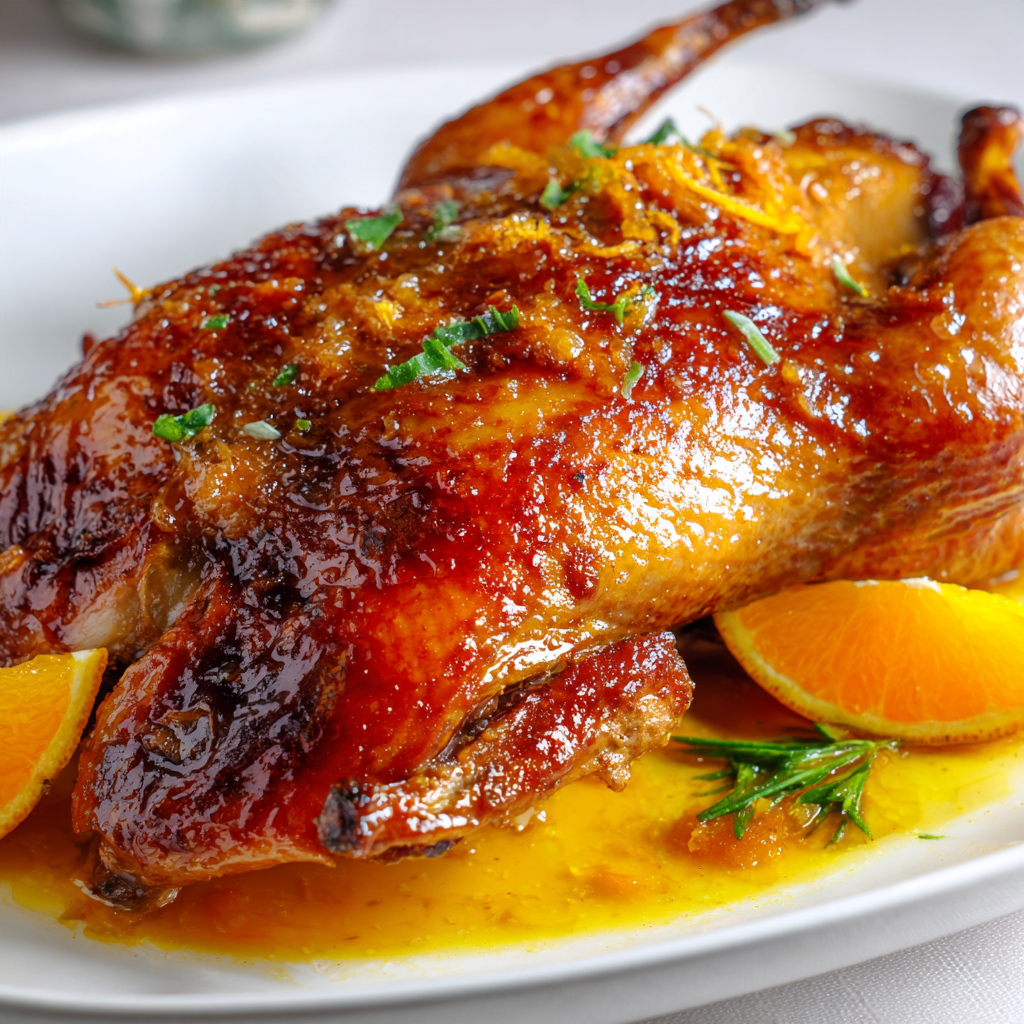
- After the duck has rested, brush it generously with some of the prepared orange sauce.
Serve
- Carefully carve the duck into quarters (or desired portions) and serve immediately, offering any remaining orange sauce on the side.
Nutrition
Notes
Duck fat rendering is key to crispy skin. Pricking the skin, drying thoroughly, and using initial high heat are crucial steps. Save the rendered duck fat for roasting vegetables.
Nutrition information is estimated based on common ingredients and serving sizes and may vary.