Introduction
Imagine a centerpiece that commands attention: a perfectly roast duck with skin so crisp it shatters with every bite, all bathed in a glistening, tangy-sweet orange sauce. This isn’t just another Thanksgiving dinner main course; it’s an experience. This recipe demystifies the process of roasting duck, ensuring a succulent, flavorful bird that will impress your guests and elevate your holiday feast. Get ready to create a memorable holiday roast that’s both elegant and achievable.
Why You’ll Love This Roast Duck Recipe
This duck recipe is your secret weapon for a stress-free yet spectacular Thanksgiving. You’ll love it because:
- Incredible Flavor & Texture: Achieves the coveted crispy skin and juicy, tender meat, perfectly complemented by a rich, balanced orange sauce.
- Impressive Presentation: A whole oven-roasted duck is a classic and elegant choice that elevates any holiday table.
- Proven Success: Follows a reliable method for achieving restaurant-quality results at home.
- The Perfect Balance: The sweet and tangy citrus glaze cuts through the richness of the duck beautifully.
- A Truly Memorable Thanksgiving Main Course: Move beyond turkey with this luxurious and delicious alternative.
Ingredients Needed
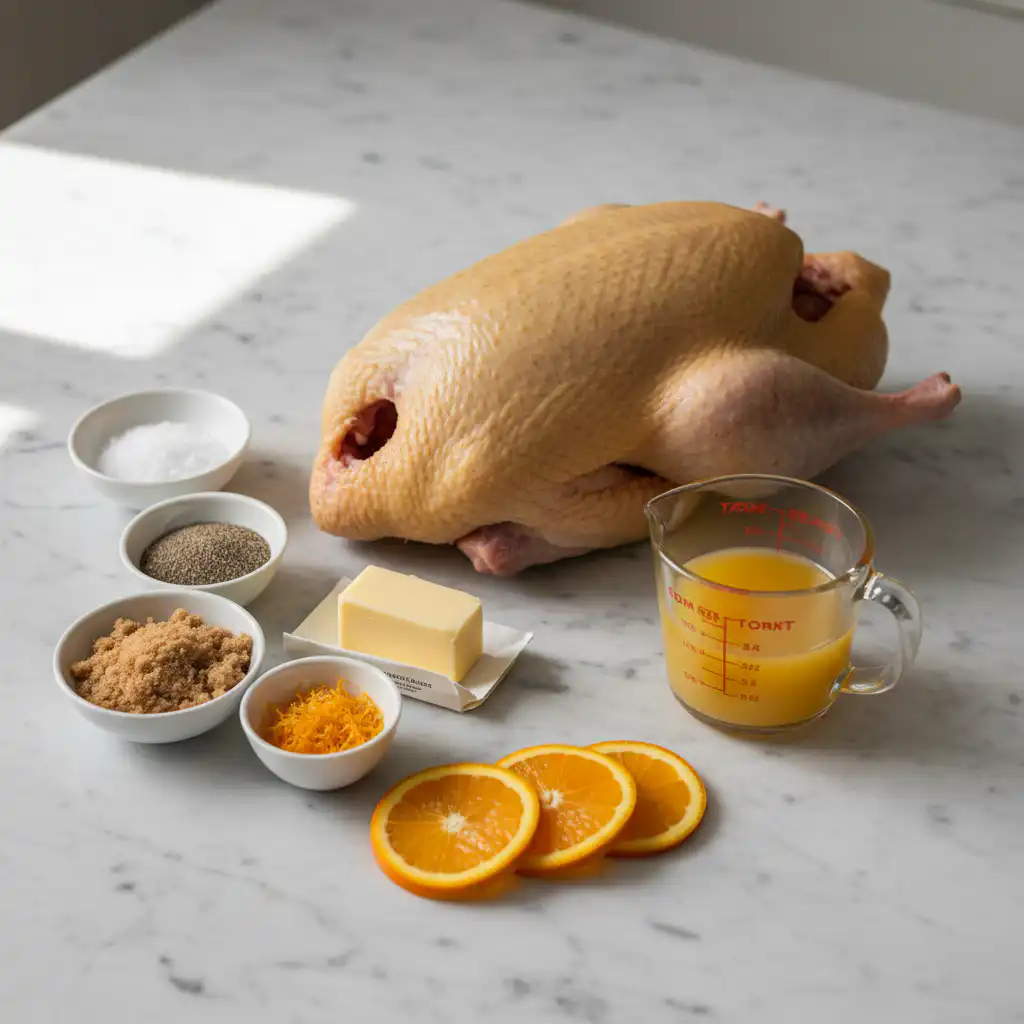
Here’s what you’ll need to create this stunning Thanksgiving main course:
- 1 duck (5 lbs or more)
- 1/2 tsp salt
- 1/4 tsp pepper
- 3/4 cup packed brown sugar
- 1 tbsp butter
- 2 tsp grated orange zest
- 3/4 cup orange juice
- 4 pieces thinly sliced orange (optional)
Ingredient Notes & Substitutions
Duck Size: A 5-6 lb duck is ideal for 4-6 servings. Larger ducks may require adjustments in roasting time. When selecting your whole duck, look for one with good skin coverage, as this is key to achieving crispiness.
Citrus: While fresh orange juice and zest are recommended for the best flavor, in a pinch, you could use bottled 100% orange juice. For the optional orange slices, use a navel or cara cara orange for best results.
Sweetener: Brown sugar provides a deep caramel note. Maple syrup could be used as a substitute for a different flavor profile, though the color of the sauce will be darker.
How to Make Thanksgiving Roast Duck with Orange Sauce
Follow these steps for a perfectly roasted duck and delicious orange sauce:
1. Prepare the Duck
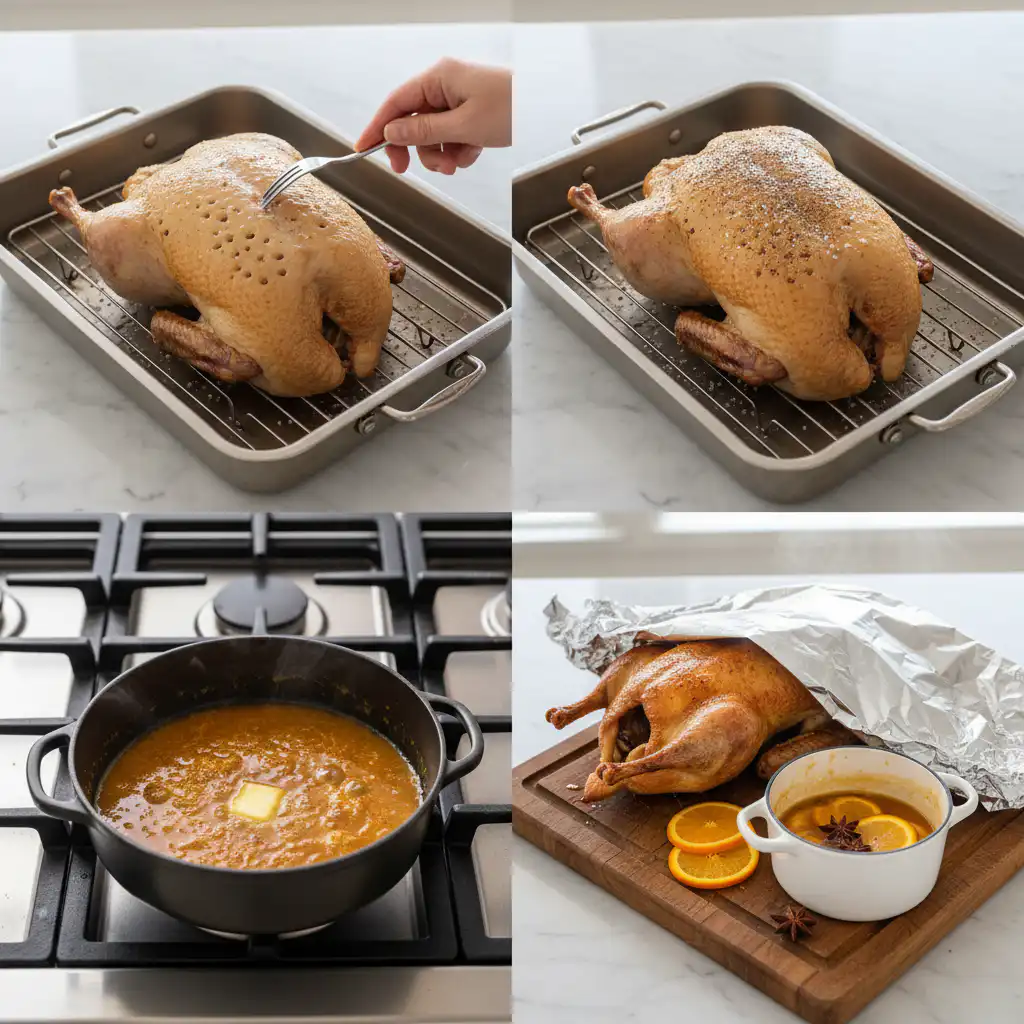
Rinse the whole duck under cold water and pat it thoroughly dry, both inside and out, with paper towels. This step is CRUCIAL for crispy skin. Carefully remove any excess fat from the cavity opening and neck area. Using a sharp fork or skewer, prick the duck skin all over at 1-inch intervals, paying extra attention to the fatty areas on the breast and legs. This allows fat to render out during cooking.
2. Preheat Oven
Preheat your oven to 400°F (200°C).
3. Set Up Roasting Pan
Place the duck, breast-side up, on a rack set inside a deep roasting pan. Ensure the rack allows air to circulate around the bird.
4. Season the Duck
In a small bowl, mix together the salt and pepper. Evenly sprinkle this mixture all over the duck’s exterior.
5. Initial Roast
Roast the duck for 40-45 minutes at 400°F (200°C). After this initial period, carefully prick the skin again. Turn the duck breast-side down on the rack.
6. Second Roast
Continue roasting for another 40-45 minutes. Prick the skin one more time, then carefully turn the duck back breast-side up.
7. Rest the Duck
Remove the duck from the oven. Tent it loosely with aluminum foil and let it rest on a cutting board for at least 20 minutes. This resting period is vital for juicy, tender meat.
8. Make the Orange Sauce
While the duck rests, prepare the orange sauce. Combine the brown sugar, butter, orange zest, and orange juice in a small saucepan. Bring the mixture to a boil over medium heat, stirring frequently. Once boiling, reduce the heat to medium-low and let it gently simmer for about 15 minutes, or until it thickens to the consistency of pancake syrup. If using, add the orange slices during the last few minutes of simmering.
9. Glaze the Duck
After the duck has rested, brush it generously with some of the prepared orange sauce.
10. Serve
Carefully carve the duck into quarters (or desired portions) and serve immediately, offering any remaining orange sauce on the side.
Unlocking Duck Fat Rendering Secrets
Mastering Duck Fat Rendering for Crispy Skin
Duck fat rendering is the key to achieving that irresistible crispy skin. It’s a natural process that happens as the duck cooks, but we enhance it with specific techniques:
- The Power of Pricking: Pricking the skin (as instructed above) creates tiny openings for the fat to escape. This prevents the skin from becoming rubbery and promotes crisping. Focus on fatty areas like the breast and thighs.
- The Role of Higher Heat: Starting the roast at a higher temperature (400°F/200°C) helps to melt the fat quickly and begin the crisping process. Reducing the heat later ensures the inside cooks through without burning the skin.
- Drying is Non-Negotiable: A dry duck skin has less moisture to evaporate, allowing it to crisp up much faster. Always pat your duck completely dry before seasoning and roasting.
- Utilizing Rendered Fat: Don’t discard the fat rendered in the roasting pan! It’s liquid gold. Strain it and save it for roasting potatoes or other vegetables – it adds unparalleled flavor.
Pro Tips & Troubleshooting
Expert Tips for Thanksgiving Duck Perfection
- Season Generously: Don’t be shy with the salt and pepper; it builds the foundation of flavor.
- Resting is Essential: Never skip the resting period. It allows the juices to redistribute, ensuring moist meat.
- Sauce Consistency Check: Aim for a syrup-like consistency for the orange sauce. If it seems too thin, simmer it a bit longer. If too thick, a splash of water or orange juice can thin it.
- Use a Thermometer: For foolproof results, use an instant-read meat thermometer. The thickest part of the thigh (without touching bone) should register 165°F (74°C).
- Vary the Citrus: Experiment with adding a tablespoon of lemon juice or lime juice to the orange sauce for a different citrusy kick.
- Aromatic Cavity: For extra flavor, stuff the duck cavity with aromatics like quartered onion, garlic cloves, or sprigs of rosemary and thyme before roasting.
Common Mistakes to Avoid
- Soggy Skin: Usually caused by not drying the duck thoroughly or not pricking the skin sufficiently.
- Overcooking: Results in dry, tough meat. Always rely on a meat thermometer for accuracy.
- Sauce Issues: A sauce that’s too thin won’t coat the duck properly; too thick, and it becomes cloying. Monitor simmering time carefully.
- Skipping the Rest: Carving too soon releases all the delicious juices, leaving the meat dry.
- Uneven Cooking: Ensure your oven temperature is accurate and consider rotating the pan halfway through if needed.
Serving & Storage
Serving Ideas for Your Holiday Roast Duck
- Classic Pairings: Roasted root vegetables (potatoes, carrots, parsnips) are a natural fit. You could also consider a mix of roasted fall vegetables for a colorful and hearty side.
- Grain Sides: A wild rice pilaf or a simple quinoa salad complements the rich duck.
- Fruity Companions: Cranberry sauce or a fresh fruit compote offers a tart contrast. An apple cranberry pecan salad would also be a delightful addition.
- Garnish: Fresh orange slices, sprigs of rosemary, or thyme add a beautiful visual and aromatic touch.
- Beverage Pairings: Consider a medium-bodied red wine like Pinot Noir or a crisp white like a Viognier.
Storage and Make-Ahead
- Make-Ahead Sauce: The orange sauce can be made up to 2 days in advance and stored in an airtight container in the refrigerator. Gently reheat on the stovetop before serving.
- Leftover Duck: Once cooled, store leftover roast duck in an airtight container in the refrigerator for up to 3 days. Reheat gently in the oven or a skillet to preserve crispness.
- Freezing: While not ideal for the crispy skin, cooked duck meat can be frozen for up to 2 months. It’s best used in dishes like duck confit-style preparations or shredded for sandwiches.
Conclusion
This roast duck with orange sauce recipe offers a spectacular and delicious alternative to traditional Thanksgiving fare. With its crispy skin, succulent meat, and vibrant citrus glaze, it’s a holiday roast that’s sure to become a new family favorite. Enjoy the process and the delightful results!
Frequently Asked Questions
- What is the best temperature to roast a duck for Thanksgiving?
A common starting temperature is 400°F (200°C) for the initial roasting to crisp the skin, then it can be reduced to 350°F (175°C) for longer cooking if needed, depending on the size of the duck. This recipe starts at 400°F. - How do I ensure my roast duck skin is crispy?
Ensure the duck is thoroughly dried, prick the skin all over (especially the fatty areas), and consider starting at a higher oven temperature to render the fat and crisp the skin. This recipe incorporates all these techniques. - How to make the orange sauce thicker if it’s too thin?
If your orange sauce is too thin, you can simmer it longer to reduce it. Alternatively, you can create a slurry with a teaspoon of cornstarch or flour mixed with a tablespoon of cold water and whisk it into the simmering sauce until thickened. - How long does it take to roast a 5 lb duck?
A 5 lb duck typically takes around 2 to 2.5 hours to roast at 350-400°F (175-200°C), but always use a meat thermometer to check for doneness (165°F or 74°C in the thickest part of the thigh). This recipe provides specific timings based on this method. - Can I make the orange sauce ahead of time?
Yes, the orange sauce can be made up to 2 days in advance and stored in the refrigerator. Reheat gently on the stovetop before serving. - What to serve with roast duck for Thanksgiving?
Great pairings include roasted root vegetables, wild rice pilaf, cranberry sauce, and fresh herbs for garnish. For a refreshing contrast, consider a simple apple arugula salad. - How to prevent duck from drying out?
Proper roasting time (using a thermometer) and allowing the duck to rest after cooking are the most crucial steps to prevent dryness. - How to carve a roast duck?
Similar to a turkey or chicken, start by removing the legs and wings, then carve the breast meat from the bone. A sharp knife and a steady hand are key.
Thanksgiving Roast Duck with Orange Sauce
Ingredients
Equipment
Method
- Rinse the whole duck under cold water and pat it thoroughly dry, both inside and out, with paper towels. This step is CRUCIAL for crispy skin. Carefully remove any excess fat from the cavity opening and neck area. Using a sharp fork or skewer, prick the duck skin all over at 1-inch intervals, paying extra attention to the fatty areas on the breast and legs. This allows fat to render out during cooking.
- Preheat your oven to 400°F (200°C).
- Place the duck, breast-side up, on a rack set inside a deep roasting pan. Ensure the rack allows air to circulate around the bird.
- In a small bowl, mix together the salt and pepper. Evenly sprinkle this mixture all over the duck's exterior.
- Roast the duck for 40-45 minutes at 400°F (200°C). After this initial period, carefully prick the skin again. Turn the duck breast-side down on the rack.
- Continue roasting for another 40-45 minutes. Prick the skin one more time, then carefully turn the duck back breast-side up.
- Remove the duck from the oven. Tent it loosely with aluminum foil and let it rest on a cutting board for at least 20 minutes. This resting period is vital for juicy, tender meat.
- While the duck rests, prepare the orange sauce. Combine the brown sugar, butter, orange zest, and orange juice in a small saucepan. Bring the mixture to a boil over medium heat, stirring frequently. Once boiling, reduce the heat to medium-low and let it gently simmer for about 15 minutes, or until it thickens to the consistency of pancake syrup. If using, add the orange slices during the last few minutes of simmering.
- After the duck has rested, brush it generously with some of the prepared orange sauce.
- Carefully carve the duck into quarters (or desired portions) and serve immediately, offering any remaining orange sauce on the side.