
Hosting Thanksgiving doesn’t have to be stressful. This prime rib recipe delivers an impressive centerpiece that’s surprisingly easy to prepare, ensuring a delicious and memorable holiday meal.
Why This Prime Rib Recipe is Your Thanksgiving Hero
- Unbeatable Flavor: A rich, savory roast enhanced by a simple yet potent herb rub.
- Perfectly Tender & Juicy: Achieves that coveted melt-in-your-mouth texture every time.
- Surprisingly Simple: Despite its impressive appearance, this recipe is designed for home cooks.
- The Centerpiece of Your Feast: Elevates your Thanksgiving table with a truly special main course.
- Reliable Results: Follow these steps, and you’re guaranteed a show-stopping prime rib.
Ingredients You’ll Need
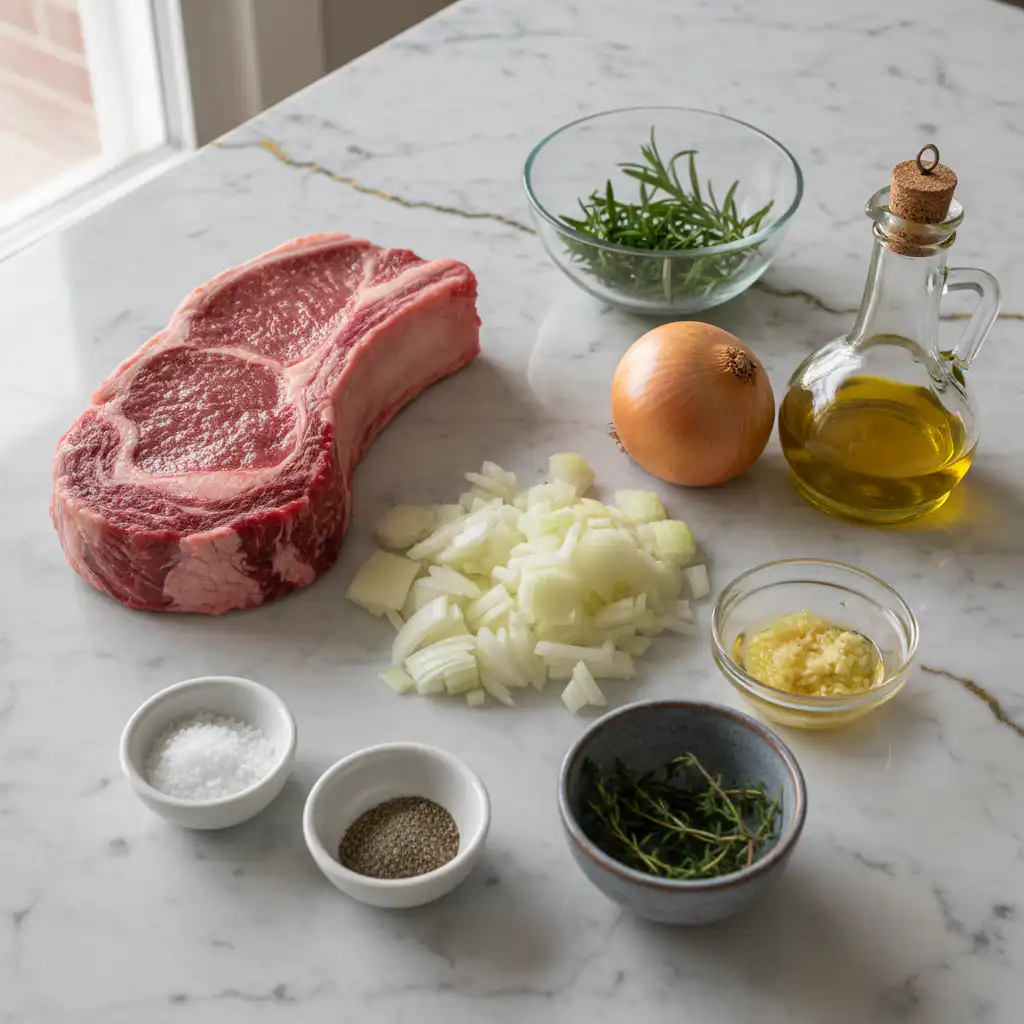
- A bone-in prime rib roast ((see note 2 if your roast is 6 lbs or less))
- 1/3 medium onion ((large dice or thickly sliced; approx. 1/3 medium onion per pound, up to 4-5 onions total; see note 3))
- 1 teaspoon Kosher or coarse sea salt per pound ((1 tsp per lb/450g))
- ½ teaspoon freshly ground black pepper per pound ((1/2 tsp per lb/450g))
- 1 teaspoon minced garlic per pound ((1 tsp per lb/450g))
- 1 teaspoon fresh rosemary per pound ((1 tsp per lb/450g))
- 1 teaspoon fresh thyme per pound ((1 tsp per lb/450g))
- ½ teaspoon olive oil per pound ((1/2 tsp per lb/450g))
Ingredient Notes & Substitutions
Choosing Your Roast: Opt for a bone-in prime rib (also known as standing rib roast) for maximum flavor and moisture. Look for USDA Prime or Choice grades for the best marbling. A bone-in roast generally yields a more tender result than boneless.
Seasoning Power: The combination of Kosher salt, black pepper, garlic, rosemary, and thyme creates a classic, robust herb rub. Feel free to adjust the herb ratios to your preference, perhaps adding a pinch of sage, which is traditional for Thanksgiving. For other holiday flavor profiles, consider exploring traditional meat dishes.
Onion’s Role: The onions in the pan are not just for aroma; they create moisture and flavor for the drippings, essential for making an amazing au jus or gravy.
How to Make Easy Thanksgiving Prime Rib
Marinate the Roast:
-
Prepare the Roast:
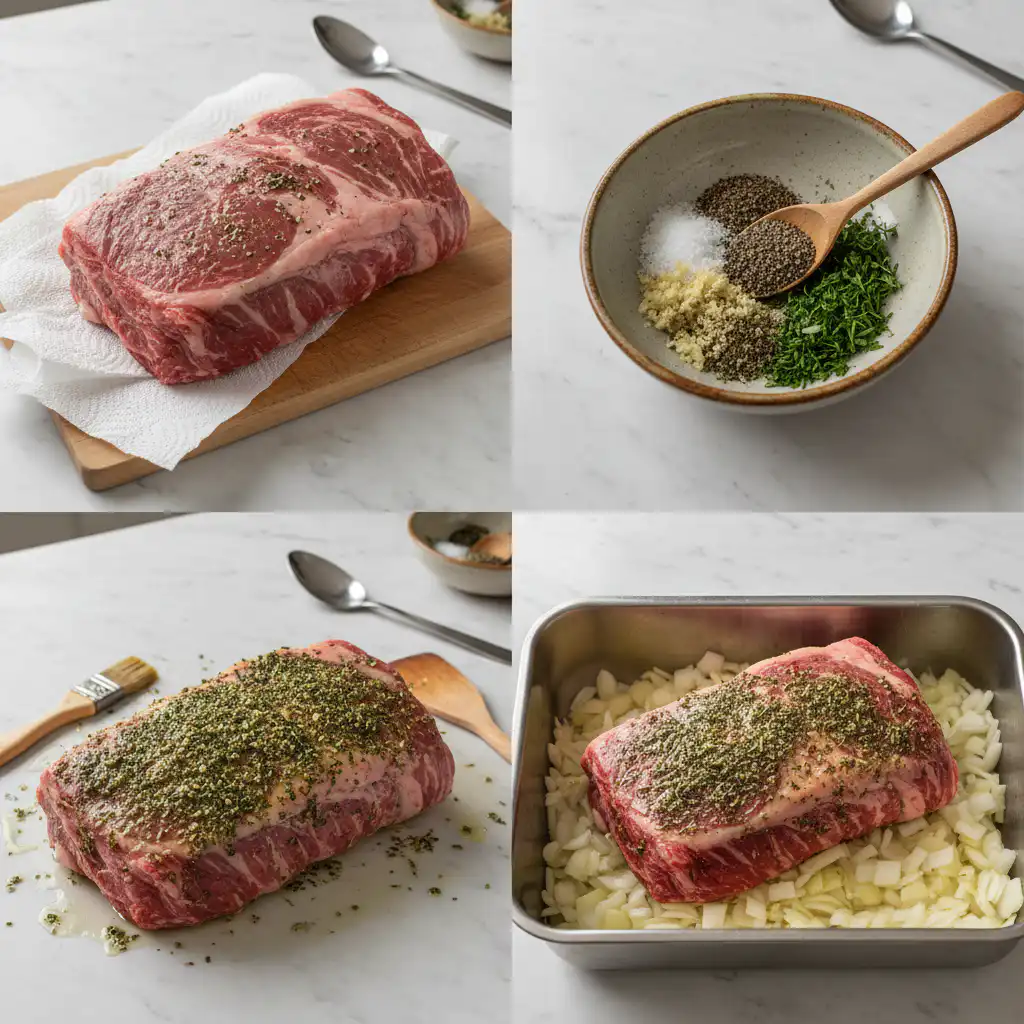
Ensure your prime rib roast has had time to come to room temperature (about 1-2 hours before cooking) for more even cooking. Pat the roast completely dry with paper towels – this is crucial for developing a crispy crust.
-
Mix the Rub:
Combine the Kosher salt, black pepper, minced garlic, chopped rosemary, and chopped thyme in a small bowl. Calculate the total amount needed based on the weight of your roast.
-
Apply the Rub:
Rub the olive oil all over the prime rib roast, then generously coat it with the prepared herb rub, pressing it in to adhere.
-
Prepare the Pan:
Scatter the diced or sliced onions evenly across the bottom of your roasting pan.
Cook the Roast:
-
Initial Sear (Optional but Recommended):
For an enhanced crust, you can sear the roast in a hot skillet with a little oil for 1-2 minutes per side before placing it in the roasting pan. Alternatively, some recipes start at a high oven temperature (450°F/230°C) for the first 15-20 minutes before reducing it.
-
Roast Low and Slow:
Place the seasoned prime rib roast directly on top of the onions in the roasting pan. Roast in a preheated oven at a lower temperature (e.g., 325°F/160°C) until it reaches your desired internal temperature (see chart below). Use a reliable meat thermometer inserted into the thickest part of the roast, avoiding bone.
- Rare: 115-120°F (46-49°C)
- Medium-Rare: 125-130°F (52-54°C)
- Medium: 130-135°F (54-57°C)
- Medium-Well: 140-145°F (60-63°C)
- *(Note: The temperature will rise 5-10 degrees F during resting.)*
-
Monitor Temperature:
Cooking times vary significantly based on roast size and oven calibration. For example, a 4-5 lb roast might take approximately 1.5 to 2 hours at 325°F (160°C) to reach medium-rare *before* resting.
Rest & Serve:
-
The Crucial Rest:
Once the roast reaches about 5-10 degrees below your target temperature, remove it from the oven. Transfer the prime rib to a cutting board and tent it loosely with aluminum foil. Let it rest for at least 15-20 minutes (up to 30 minutes for larger roasts).
-
Carve:
Using a sharp carving knife, slice the prime rib between the ribs or across the grain for maximum tenderness.
-
Serve:
Serve immediately with pan drippings (au jus) or gravy. Consider pairing it with a hearty side dish like creamy butternut squash and sausage pasta for a complete meal.
Mastering Your Thanksgiving Prime Rib: A Deep Dive
Achieving Perfect Doneness: Internal Temperatures Explained
The Science of Temperature: Prime rib is best enjoyed when not overcooked. A meat thermometer is your most critical tool. Insert it into the thickest part of the roast, ensuring it doesn’t touch the bone. Remember that the temperature will continue to rise by 5-10°F after you remove it from the oven – this is called carryover cooking.
Temperature Guide:
- Rare: 115-120°F (46-49°C) *becomes* 125-130°F (52-54°C)
- Medium-Rare: 125-130°F (52-54°C) *becomes* 130-135°F (54-57°C)
- Medium: 130-135°F (54-57°C) *becomes* 135-140°F (57-60°C)
- Medium-Well: 140-145°F (60-63°C) *becomes* 145-150°F (63-66°C)
Targeting Your Preference: For a classic Thanksgiving prime rib, medium-rare (130-135°F final temp) is often preferred for its balance of tenderness and richness. If you’re exploring other healthy poultry options, check out our Mediterranean Chicken Bowls.
The Magic of Resting Meat
Why Rest? When meat cooks, the muscle fibers tighten and push the juices towards the center. Resting allows these fibers to relax, redistribuing the juices evenly throughout the roast. Skipping this step results in juices running out onto the cutting board, leading to a dry piece of meat.
How to Rest: Tent the roast loosely with foil to keep it warm without steaming the crust. Aim for at least 15-20 minutes, and up to 30 minutes for larger cuts, to allow the juices to fully redistribute.
Expert Tips & Common Mistakes
Chef’s Secrets for Prime Rib Perfection
- Use a Bone-In Roast: The bones act as natural insulation, protecting the meat from overcooking and adding significant flavor.
- Room Temperature is Key: Allow the roast to sit out for 1-2 hours before cooking. A cold roast will cook unevenly.
- Pat it Dry: Moisture is the enemy of a crispy crust. Dry the roast thoroughly before seasoning.
- Don’t Skimp on Salt: Salt not only seasons but also helps create that delicious, browned exterior.
- Invest in a Thermometer: An instant-read meat thermometer is non-negotiable for perfectly cooked prime rib.
- Low and Slow is Reliable: While some methods use high heat initially, a consistent lower temperature (325°F/160°C) is more forgiving and ensures even cooking.
- Don’t Crowd the Pan: Ensure good air circulation around the roast in the pan for even roasting.
- Make Ahead Seasoning: Mix your herb rub ingredients a day or two in advance for maximum flavor infusion.
Common Prime Rib Pitfalls to Avoid
- Not Resting the Meat: The #1 cause of dry prime rib. Always rest!
- Guessing Doneness: Relying on time alone instead of a meat thermometer leads to over or undercooking.
- Cutting Too Soon: Impatience leads to a mess of juices on the plate.
- Using a Boneless Roast (for this method): While boneless can be delicious, bone-in is preferred for this specific roasting technique’s optimal results.
- Not Patting Dry: Results in a steamed exterior rather than a beautifully browned crust.
- Oven Temperature Fluctuations: Ensure your oven is accurately preheated and maintains a steady temperature.
Serving & Storage Suggestions
Thanksgiving Serving Ideas
Classic Pairings: Serve with creamy mashed potatoes, savory stuffing, roasted Brussels sprouts, or green bean casserole. For a lighter, yet flavorful option, consider a roasted sweet potato, kale, and quinoa salad.
Sauces & Gravy: A rich au jus made from the pan drippings, or a classic brown gravy, is essential. Offer a side of horseradish cream sauce for an extra kick.
Festive Sides: Complement the richness of the prime rib with lighter fare like a cranberry relish, a simple green salad with vinaigrette, or baked sweet potatoes.
Beverages: Pair with a full-bodied red wine like Cabernet Sauvignon or Merlot, or a festive sparkling cider. For a non-alcoholic option, try an ultimate refreshing pomegranate drink.
Storage and Reheating
Refrigeration: Store leftover prime rib tightly wrapped in plastic wrap or in an airtight container in the refrigerator for up to 3-4 days.
Freezing: For longer storage, wrap portions tightly in plastic wrap, then in foil or a freezer bag. Freeze for up to 2-3 months. Thaw in the refrigerator overnight.
Reheating: The best method is to gently reheat slices in a shallow pan with a bit of beef broth or au jus over low heat, or in a moderate oven (300°F/150°C) until just warmed through. Avoid microwaving, which can make the meat tough.
The Perfect Prime Rib: A Thanksgiving Centerpiece
This easy prime rib recipe delivers a stunningly delicious and tender roast that will be the star of your Thanksgiving table. By following these straightforward steps, you’ll achieve a perfectly cooked, flavorful prime rib with a beautiful crust, making your holiday meal truly memorable. For other comforting holiday dishes, explore our recipe for homemade chicken noodle soup.
Frequently Asked Questions
- Q: What is the ideal internal temperature for prime rib for Thanksgiving dinner?
- A: For a perfect medium-rare, aim for an internal temperature of 130-135°F (54-57°C) *after resting*. Remove it from the oven around 125-130°F (52-54°C) to account for carryover cooking.
- Q: How do I prevent my prime rib from drying out?
- A: Ensure you don’t overcook it by using a meat thermometer and removing it at the right temperature. Resting the roast after cooking is also critical, as it allows the juices to redistribute throughout the meat.
- Q: Can I prepare the prime rib seasoning ahead of time?
- A: Yes, you can mix your salt, pepper, garlic, rosemary, and thyme rub ahead of time. You can also apply it to the roast a few hours before cooking, or even the day before for a deeper flavor penetration.
- Q: What is the role of the onions in the recipe?
- A: The onions are placed in the bottom of the roasting pan to add moisture and flavor to the drippings, which can be used to make a delicious au jus or gravy.
- Q: How long should I rest my prime rib?
- A: Rest the prime rib for at least 15-20 minutes, or up to 30 minutes for larger roasts, loosely tented with foil. This allows the juices to settle, resulting in a more tender and moist roast.
- Q: What temperature should prime rib be for Thanksgiving?
- A: For Thanksgiving, medium-rare (final temp 130-135°F) is highly recommended for prime rib, offering the best balance of tenderness and flavor. Always use a meat thermometer to ensure accuracy.
- Q: How long does it take to cook a 5 lb prime rib?
- A: A 5 lb bone-in prime rib at 325°F (160°C) typically takes about 15-20 minutes per pound to reach medium-rare *before* resting. So, expect roughly 1 hour 15 minutes to 1 hour 40 minutes of cooking time, plus resting.
- Q: What’s the best way to season prime rib for Thanksgiving?
- A: A simple yet effective seasoning includes Kosher salt, freshly ground black pepper, minced garlic, fresh rosemary, and fresh thyme, often mixed with a little olive oil to form a paste or rub.
- Q: Can I marinate prime rib overnight?
- A: While not a traditional marinade, you can apply the herb rub and olive oil mixture to the roast the night before and refrigerate it. Bring it to room temperature for 1-2 hours before cooking.
- Q: How do I get a crispy crust on prime rib?
- A: Pat the roast completely dry before seasoning, ensure adequate salt in your rub, and consider starting with a higher oven temperature for the first 15-20 minutes before reducing it, or searing it in a hot pan.
- Q: Is bone-in or boneless prime rib better for roasting?
- A: For this roasting method, bone-in prime rib is generally preferred. The bones help insulate the meat, leading to more even cooking and added flavor from the marrow.
Easy Prime Rib Thanksgiving Dinner Recipe
Ingredients
Equipment
Method
- Ensure your prime rib roast has had time to come to room temperature (about 1-2 hours before cooking) for more even cooking. Pat the roast completely dry with paper towels – this is crucial for developing a crispy crust.
- Combine the Kosher salt, black pepper, minced garlic, chopped rosemary, and chopped thyme in a small bowl. Calculate the total amount needed based on the weight of your roast.
- Rub the olive oil all over the prime rib roast, then generously coat it with the prepared herb rub, pressing it in to adhere.
- Scatter the diced or sliced onions evenly across the bottom of your roasting pan.
- For an enhanced crust, you can sear the roast in a hot skillet with a little oil for 1-2 minutes per side before placing it in the roasting pan. Alternatively, some recipes start at a high oven temperature (450°F/230°C) for the first 15-20 minutes before reducing it.
- Place the seasoned prime rib roast directly on top of the onions in the roasting pan. Roast in a preheated oven at a lower temperature (e.g., 325°F/160°C) until it reaches your desired internal temperature (see chart below). Use a reliable meat thermometer inserted into the thickest part of the roast, avoiding bone.
- Rare: 115-120°F (46-49°C)
- Medium-Rare: 125-130°F (52-54°C)
- Medium: 130-135°F (54-57°C)
- Medium-Well: 140-145°F (60-63°C)
- *(Note: The temperature will rise 5-10 degrees F during resting.)*
- Cooking times vary significantly based on roast size and oven calibration. For example, a 4-5 lb roast might take approximately 1.5 to 2 hours at 325°F (160°C) to reach medium-rare before resting.
- Once the roast reaches about 5-10 degrees below your target temperature, remove it from the oven. Transfer the prime rib to a cutting board and tent it loosely with aluminum foil. Let it rest for at least 15-20 minutes (up to 30 minutes for larger roasts).
- Using a sharp carving knife, slice the prime rib between the ribs or across the grain for maximum tenderness.
- Serve immediately with pan drippings (au jus) or gravy. Consider pairing it with a hearty side dish like creamy butternut squash and sausage pasta for a complete meal.
Nutrition
Notes
The Science of Temperature: Prime rib is best enjoyed when not overcooked. A meat thermometer is your most critical tool. Insert it into the thickest part of the roast, ensuring it doesn't touch the bone. Remember that the temperature will continue to rise by 5-10°F after you remove it from the oven – this is called carryover cooking.
Temperature Guide:
- Rare: 115-120°F (46-49°C) *becomes* 125-130°F (52-54°C)
- Medium-Rare: 125-130°F (52-54°C) *becomes* 130-135°F (54-57°C)
- Medium: 130-135°F (54-57°C) *becomes* 135-140°F (57-60°C)
- Medium-Well: 140-145°F (60-63°C) *becomes* 145-150°F (63-66°C)
Why Rest? When meat cooks, the muscle fibers tighten and push the juices towards the center. Resting allows these fibers to relax, redistribuing the juices evenly throughout the roast. Skipping this step results in juices running out onto the cutting board, leading to a dry piece of meat.
How to Rest: Tent the roast loosely with foil to keep it warm without steaming the crust. Aim for at least 15-20 minutes, and up to 30 minutes for larger cuts, to allow the juices to fully redistribute. Chef's Secrets for Prime Rib Perfection
- Use a Bone-In Roast: The bones act as natural insulation, protecting the meat from overcooking and adding significant flavor.
- Room Temperature is Key: Allow the roast to sit out for 1-2 hours before cooking. A cold roast will cook unevenly.
- Pat it Dry: Moisture is the enemy of a crispy crust. Dry the roast thoroughly before seasoning.
- Don't Skimp on Salt: Salt not only seasons but also helps create that delicious, browned exterior.
- Invest in a Thermometer: An instant-read meat thermometer is non-negotiable for perfectly cooked prime rib.
- Low and Slow is Reliable: While some methods use high heat initially, a consistent lower temperature (325°F/160°C) is more forgiving and ensures even cooking.
- Don't Crowd the Pan: Ensure good air circulation around the roast in the pan for even roasting.
- Make Ahead Seasoning: Mix your herb rub ingredients a day or two in advance for maximum flavor infusion.
- Not Resting the Meat: The #1 cause of dry prime rib. Always rest!
- Guessing Doneness: Relying on time alone instead of a meat thermometer leads to over or undercooking.
- Cutting Too Soon: Impatience leads to a mess of juices on the plate.
- Using a Boneless Roast (for this method): While boneless can be delicious, bone-in is preferred for this specific roasting technique's optimal results.
- Not Patting Dry: Results in a steamed exterior rather than a beautifully browned crust.
- Oven Temperature Fluctuations: Ensure your oven is accurately preheated and maintains a steady temperature.
Thanksgiving Serving Ideas
Classic Pairings: Serve with creamy mashed potatoes, savory stuffing, roasted Brussels sprouts, or green bean casserole. For a lighter, yet flavorful option, consider a roasted sweet potato, kale, and quinoa salad.
Sauces & Gravy: A rich au jus made from the pan drippings, or a classic brown gravy, is essential. Offer a side of horseradish cream sauce for an extra kick.
Festive Sides: Complement the richness of the prime rib with lighter fare like a cranberry relish, a simple green salad with vinaigrette, or baked sweet potatoes.
Beverages: Pair with a full-bodied red wine like Cabernet Sauvignon or Merlot, or a festive sparkling cider. For a non-alcoholic option, try an ultimate refreshing pomegranate drink. Storage and Reheating
Refrigeration: Store leftover prime rib tightly wrapped in plastic wrap or in an airtight container in the refrigerator for up to 3-4 days.
Freezing: For longer storage, wrap portions tightly in plastic wrap, then in foil or a freezer bag. Freeze for up to 2-3 months. Thaw in the refrigerator overnight.
Reheating: The best method is to gently reheat slices in a shallow pan with a bit of beef broth or au jus over low heat, or in a moderate oven (300°F/150°C) until just warmed through. Avoid microwaving, which can make the meat tough. The Perfect Prime Rib: A Thanksgiving Centerpiece
This easy prime rib recipe delivers a stunningly delicious and tender roast that will be the star of your Thanksgiving table. By following these straightforward steps, you’ll achieve a perfectly cooked, flavorful prime rib with a beautiful crust, making your holiday meal truly memorable. For other comforting holiday dishes, explore our recipe for homemade chicken noodle soup. Frequently Asked Questions
Q: What is the ideal internal temperature for prime rib for Thanksgiving dinner?
A: For a perfect medium-rare, aim for an internal temperature of 130-135°F (54-57°C) after resting. Remove it from the oven around 125-130°F (52-54°C) to account for carryover cooking.
Q: How do I prevent my prime rib from drying out?
A: Ensure you don't overcook it by using a meat thermometer and removing it at the right temperature. Resting the roast after cooking is also critical, as it allows the juices to redistribute throughout the meat.
Q: Can I prepare the prime rib seasoning ahead of time?
A: Yes, you can mix your salt, pepper, garlic, rosemary, and thyme rub ahead of time. You can also apply it to the roast a few hours before cooking, or even the day before for a deeper flavor penetration.
Q: What is the role of the onions in the recipe?
A: The onions are placed in the bottom of the roasting pan to add moisture and flavor to the drippings, which can be used to make a delicious au jus or gravy.
Q: How long should I rest my prime rib?
A: Rest the prime rib for at least 15-20 minutes, or up to 30 minutes for larger roasts, loosely tented with foil. This allows the juices to settle, resulting in a more tender and moist roast.
Q: What temperature should prime rib be for Thanksgiving?
A: For Thanksgiving, medium-rare (final temp 130-135°F) is highly recommended for prime rib, offering the best balance of tenderness and flavor. Always use a meat thermometer to ensure accuracy.
Q: How long does it take to cook a 5 lb prime rib?
A: A 5 lb bone-in prime rib at 325°F (160°C) typically takes about 15-20 minutes per pound to reach medium-rare before resting. So, expect roughly 1 hour 15 minutes to 1 hour 40 minutes of cooking time, plus resting.
Q: What's the best way to season prime rib for Thanksgiving?
A: A simple yet effective seasoning includes Kosher salt, freshly ground black pepper, minced garlic, fresh rosemary, and fresh thyme, often mixed with a little olive oil to form a paste or rub.
Q: Can I marinate prime rib overnight?
A: While not a traditional marinade, you can apply the herb rub and olive oil mixture to the roast the night before and refrigerate it. Bring it to room temperature for 1-2 hours before cooking.
Q: How do I get a crispy crust on prime rib?
A: Pat the roast completely dry before seasoning, ensure adequate salt in your rub, and consider starting with a higher oven temperature for the first 15-20 minutes before reducing it, or searing it in a hot pan.
Q: Is bone-in or boneless prime rib better for roasting?
A: For this roasting method, bone-in prime rib is generally preferred. The bones help insulate the meat, leading to more even cooking and added flavor from the marrow. Nutrition information is estimated based on common ingredients and serving sizes and may vary.