
Mastering an incredibly easy stuffed Cornish hen recipe for Thanksgiving is simpler than you think! These golden-brown birds with crispy skin and savory stuffing are perfect for individual holiday servings, making your meal feel extra special.
Why You’ll Love This Recipe
- Effortlessly Elegant: These stuffed Cornish hens offer the festive appeal of a whole roast turkey but are perfectly portioned for individual holiday servings, making Thanksgiving dinner feel extra special with minimal fuss.
- Perfectly Cooked Every Time: This recipe delivers a moist, tender hen with golden-brown, crispy skin, thanks to a foolproof method and clear doneness indicators.
- Savory & Satisfying: The homemade herbed stuffing adds a comforting depth of flavor that complements the rich Cornish hen beautifully, creating a complete, delicious meal in one.
- Quick Prep, Big Impact: Designed for ease, this recipe minimizes active cooking time, allowing you to enjoy more of the holiday season.
Ingredients Needed
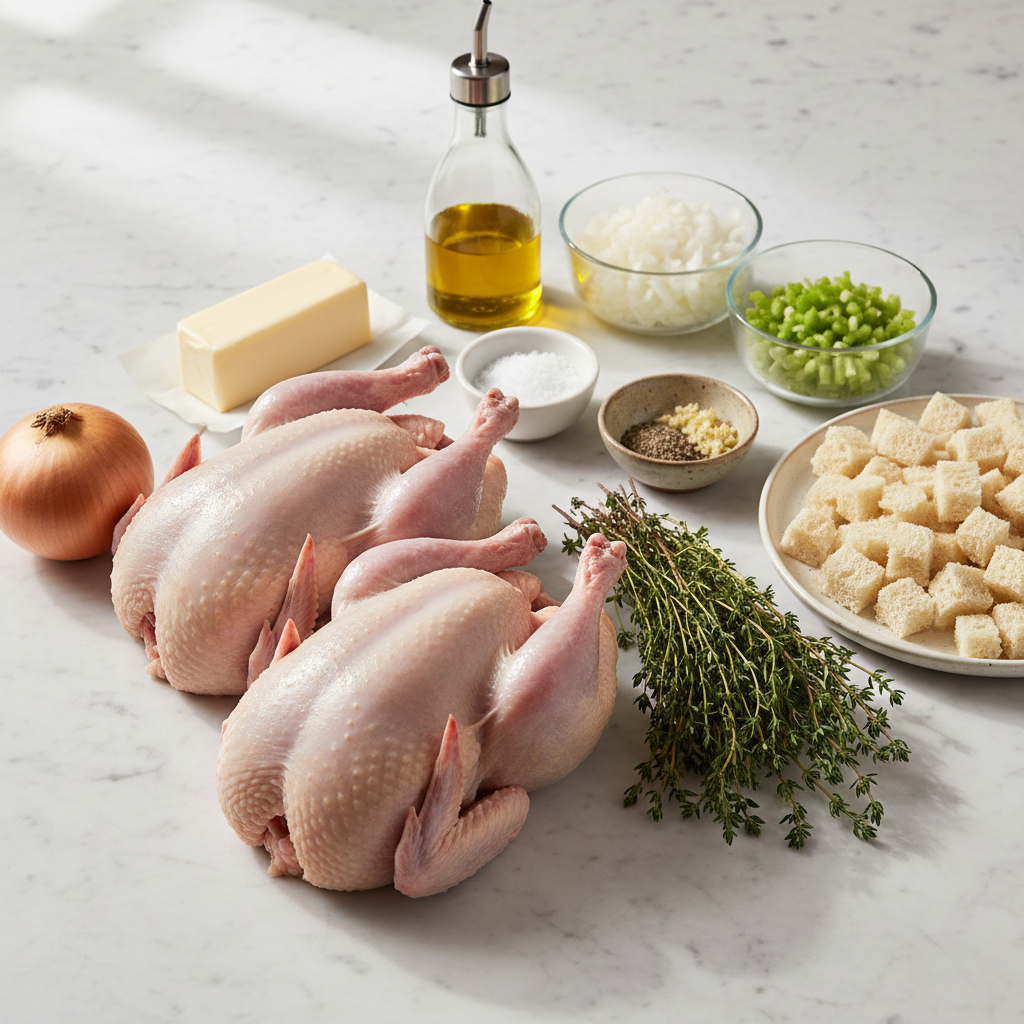
- 1 Cornish game hen, thawed and giblets removed
- 1 teaspoon fresh thyme leaves (or herb of choice)
- 1 teaspoon salt
- 1/2 teaspoon black pepper
- Olive oil, for brushing
- 1/2 cup (4 ounces or 8 tablespoons) unsalted butter
- 1/2 cup chopped onion
- 1 celery stalk, chopped
- 1 garlic clove, minced
- 4 slices white bread, cut into 1/2-inch pieces
- 1/4 teaspoon salt
Ingredient Notes & Substitutions
Cornish Game Hen: Ensure your hen is fully thawed for even cooking. If unavailable, a small chicken can be used, but adjust cooking time accordingly.
Herbs: While thyme is classic, feel free to substitute with sage, rosemary, or a mix for a different aromatic profile. Adjust dried herb amounts (use 1/3 to 1/2 the fresh amount).
Bread: Any sturdy white bread works well. Day-old bread is ideal for stuffing as it absorbs moisture better. You can also experiment with sourdough discard flatbread for a different flavor.
Butter: Unsalted butter allows for better control of the saltiness. If you only have salted, reduce the added salt in the stuffing.
How to Make Easy Stuffed Cornish Hens for Thanksgiving
Follow these straightforward steps to create a delicious centerpiece for your holiday table.
1. Prepare the Stuffing Base
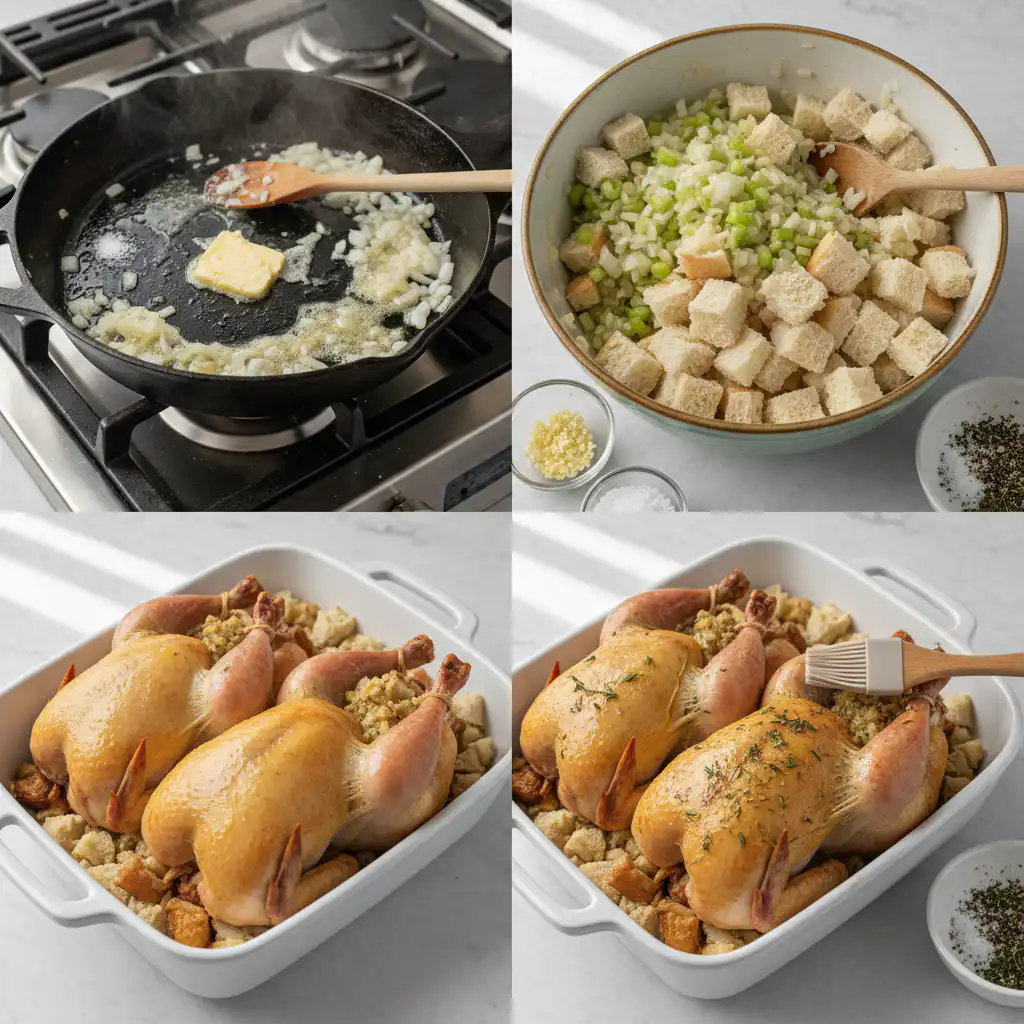
In a large skillet, melt the butter over medium heat. Once hot, add the chopped onion, chopped celery, and a generous pinch of salt (from the stuffing ingredients). Cook, stirring occasionally, until the vegetables are softened and the onion is translucent, about 5 minutes. Add the minced garlic and cook for another minute until fragrant, being careful not to burn it.
2. Moisten the Bread
In a large bowl, combine the cubed bread pieces with the cooked onion and celery mixture from the skillet. Add the 1/4 teaspoon of salt for the stuffing. Gently toss everything together until the bread is evenly moistened by the butter and vegetables.
3. Preheat and Prep Pan
Preheat your oven to 400°F (200°C). Select a small roasting pan or an 8×8 inch baking dish.
4. Mix the Seasoning
In a small bowl, create the herb rub by mixing together the fresh thyme leaves (or your chosen herb), 1 teaspoon of salt, and 1/2 teaspoon of black pepper.
5. Stuff the Hens
Loosely fill the cavity of each Cornish hen with the prepared bread stuffing. Avoid packing it too tightly, as this can prevent even cooking of both the hen and the stuffing. If you have leftover stuffing, you can spread it in a single layer in the bottom of your prepared roasting pan to bake alongside the hens.
6. Truss and Position (Optional but Recommended)
For a neater presentation and more even cooking, tie the hen’s legs together using oven-safe twine. Place the stuffed hen(s) directly into the roasting pan on top of any extra stuffing, or on a roasting rack if not using extra stuffing.
7. Season and Oil
Brush the entire exterior of the hen(s) with olive oil. Then, generously rub the thyme and pepper mixture all over the skin, ensuring you get some under the wings and legs for maximum flavor and crispy skin.
8. Bake to Perfection
Roast in the preheated 400°F (200°C) oven for 50-60 minutes. The hens are done when the juices run clear when the thickest part of the thigh is pierced with a fork or knife, and a meat thermometer inserted into the thigh (without touching bone) registers 165°F (74°C).
Bridging the Gaps: Making Your Stuffed Hens Flawless
Visual Guide to Trussing and Stuffing
While this recipe provides clear instructions, visual aids can be incredibly helpful. For trussing, imagine tying the legs together as you would a small package to keep everything neat. For stuffing, focus on lightly filling the cavity – think of it as giving the hen a comforting, not a tight, hug.
Timing for Size and Doneness
The 50-60 minute timeframe is a guideline for standard 1.5-2 lb Cornish hens. Larger hens will require slightly longer. Always rely on the internal temperature of 165°F (74°C) in the thickest part of the thigh for accuracy. Don’t guess – a thermometer is your best friend for perfectly cooked poultry.
Stuffing Inside vs. Baking Separately
Stuffing the hen adds wonderful flavor directly to the meat and creates a cohesive dish. However, stuffing very densely can lead to undercooked stuffing or hen. If you prefer to be extra cautious or want to make a larger batch of stuffing, baking it separately in a dish alongside the hen is a great option. It will still be delicious!
Pro Tips & Troubleshooting
Expert Tips for Success
- Thorough Thawing: Always ensure your Cornish game hen is completely thawed before cooking for even heat penetration.
- Pat it Dry: For the crispiest skin, pat the hen thoroughly dry with paper towels after thawing and before applying oil and seasonings.
- Trussing for Evenness: Tying the legs not only looks professional but also helps the hen cook more evenly by keeping its shape compact.
- Thermometer is Key: A reliable meat thermometer is the most accurate tool to guarantee your hen is cooked safely and perfectly, avoiding both undercooked and overcooked results.
- Rest Before Carving: Allow the hen to rest for 10 minutes after removing it from the oven. This allows the juices to redistribute, resulting in a more tender and flavorful bird.
Common Mistakes to Avoid
- Forgetting the Giblets: Always remove the giblets from the hen’s cavity before cooking; they can impart an unwanted flavor and affect cooking time.
- Overcrowding the Pan: Ensure there’s enough space around the hen for air to circulate. Overcrowding can lead to steaming rather than roasting, resulting in less crispy skin.
- Packing Stuffing Too Tightly: Overstuffing the hen’s cavity prevents heat from circulating properly, potentially leading to undercooked stuffing and hen.
- Low Oven Temperature: Starting with a hot oven (400°F) is crucial for achieving that desirable golden-brown, crispy skin.
- Cutting Too Soon: Resist the urge to cut into the hen immediately. Resting is a vital step for juiciness and tenderness.
Serving & Storage
Serving Ideas
Pair these individual hens with traditional Thanksgiving favorites like roasted Brussels sprouts, mashed sweet potatoes, or a simple green salad. A side of cranberry sauce or a rich turkey gravy complements the savory flavors beautifully. You can also roast them alongside carrots, parsnips, and potatoes for a complete, colorful meal. For a lighter option, consider a refreshing zesty pineapple detox smoothie.
Storage and Make-Ahead
Make-Ahead Stuffing: Prepare the stuffing mixture (up to step 2) up to 1 day in advance. Store in an airtight container in the refrigerator. Gently moisten with a tablespoon or two of broth or melted butter before stuffing the hens.
Leftovers: Store cooked, cooled Cornish hens and stuffing in an airtight container in the refrigerator for up to 3 days. Reheat gently in the oven or microwave.
Freezing: While best fresh, cooked hen can be frozen, though the skin may lose some crispness upon reheating.
Conclusion
This easy stuffed Cornish hen recipe provides a delightful and stress-free way to enjoy a festive, individual holiday meal. With its crispy skin, savory stuffing, and straightforward preparation, it’s sure to become a favorite Thanksgiving tradition. For other holiday favorites, explore our recipes for easy maple glazed turkey or a delicious spatchcock turkey.
Frequently Asked Questions
What is the best temperature to cook stuffed Cornish hens?
The recommended oven temperature for stuffed Cornish hens is 400°F (200°C).
How long does it take to bake a stuffed Cornish hen?
A stuffed Cornish hen typically bakes for 50-60 minutes, or until the internal temperature reaches 165°F (74°C) in the thickest part of the thigh and the juices run clear.
Can I make the stuffing ahead of time for Cornish hens?
Yes, you can prepare the stuffing a day in advance. Store it in an airtight container in the refrigerator. When ready to cook, gently moisten it with a little broth or melted butter if needed before stuffing the hen.
What is the purpose of trussing Cornish hens?
Trussing, or tying the legs together, helps the hen maintain a compact shape, promoting even cooking and a more attractive presentation.
Can you stuff Cornish hens with bread stuffing?
Absolutely! Bread stuffing is a classic and delicious choice for Cornish hens, providing a comforting, savory filling.
What are the best herbs for stuffing Cornish hens?
Thyme, sage, and rosemary are excellent choices for stuffing Cornish hens, offering a warm, aromatic flavor that pairs well with poultry. A mix of these is also fantastic.
How to make easy stuffed Cornish hens for Thanksgiving?
Follow this recipe! Key steps include preparing a simple bread stuffing, loosely stuffing the hen, seasoning well, and roasting at a high temperature (400°F) until cooked through.
What to serve with stuffed Cornish hens?
Serve with your favorite Thanksgiving sides such as mashed potatoes, roasted vegetables, cranberry sauce, or a light salad. You might also enjoy our chicken and roasted fall vegetables or a hearty high-protein broccoli cheddar soup.
Easy Stuffed Cornish Hens for Thanksgiving
Ingredients
Equipment
Method
- In a large skillet, melt the butter over medium heat. Once hot, add the chopped onion, chopped celery, and a generous pinch of salt (from the stuffing ingredients). Cook, stirring occasionally, until the vegetables are softened and the onion is translucent, about 5 minutes. Add the minced garlic and cook for another minute until fragrant, being careful not to burn it.
- In a large bowl, combine the cubed bread pieces with the cooked onion and celery mixture from the skillet. Add the 1/4 teaspoon of salt for the stuffing. Gently toss everything together until the bread is evenly moistened by the butter and vegetables.
- Preheat your oven to 400°F (200°C). Select a small roasting pan or an 8x8 inch baking dish.
- In a small bowl, create the herb rub by mixing together the fresh thyme leaves (or your chosen herb), 1 teaspoon of salt, and 1/2 teaspoon of black pepper.
- Loosely fill the cavity of each Cornish hen with the prepared bread stuffing. Avoid packing it too tightly, as this can prevent even cooking of both the hen and the stuffing. If you have leftover stuffing, you can spread it in a single layer in the bottom of your prepared roasting pan to bake alongside the hens.
- For a neater presentation and more even cooking, tie the hen's legs together using oven-safe twine. Place the stuffed hen(s) directly into the roasting pan on top of any extra stuffing, or on a roasting rack if not using extra stuffing.
- Brush the entire exterior of the hen(s) with olive oil. Then, generously rub the thyme and pepper mixture all over the skin, ensuring you get some under the wings and legs for maximum flavor and crispy skin.
- Roast in the preheated 400°F (200°C) oven for 50-60 minutes. The hens are done when the juices run clear when the thickest part of the thigh is pierced with a fork or knife, and a meat thermometer inserted into the thigh (without touching bone) registers 165°F (74°C).