How to Eat 30 Plants Per Week (A Beginner's Meal Plan)
The idea of eating thirty different plants a week is not just another wellness challenge. It is rooted in science and supported by one of the largest gut health studies ever conducted. In 2018, the American Gut Project, led by researchers at the University of California, San Diego, examined thousands of stool samples from participants around the world to understand how diet shapes the gut microbiome.
The results were clear. People who ate thirty or more different plants each week had a significantly more diverse gut microbiome than those who ate fewer than ten. Gut diversity matters because it means your body hosts a wider variety of beneficial bacteria. These microbes help break down food, produce essential nutrients, and keep harmful bacteria in check. A richer microbiome is linked to stronger immunity, better digestion, and even improved mental health.
When we eat a variety of plants, we also provide a variety of fibers and polyphenols that feed different types of gut bacteria. Each plant food acts like a unique meal for your microbes. The more diverse your diet, the more balanced your internal ecosystem becomes.
The 30 Plant Diet: What It Is and What It Isn’t
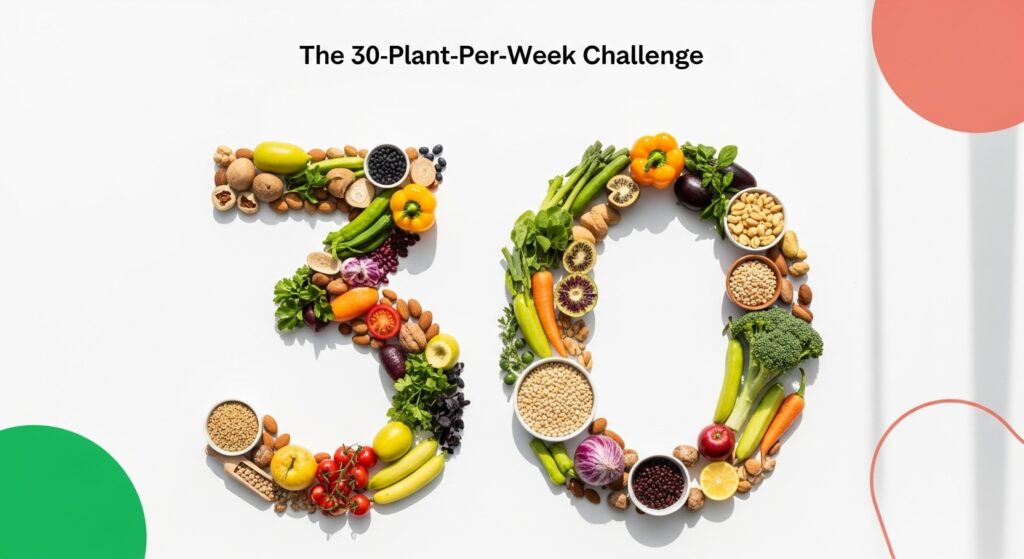
It’s Not Just Gut Health: Total-Body Benefits
The benefits of a diverse gut go far beyond digestion. Research shows that a healthy microbiome can influence several key areas of wellness.
- Mood and Mental Clarity: Gut bacteria help produce serotonin, often called the happiness chemical. A balanced microbiome supports emotional stability and focus.
- Weight Management: A diverse gut helps regulate metabolism and blood sugar levels, which can reduce cravings and support healthy weight.
- Inflammation Control: Short-chain fatty acids (SCFAs), produced when gut bacteria ferment fiber, help lower inflammation and protect against chronic diseases.
- Heart and Hormone Health: Studies suggest that gut health is connected to lower cholesterol, improved blood pressure, and better hormonal balance.
In simple terms, every time you add a new plant to your plate, you are feeding more than yourself. You are nourishing the billions of microscopic partners that keep your body thriving.
Why 30? The Science Behind Plant Diversity and Your Gut
The idea of eating thirty different plants a week is not just another wellness challenge. It is rooted in science and supported by one of the largest gut health studies ever conducted. In 2018, the American Gut Project, led by researchers at the University of California San Diego, examined thousands of stool samples from participants around the world to understand how diet shapes the gut microbiome.
The results were clear. People who ate thirty or more different plants each week had a significantly more diverse gut microbiome than those who ate fewer than ten. Gut diversity matters because it means your body hosts a wider variety of beneficial bacteria. These microbes help break down food, produce essential nutrients, and keep harmful bacteria in check. A richer microbiome is linked to stronger immunity, better digestion, and even improved mental health.
When we eat a variety of plants, we also provide a variety of fibers and polyphenols that feed different types of gut bacteria. Each plant food acts like a unique meal for your microbes. The more diverse your diet, the more balanced your internal ecosystem becomes.
It’s Not Just Gut Health: Total-Body Benefits
The benefits of a diverse gut go far beyond digestion. Research shows that a healthy microbiome can influence several key areas of wellness.
- Mood and Mental Clarity: Gut bacteria help produce serotonin, often called the happiness chemical. A balanced microbiome supports emotional stability and focus.
- Weight Management: A diverse gut helps regulate metabolism and blood sugar levels, which can reduce cravings and support a healthy weight.
- Inflammation Control: Short-chain fatty acids (SCFAs), produced when gut bacteria ferment fiber, help lower inflammation and protect against chronic diseases.
- Heart and Hormone Health: Studies suggest that gut health is connected to lower cholesterol, improved blood pressure, and better hormonal balance.
In simple terms, every time you add a new plant to your plate, you are feeding more than yourself. You are nourishing the billions of microscopic partners that keep your body thriving.
Want to boost protein while hitting 30 plants? Add fermented proteins like tempeh, kefir, or Greek yogurt to any of these meals. They count as plant points AND give you 15-20g protein per serving.
What Exactly Counts as a “Plant Point”?
One of the most common questions people ask when starting the thirty-plant challenge is simple: What actually counts as a plant? The good news is that it is much easier than you think. Every plant-based food you eat counts toward your weekly total, and you will be surprised by how quickly those numbers add up once you start paying attention.
The key idea is variety. Eating five servings of spinach does not count as five points. It counts as one because it is the same plant. The goal is to include as many different plant foods as possible throughout the week. To make it simple, we can divide plants into six main categories.
Category 1: Vegetables
Vegetables are the foundation of the challenge. Each different type of vegetable earns one point. For example, spinach, kale, zucchini, and carrots all count separately. Try to include a mix of leafy greens, root vegetables, and colorful options to cover a wide range of nutrients.
Category 2: Fruits
Every unique fruit counts as one point. Blueberries, oranges, bananas, apples, and kiwis all add to your total. Different colors often represent different phytonutrients, so aim for a rainbow throughout the week.
Category 3: Legumes
Legumes include beans, lentils, and peas. Black beans, chickpeas, lentils, kidney beans, and edamame are all separate points. They are rich in fiber and plant-based protein, making them a powerful ally for gut and heart health.
Category 4: Whole Grains
Whole grains such as oats, quinoa, barley, brown rice, and bulgur each count as one point. When possible, choose unrefined versions since they contain more fiber and minerals.
Category 5: Nuts and Seeds
Every type of nut and seed counts individually. Almonds, walnuts, chia seeds, flaxseeds, sunflower seeds, and pumpkin seeds all earn their own points. These foods provide healthy fats and support brain and hormone health.
Category 6: Herbs and Spices
Herbs and spices are often overlooked, but they are your secret weapon for reaching thirty plants easily. Even small amounts can feed your gut microbes with powerful polyphenols,. Basil, parsley, turmeric, ginger, cinnamon, and cumin all count. Because they are used in smaller amounts, you can assign a quarter point to each herb or spice. For example, four different herbs together can equal one full plant point.
“Plant Point” FAQs
Do different colors of the same vegetable count separately?
No, different colors of the same variety still count as one plant. For example, red and yellow bell peppers are both bell peppers, so they count as one.
Do coffee, tea, or dark chocolate count?
Yes, but only minimally. Coffee, tea, and cacao come from plants, so they technically qualify for one point each per week. However, they should not replace whole foods such as vegetables and fruits.
How do I count mixed foods?
If you make a chili with beans, tomatoes, peppers, onions, and garlic, that single meal could include five or more plants. Meals like soups, salads, and grain bowls are the easiest way to add multiple points in one serving.
Once you start looking closely, you will realize that eating thirty different plants a week is not as complicated as it sounds. It simply requires awareness, creativity, and a willingness to explore new flavors.
How to Eat 30 Plants a Week (Without Stress or a Huge Budget)
When I first decided to aim for thirty plants a week, I imagined long grocery lists and complicated recipes. But after a few tries, I realized that the secret is not in doing more—it is in doing smarter. You do not need to overhaul your diet or spend hours cooking. You only need a few simple habits that make plant diversity part of your normal routine.
10 Simple Tips I Used to Boost My Plant Count
1. The “Topper” Technique
I keep a jar filled with mixed seeds—chia, flax, pumpkin, and sunflower. I sprinkle it on oatmeal, yogurt, salads, or even soup. It takes two seconds and adds four different plants instantly.
2. Mix, Don’t Repeat
Instead of using just one type of bean or grain, I use mixed varieties. A can labeled “five-bean mix” or a blend of quinoa, barley, and lentils gives you several points in one meal.
3. Keep Frozen Veggies Handy
Frozen vegetables are just as nutritious as fresh ones and often cheaper. I always have a mix of spinach, broccoli, and peas in my freezer. They can be added to omelets, stews, or pasta dishes without any extra prep.
4. Build Colorful Bowls
When I make a grain bowl or salad, I aim for at least five different plants in one bowl. Think of it like painting a plate: a base of greens, a protein such as beans, two bright vegetables, and one seed or nut topping.
5. Rotate Breakfasts
Each morning can bring new plant points. One day I have oatmeal with fruit and seeds, the next day a smoothie with spinach and berries, and on weekends, whole grain toast with avocado and tomatoes.
6. Add Herbs to Everything
Herbs are one of the easiest ways to increase plant diversity. I sprinkle fresh parsley or coriander on almost every savory dish. Dried herbs like oregano and thyme also count, so keep a small spice shelf ready.
7. Try New Ingredients Weekly
Each week, I buy one plant I have not used before. It can be as simple as a new fruit or a different type of lentil. Over time, this small habit adds dozens of plants to your diet.
8. Blend Your Leftovers
Leftover vegetables, fruits, or herbs can easily become part of smoothies, soups, or sauces. This helps reduce food waste while adding new plant points without effort.
9. Use Snacks to Your Advantage
Snack time is perfect for boosting your count. Swap chips for roasted chickpeas, apple slices with almond butter, or a small handful of mixed nuts.
10. Plan but Stay Flexible
I do not follow a strict meal plan every day. Instead, I keep a running list of plants I have eaten that week. If I notice I am low on fruits or grains, I simply add them in the next meal.
Eating thirty plants a week is not about perfection or expensive organic produce. It is about being intentional, creative, and open to variety. Over time, it becomes second nature, and your grocery cart starts to look like a rainbow without even trying.
30 Plants a Week Meal Plan: My 7-Day Kickstart
The 30 Plants a Week Challenge: Can You Hit 30 in 7 Days?
When I first began the thirty-plant challenge, I realized that planning made everything easier. This plan is based on what I actually ate during my first successful week.
The goal is not to eat 30 new plants every day, but to reach a cumulative total of 30+ unique plants by the end of the week. Watch how quickly the points add up.
Your Free 30 Plants a Week Checklist
Monday (Running Total: 11 Points)
Breakfast: Oatmeal (1) with blueberries (2), banana (3), and chia seeds (4).
Lunch: Lentil soup with carrots (5), celery (6), onion (7), and garlic (8).
Dinner: Brown rice (9) with mixed vegetables such as broccoli (10) and peas (11).
Tuesday (Running Total: 19 Points)
Breakfast: Smoothie with spinach (12), pineapple (13), mango (14), and flaxseed (15).
Lunch: Chickpea salad with tomato (16), cucumber (17), parsley (18), and lemon juice (19).
Dinner: Quinoa with roasted sweet potatoes and herbs. (Using 2 new plants: Quinoa (20), Sweet Potato (21). Using old plants: herbs, onion, garlic).
(See? We added 8 new plants today, bringing our total to 19.)
Wednesday (Running Total: 25 Points)
Breakfast: Whole grain toast (22) with avocado (23) and tomato (from yesterday).
Lunch: Black bean chili with red beans (24), corn (25), and bell peppers (26). (Uses old plants: onion, garlic, tomato).
Dinner: Roasted cauliflower (27) and a handful of walnuts (28).
(We added 6 new plants and are already at 25!)
Thursday (Running Total: 30 Points – GOAL HIT!)
Breakfast: Yogurt with raspberries (29) and pumpkin seeds (30).
Lunch: Barley with mushrooms and spinach. (Uses 2 new plants: Barley (31), Mushrooms (32). Uses old plant: spinach).
Dinner: Pasta with tomato sauce and basil. (Uses 1 new plant: Basil (33). Uses old plants: tomato, garlic).
(By Thursday, we’ve already hit 33 unique plants!)
Friday, Saturday, Sunday
Now that you’ve hit the goal, the pressure is off! You can relax, eat leftovers, and have fun. If you have an apple (34), some almonds (35), or a different herb like oregano (36), you’ll just keep adding to your total without even trying.
Why You Can Trust New Health Wire
At New Health Wire, our mission is simple: to make health information reliable, science-based, and easy to understand. We know how confusing wellness advice can be online, which is why every article we publish follows strict editorial and review standards. Our goal is to empower you with knowledge that is both trustworthy and actionable.
This article was written by Naomi Vance, founder of newhealthwire.com/ and a dedicated health researcher. Naomi specializes in translating complex science—especially around the gut-hormone axis—into simple, practical steps that women can apply in their daily lives. Her writing combines research, experimentation, and real-life experience to help readers make confident health choices.
Every recommendation shared here is backed by peer-reviewed studies and recognized health authorities. We include links to credible scientific journals, trusted medical organizations, and clinical research papers. By doing this, we make it easier for you to explore the original data and verify the information yourself.
We clearly identify our authors, update dates, and medical reviewers. We never accept sponsorships or payments in exchange for favorable coverage of products or brands. Our goal is to provide information that serves your health, not marketing agendas.
We believe that health information should be honest, compassionate, and empowering. Whether you are starting a gut-healing journey, learning about nutrition, or simply improving your eating habits, you can trust that the content on New Health Wire is created with care, scientific integrity, and respect for your well-being.
Conclusion: Your Journey to 30 Plants Starts with One
The thirty-plant-per-week challenge is not a diet or a rulebook. It is a mindset shift that invites color, flavor, and energy back into your life. When I started, I barely reached twenty-two plants in a week. I felt discouraged at first, but with time, I realized that every small step counts. Each new plant you add builds a stronger, more diverse microbiome that supports your digestion, immunity, and mood.
You do not need to be perfect. You only need to begin. Maybe it starts with sprinkling chia seeds on your breakfast, adding herbs to your dinner, or trying a new vegetable at the market. Soon, those little choices become habits that nourish your gut and your entire body.
Your journey to thirty plants is about curiosity and care. It is about experimenting, enjoying food, and reconnecting with what makes you feel well.
Call to Action:
What is one new plant you will try this week? Share your ideas and progress in the comments below. Your creativity might inspire someone else to begin their journey too.
Scientific References
- Knight, R. et al. (2018). American Gut: an Open Platform for Citizen Science Microbiome Research. mSystems.
- Chambers, E. S., et al. (2019). Effects of Dietary Fiber on Short-Chain Fatty Acid Production and Health. Nutrients.
- Tzounis, X., et al. (2020). Polyphenols and Gut Health: Interactions Between Dietary Compounds and Microbiota. Frontiers in Nutrition.
Medical Disclaimer
The information in this article is for educational purposes only. It is not intended as a substitute for professional medical advice, diagnosis, or treatment. Always seek the guidance of your doctor or a qualified healthcare provider before making any changes to your diet or lifestyle.
Your 7-Day “30 Plants a Week” Meal Plan
Reaching the goal of 30 vegetables a week (and fruits, seeds, and nuts) might sound daunting, but with the right 30 plants a week recipes, it becomes completely effortless. Here is a simple, gut-healing 7-day meal plan to get you there:
- Monday: Start with a Kefir Oatmeal bowl topped with chia seeds, flax, pumpkin seeds, blueberries, and raspberries. (+6 plants)
- Tuesday: For lunch, throw together a Dense Bean Salad featuring black beans, chickpeas, kidney beans, red onion, bell peppers, and cilantro. (+6 plants)
- Wednesday: Make a Smoky Sweet Buddha Bowl packed with sweet potato, kale, quinoa, avocado, and tahini. (+5 plants)
- Thursday: Snack on homemade Fibermaxxing Energy Balls made with rolled oats, almond butter, hemp hearts, and cacao nibs. (+4 plants)
- Friday: Dinner is a quick Fajita Bowl loaded with zucchini, yellow squash, tomatoes, jalapenos, and black olives. (+5 plants)
- Saturday: Start your weekend with Pumpkin Muffins baked with walnuts and cinnamon. (+3 plants)
- Sunday: Reset your gut with a warm cup of Golden Milk containing turmeric, ginger, and black pepper. (+3 plants)
Total: 32 unique plants!
Free Printable 30-Plant Checklist
To make tracking easier, simply draw a grid of 30 boxes in your journal or on your fridge. Every time you eat a new plant variety during the week (spinach counts once, even if you eat it every day!), check off a box. Your gut microbiome will thank you!