Fibermaxxing recipes are everywhere right now! but 95% of them are missing the most important piece.
Fibermaxxing blew up on TikTok last year as the “new weight loss trend.” Fair enough, eating 30g+ fiber daily keeps you full longer, reduces cravings, and naturally lowers calorie intake.
But there’s something nobody’s talking about.
The fitness people are missing fiber entirely. The health bloggers are ignoring protein. And everyone’s glossing over the fact that the foods that are best for your gut are also best for building muscle.
I didn’t notice this until I was three years into fermenting everything in my kitchen.
A jar of kefir has 10g of protein and 30+ probiotic strains. Tempeh has 20g of protein and naturally fermented enzymes that make it easier to digest. A bowl of lentils gives you 16g fiber AND 18g protein in one serving. Aged sourdough is technically fermented; your gut handles it better than commercial bread.
These foods aren’t “fiber foods” or “protein foods.” They’re both. And when you build your diet around them, protein AND fiber AND probiotics in every meal, something shifts.
You feel full. Your energy is stable. Your digestion improves. And you actually get stronger because your body is properly fueled and your gut is healthy enough to absorb nutrients.
These fibermaxxing recipes are different because they combine real fermentation with real protein.
That’s what fibermaxxing actually is, when you do it right.
This is the guide I wish I’d had three years ago when I first realized this connection. It’s what I teach people now.
Table of Contents
– What Is Fibermaxxing (The Real Definition)
– The Fermentation Angle Nobody Talks About
– Why Fiber + Protein Together Is the Real Secret
– 5 Fibermaxxing Recipes That Build Muscle
– 7-Day Fibermaxxing Meal Plan
– Does This Actually Work? (The Science)
– Common Fibermaxing Mistakes
What Is Fibermaxxing? (The Real Definition)
Fibermaxxing = intentionally eating 25-38+ grams of fiber daily using real, whole foods — not supplements, not processed “high-fiber” bars, not powders.
The term went viral in late 2025. #BeanTok exploded. People posted videos of beans on toast and suddenly, the internet cared about legumes.
But here’s the thing: fibermaxxing isn’t a diet trend. It’s the opposite of a trend. It’s what humans ate for thousands of years before we started eating 10g of fiber a day and calling it normal.
Why it’s trending now:
Most adults need 25-38 grams of fiber per day, but 95% of Americans fall significantly short of that daily target.
Stable digestion? Gone. Steady energy? Gone. Proper hunger cues? Shot. And your gut bacteria, which control everything from your mood to your immune system to how efficiently you build muscle, are basically starving.
Close that gap, and everything changes.
The Fermentation Angle (Why I Do This Differently)
Here’s what’s not in other fibermaxxing guides:
When you ferment food, bacteria partially digest it for you. They break down proteins into amino acids, convert carbs into compounds your gut actually wants, kill off pathogens, and multiply like crazy, creating the probiotics you’ve heard about.
This matters for fibermaxxing because:
- Fermented foods are easier to digest. Eating 30+ g of fiber is only good if your gut can actually handle it. Fermented fiber sources (sourdough, miso, aged cheeses, tempeh) are gentler than raw beans and less likely to cause bloating.
- Probiotics speed up the benefits of fiber. Fiber feeds your good gut bacteria. Good bacteria flourish. But if you’re starting with a depleted microbiome, the process is slow. Fermented foods fast-track it — you’re literally adding billions of bacteria to your system.
- Fermented foods have extra protein. Kefir. Tempeh. Miso. Aged sourdough starter. These are high-fiber and high-protein in a way that feels effortless to eat. You’re not choking down protein powder or forcing yourself to eat chicken breast with every meal.
I’m not saying this to sell you on fermentation (though if you want to learn how to make kefir at home, I have recipes for that). I’m saying it because if you’re going to Fibermaxx, you might as well do it in a way that actually feels good.
The High-Protein Angle (Why Fiber Alone Isn’t Enough)
Fibermaxxing will keep you full. High protein will build muscle and keep you full longer. Together, they’re unstoppable.
Here’s the science everyone ignores:
Fiber expands in your stomach and slows gastric emptying, the rate at which food leaves your stomach. This makes you feel full.
Protein triggers satiety hormones (peptide YY and GLP-1) and requires more energy to digest. This also makes you feel full and preserves muscle during calorie deficits.
Together, high-fiber + high-protein meals are the most satiating combination per calorie. You eat less, naturally. You feel better. You’re not fighting hunger all day.
The fitness industry got protein right but skipped fiber. The health industry got fiber right, but treated protein like a side dish.
New Health Wire does both. Every recipe here hits at least 20g protein and 20g+ fiber in a single serving. That’s the real unlock.
The 5 Fibermaxxing Recipes That Actually Work
I’m not giving you 15 variations of the same salad. These are the 5 recipes I actually cook. They’re tested. They’re delicious. They have real fiber counts and real protein.
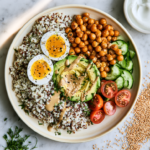
Recipe 1: The Buddha Bowl That Actually Keeps You Full (18g fiber, 22g protein)

Smoky roasted chickpeas, sweet potato, kale, and quinoa with a garlic tahini dressing. This Buddha bowl hits 18g fiber and 22g protein in one bowl — get the full recipe here.
Recipe 2: Overnight Oats With Kefir (32g fiber, 22g protein)

This is how you get probiotics WITHOUT yogurt getting weird and separated by 10 am. Get the full recipe here.
Total: 8g fiber, 15g protein, ~320 calories
Pro tip: Don’t use vanilla yogurt or flavored kefir — they add sugar. Plain kefir tastes tangy (which some people don’t expect) but it pairs perfectly with the natural sweetness of pear and the richness of almond butter. Trust it.
Recipe 3: Chickpea Pasta With Fermented Toppings (38g fiber, 26g protein)

This is what happens when you use chickpea pasta (10g fiber, 14g protein per serving) as your base instead of whole wheat.
Recipe 4: Breakfast Scramble With Cottage Cheese (28g fiber, 32g protein)

The secret weapon nobody thinks of: cottage cheese in breakfast eggs. Get the full recipe here.
Real talk: If you’re doing fitness training, this breakfast is fuel. It’s not “light.” It’s not a salad. It’s proper nutrition.
Recipe 5: No-Bake Fibermaxxing Energy Balls (24g fiber, 16g protein per 3-ball serving)

These are the “protein bar” you should be making at home instead of buying. Get the full recipe here.
Real talk: These taste like chocolate truffles. Friends will ask for the recipe. They’ll be shocked when you tell them it’s all whole food.
The 7-Day Fibermaxxing Meal Plan (Built for Actual People)
This isn’t theoretical. It’s what I eat. It delivers 35-50g fiber per day with 80-100g protein.
| Day | Breakfast | Lunch | Dinner | Snack | Fiber | Protein |
|---|---|---|---|---|---|---|
| Monday | Overnight oats kefir (32g fiber, 22g protein) | Buddha bowl (35g fiber, 28g protein) | Chickpea pasta (38g fiber, 26g protein) | Pear + almond butter (5g fiber, 4g protein) | 110g | 80g |
| Tuesday | Breakfast scramble (28g fiber, 32g protein) | Lentil soup (16g fiber, 18g protein) | Salmon with roasted broccoli + sweet potato (8g fiber, 35g protein) | Energy balls (24g fiber, 16g protein) | 76g | 101g |
| Wednesday | Overnight oats kefir (32g fiber, 22g protein) | Chickpea salad with tahini (14g fiber, 16g protein) | White beans on sourdough + fried egg (13g fiber, 20g protein) | Berries + cottage cheese (5g fiber, 14g protein) | 64g | 72g |
| Thursday | Smoothie bowl: oats, chia, berries, hemp (18g fiber, 24g protein) | Turkey & lentil soup (16g fiber, 28g protein) | Chickpea pasta (38g fiber, 26g protein) | Energy balls (24g fiber, 16g protein) | 96g | 94g |
| Friday | Breakfast scramble (28g fiber, 32g protein) | Buddha bowl (35g fiber, 28g protein) | Baked white fish with roasted vegetables + wild rice (10g fiber, 32g protein) | Pear + cheese (5g fiber, 7g protein) | 78g | 99g |
| Saturday | Overnight oats kefir (32g fiber, 22g protein) | Lentil & vegetable curry (15g fiber, 20g protein) | Chickpea stir-fry with brown rice (14g fiber, 18g protein) | Energy balls (24g fiber, 16g protein) | 85g | 76g |
| Sunday | Free choice breakfast (aim for 20g+ fiber, 20g+ protein) | Buddha bowl OR chickpea salad (30-35g fiber, 25-28g protein) | Leftover fav or simple meal (15g fiber, 20g protein) | Whatever fits (5-10g fiber) | 60-80g+ | 65-85g+ |
Notes on the plan:
- Sunday is flexible because you’ll want one day to eat what sounds good without tracking
- Dinners can rotate — swap salmon for chicken, white beans for lentils, broccoli for Brussels sprouts
- Soups and pasta meals prep easily — make 4-6 servings on Sunday, eat all week
- Snacks are non-negotiable. Energy balls + fruit + nuts keep you from raiding processed snacks at 3pm
- Water is non-negotiable. 8-10 glasses per day minimum. Fiber absorbs liquid.
Does This Actually Work? (The Real Science)
For weight loss: Yes, but not because fiber has magic fat-burning properties. High-fiber meals keep you full longer. You naturally eat fewer calories without feeling deprived. That’s it. That’s the whole mechanism.
For building muscle: Yes, because you’re eating enough protein (80-100g daily) to build tissue, and your digestion is healthy enough to absorb it all. You’re also not inflamed, which impairs recovery.
For energy: Yes. Fiber slows carbohydrate absorption, preventing blood sugar spikes and crashes. Stable glucose = stable energy all day.
For digestion: This depends on how you start.
If you’re currently eating 10-15g fiber per day and jump straight to 40g, your gut will fight back (gas, bloating, digestive discomfort). This is normal but avoidable.
Start here: Add 5g fiber per week. Drink extra water. Give your microbiome time to adapt. By week 8, you should be at 35-40g with zero bloating.
Common Fibermaxxing Mistakes (Don’t Make These)
Mistake 1: Jumping to 40g fiber overnight. Your gut bacteria need time to adapt. They’ll feast on all that new fiber and produce gas as a byproduct (which is actually a sign things are working, but it’s uncomfortable). Go slow.
Mistake 2: Forgetting to drink water. Fiber absorbs water. If you eat 30g of fiber but drink 4 glasses of water, you’ll be constipated and bloated. Counterintuitive but true. Aim for 8-10 glasses daily.
Mistake 3: Relying on raw vegetables for fiber. Raw broccoli, raw carrots, raw salad — they have fiber, but they’re also high-volume and low-calorie-dense. You’ll eat a massive salad and still be hungry. Cooked vegetables, beans, lentils, and oats are more satiating.
Mistake 4: Buying “high fiber” processed foods. Fiber bars, fiber crackers, fiber cereals often add isolated fiber (inulin, chicory root), which causes gas. Whole-food fiber sources are better tolerated.
Mistake 5: Skipping protein because “I’m just doing fiber.” Fiber alone keeps you full. Fiber + protein keeps you full AND preserves muscle AND supports recovery. Do both.
The Difference Between This and Every Other Fibermaxxing Guide
Most fibermaxxing guides focus on weight loss. They list 15-20 recipes, some of which you’d never actually make, thrown together to hit a number.
This guide focuses on real food that tastes good and actually fits into a fitness-oriented life.
- Every recipe has real protein (not an afterthought)
- Every recipe uses ingredients you can actually find (not exotic superfoods)
- Every recipe meal-preps well (you’re not cooking fresh every meal)
- The fermentation angle is unique (most guides ignore this entirely)
- The plan assumes you have a life outside the kitchen
Your Next Step
Pick one recipe from this guide and make it this week. Just one.
If you hate it, try the next one. If you love it, add it to your rotation.
You don’t have to do all 5 immediately. You don’t have to hit 40g fiber on day one. Start with one meal that slots into your existing routine, then build from there.
The best diet is the one you’ll actually stick with. Fibermaxxing only works if it becomes something you want to do, not something you force yourself through.
Questions about fibermaxxing? Here’s what people ask:
Q: Will I gain weight from eating all this? A: No. High-fiber foods are lower in calories per volume. A bowl of lentil soup (16g fiber, 200 cal) is more filling than a bowl of pasta (3g fiber, 300 cal). You’ll naturally eat fewer calories overall.
Q: Can I do this if I have IBS/digestive issues? A: Maybe. Fermented foods are easier to digest than raw fiber sources. Cooked vegetables are better than raw. Start slow and work with your body. If bloating persists beyond week 3, talk to a doctor.
Q: Do I have to eat kefir if I don’t like it? A: No. Use Greek yogurt instead (you lose the wide variety of probiotics, but keep the protein and culture). Or use other fermented foods like miso or tempeh. The goal is to ferment something, not kefir specifically.
Q: What if I hate one of these recipes? A: Don’t eat it. There are thousands of high-fiber, high-protein recipes out there. These are just my top 5. Find yours.
Final thought:
Fibermaxxing isn’t a trend that’s going to die. It’s what your body actually needs. The fact that it’s trendy right now is just lucky timing.
Start this week. Pick one meal. Make it. Notice how you feel. That’s the real science — not what I tell you, but what your own body tells you.
Naomi Vance
Home cook, fermentation nerd, gut health enthusiast
New Health Wire
Subscribe for weekly fibermaxxing recipes + fermentation guides delivered to your inbox.