There is something uniquely comforting about a steaming mug of rich, homemade bone broth. It feels deeply nourishing, warming you from the inside out. For years, I thought a truly gelatinous, flavorful bone broth recipe was something only professional kitchens could achieve. It seemed complex and intimidating. This guide is here to change that, making the entire process foolproof. I will share my masterclass method for the perfect gel and deep flavor, focusing on my favorite tool, the Instant Pot, with simple variations for your slow cooker and stovetop too.
Why You’ll Love This Recipe (The Umami Secret)
This is not just any bone broth recipe. We have a secret that elevates it from good to absolutely unforgettable. By adding dried shiitake mushrooms and a piece of kombu, we create a profoundly deep, savory flavor you simply cannot get from bones alone. These two ingredients are umami powerhouses that work together to create a richer, more complex broth without needing extra salt.
Incredible Flavor
The combination of roasted bones and our umami-boosting ingredients results in a broth with unparalleled depth. It is savory, complex, and incredibly satisfying to sip on its own.
Nutrient-Dense Goodness
My method is specifically designed to extract the maximum amount of collagen and gelatin from the bones. This creates that prized jiggly texture and a broth packed with beneficial compounds.
Fail-Proof Gelling
If you have ever been disappointed by a watery broth, this recipe is for you. By following these steps, you will achieve that beautiful, jello-like consistency that signals a successful, high-quality bone broth.
Versatile Meal Prep
This broth is a foundational ingredient in my kitchen. I use it as a base for soups and stews, to cook grains, or just to have on hand for a warm, nourishing drink.
Ingredients Needed

2-3 pounds beef bones (or chicken, pork, turkey)
1 onion, quartered
2 carrots, roughly chopped
2 celery stalks, roughly chopped
4 cloves garlic, smashed
2 bay leaves
1-2 teaspoons apple cider vinegar
1 teaspoon salt
1/2 teaspoon black peppercorns
Water
Ingredient Notes & Sourcing
Bones: For the richest broth with the best gel, a mix of bones is always best. I recommend using a combination of knuckle or joint bones and feet for their high collagen content, and marrow bones for richness. When you visit your local US butcher, you can ask, “Do you have beef knuckle bones for broth?” or “I am looking for a mix of bones for a gelatinous bone broth.” Using bones from grass-fed animals can offer additional nutrients, but conventional bones will also make a wonderful broth.
The Umami Boost (Our Twist): I highly recommend adding 1-2 dried shiitake mushrooms and a 4-inch piece of kombu to your pot. These are optional but create an incredible depth of flavor. You can find them in the international aisle of most supermarkets or at an Asian market.
Apple Cider Vinegar: Do not skip the apple cider vinegar. This small amount of acid plays a crucial role in helping to break down the connective tissue and draw the valuable minerals and collagen out of the bones and into your broth.

How to Make Instant Pot Bone Broth
The pressure cooker is my favorite tool for making bone broth. It is fast, efficient, and produces consistently amazing results.
Roast the Bones for Flavor
First, if using raw bones, you must roast them. This is the single most important step for developing a deep, rich, savory flavor. Simply place the beef bones on a baking sheet and roast them in a 400°F oven for 20-25 minutes, until they are deeply browned and fragrant. Your kitchen will smell amazing. If you are using bones from a leftover roast chicken or turkey, you can skip this step.
Load and Seal the Instant Pot
Transfer the roasted bones into the inner pot of your Instant Pot. Add the classic mirepoix of onion, carrots, and celery, along with the smashed garlic and bay leaves. Now is the time to add our umami-boosting shiitake mushrooms and kombu if you are using them. Finally, pour in the apple cider vinegar, salt, and black peppercorns. Add just enough water to cover all the ingredients, being very careful not to fill past the max fill line on the pot for safety.
Pressure Cook and Natural Release
Secure the lid, turn the steam release valve to the “sealing” position, and select the Pressure Cook or Manual function. Set the time to 120 minutes on high pressure. Once the cooking cycle is finished, let the pressure release naturally for at least 30 to 45 minutes. This slow release is essential for a clear broth and prevents hot liquid from sputtering out of the valve.
Strain, Chill, and Skim the Fat
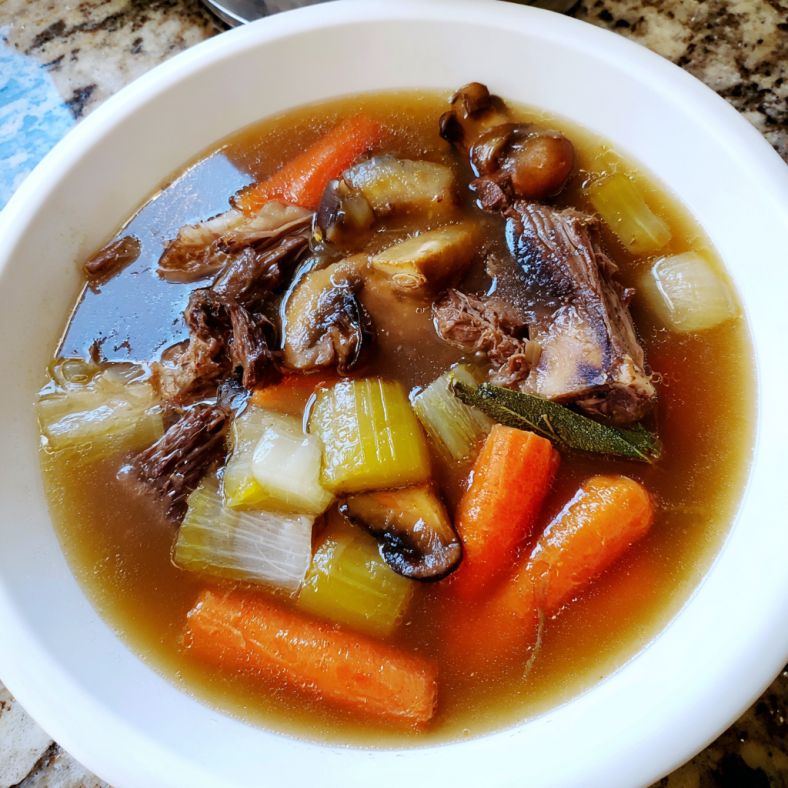
Once the pressure has fully released, carefully open the lid. Use tongs or a large slotted spoon to remove the large bones and vegetable pieces. To get a crystal-clear, sediment-free broth, strain it through a fine-mesh sieve lined with cheesecloth into a large bowl. Let the broth cool on the counter for about an hour before moving it to the refrigerator to chill completely overnight. This allows the fat to rise to the top and solidify into a thick cap. The next day, you can lift this fat cap right off, revealing the beautiful, jiggly, gelatinous broth underneath.
Other Cooking Methods: Slow Cooker & Stovetop
If you do not have an Instant Pot, you can still make an incredible bone broth using these traditional methods.
Slow Cooker / Crock-Pot Bone Broth
To adapt this recipe for a slow cooker, follow the same initial step of roasting your raw bones. Place the roasted bones and all other ingredients into your slow cooker. Cover with water, again being careful not to overfill. Cook on the LOW setting for 12 to 24 hours. The longer you let it go, the richer and more concentrated your broth will become. Strain and chill as directed in the Instant Pot method.
Traditional Stovetop Bone Broth
For the stovetop method, you will need a large stockpot. After roasting your bones, add them to the pot with the rest of the ingredients and cover with water. Bring the mixture to a boil, then immediately reduce the heat to a very low simmer. You should only see a few tiny bubbles rising to the surface. Skim off any foam or scum that forms during the first hour. Partially cover the pot and let it simmer for at least 8-12 hours for chicken or 12-24 hours for beef. You may need to top it up with a little extra water to keep the bones covered as it simmers.
Pro Tips & Troubleshooting
After years of making this recipe, I have learned a few things that guarantee a perfect result every time.
Expert Tips for the Best Broth
– Always roast raw bones. This Maillard reaction is non-negotiable for maximum flavor.
– For an ultra-clear broth, double-strain it through a fine-mesh sieve lined with cheesecloth.
– Chilling the broth overnight is the easiest way to remove 100% of the fat.
– Use a mix of bones. Joints, knuckles, and feet provide the collagen for a great gel, while marrow bones add richness.
– Do not skip the apple cider vinegar. It is the key to extracting all the valuable minerals.
Troubleshooting Common Issues
Why didn’t my broth gel? This is the most common question. It usually comes down to three things: the water-to-bone ratio was too high, you did not cook it long enough, or you did not use enough collagen-rich bones like joints and feet. For your next batch, reduce the water slightly or add a few chicken feet.
My broth is cloudy, what happened? A cloudy broth is usually the result of boiling it too vigorously. Bone broth should be kept at a gentle simmer, not a rolling boil. On the Instant Pot, this can happen if you use the quick release method, which agitates the contents.
How do I source the best bones? Your local butcher is your best friend. Simply ask for a mix of beef, pork, or chicken bones specifically for making broth. They will know exactly what you need. You can also save and freeze bones from roasts to use later.
Serving & Storage
Now that you have this liquid gold, here is how to use and store it.
Creative Serving Ideas
– Sip it warm from a mug with just a pinch of salt for a simple, nourishing drink.
– Use it as the cooking liquid for rice, quinoa, or risotto to infuse them with incredible flavor and nutrients.
– It is the perfect flavorful base for homemade ramen, pho, and any kind of soup or stew.
– Deglaze the pan with a splash of broth after searing meat to create a quick, delicious pan sauce.
– Gently poach eggs in simmering bone broth for a savory, protein-packed breakfast.
Storing and Freezing Bone Broth
For short-term use, store your bone broth in airtight jars or containers in the refrigerator for up to 5 days. The fat cap, if you leave it on, will help preserve it. For long-term storage, freezing is the best option. I recommend freezing it in practical portions. Ice cube trays are perfect for small amounts to use in pan sauces. Silicone muffin pans or Souper Cubes are great for freezing 1-cup or 2-cup portions for soups.
Conclusion
Making your own delicious, gelatinous, and nourishing bone broth is a deeply rewarding kitchen ritual. With our umami twist and detailed instructions for the Instant Pot, slow cooker, and stovetop, anyone can master this foundational recipe. You are now equipped to create a broth that is miles ahead of anything you can buy at the store. We can’t wait to see your beautiful, jiggly broth! Let us know how you use it in the comments below.
Frequently Asked Questions (FAQ)
What is the difference between bone broth and stock?
The main differences are cook time and the final product’s texture. Bone broth is simmered for a very long time (8-24+ hours) to extract collagen, which results in a gelatinous consistency when chilled. Stock is typically cooked for a shorter period and is used primarily for flavor in cooking, usually remaining a liquid when cold.
Why didn’t my bone broth gel?
There are three main culprits. First, your bone-to-water ratio might be off; too much water will dilute the gelatin. Second, the cooking time might have been too short. Third, you may not have used enough collagen-rich bones like knuckles, joints, or feet. A good gel requires plenty of these parts.
How long does bone broth last?
Properly stored in an airtight container, bone broth will last for about 5 days in the refrigerator. For longer storage, it can be frozen for up to 6 months without losing its quality.
Do I have to roast the bones first?
While not strictly mandatory, I highly recommend it for beef or pork bones. Roasting creates a Maillard reaction, which deeply browns the bones and adds a huge amount of rich, savory flavor to your final broth. You can skip this for leftover cooked bones.
What kind of bones are best for bone broth?
A mix is always ideal. Use collagen-rich bones like knuckles, joints, chicken feet, and pig’s feet to achieve that perfect gel. Combine them with marrow bones for a richer flavor and mouthfeel.
What are the benefits of drinking bone broth?
Bone broth is celebrated for its high content of collagen, gelatin, and amino acids. These components are thought to support gut health, joint health, and promote healthy skin and hair. It is a nourishing, easily digestible, and comforting food.
The Ultimate Bone Broth Recipe (Instant Pot & More)
Ingredients
Equipment
Method
- If using raw bones, place them on a baking sheet and roast in a 400°F oven for 20-25 minutes, until deeply browned and fragrant. This step develops rich flavor. If using bones from a leftover roast, you can skip this step.
- Transfer the roasted bones into the inner pot of your Instant Pot. Add the quartered onion, roughly chopped carrots, roughly chopped celery, smashed garlic, and bay leaves. Now, add the optional dried shiitake mushrooms and kombu (if using) for an umami boost. Pour in the apple cider vinegar, salt, and black peppercorns.
- Add just enough water to cover all the ingredients, being very careful not to fill past the max fill line on the pot for safety.
- Secure the lid, turn the steam release valve to the "sealing" position, and select the Pressure Cook or Manual function. Set the time to 120 minutes on high pressure.
- Once the cooking cycle is finished, let the pressure release naturally for at least 30 to 45 minutes. This slow release is essential for a clear broth and prevents hot liquid from sputtering out of the valve.
- Once the pressure has fully released, carefully open the lid. Use tongs or a large slotted spoon to remove the large bones and vegetable pieces.
- To get a crystal-clear, sediment-free broth, strain it through a fine-mesh sieve lined with cheesecloth into a large bowl.
- Let the broth cool on the counter for about an hour before moving it to the refrigerator to chill completely overnight. This allows the fat to rise to the top and solidify into a thick cap.
- The next day, you can lift this fat cap right off, revealing the beautiful, jiggly, gelatinous broth underneath.
- Roast your raw bones as described above. Place the roasted bones and all other ingredients into your slow cooker. Cover with water, being careful not to overfill. Cook on the LOW setting for 12 to 24 hours. The longer it cooks, the richer and more concentrated the broth will become. Strain and chill as directed in the Instant Pot method.
- After roasting your bones, add them to a large stockpot with the rest of the ingredients and cover with water. Bring the mixture to a boil, then immediately reduce the heat to a very low simmer (you should only see a few tiny bubbles rising). Skim off any foam or scum that forms during the first hour.
- Partially cover the pot and let it simmer for at least 8-12 hours for chicken or 12-24 hours for beef. You may need to top it up with a little extra water to keep the bones covered as it simmers. Strain and chill as directed.