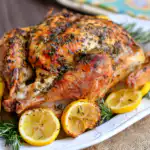
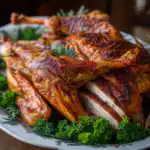
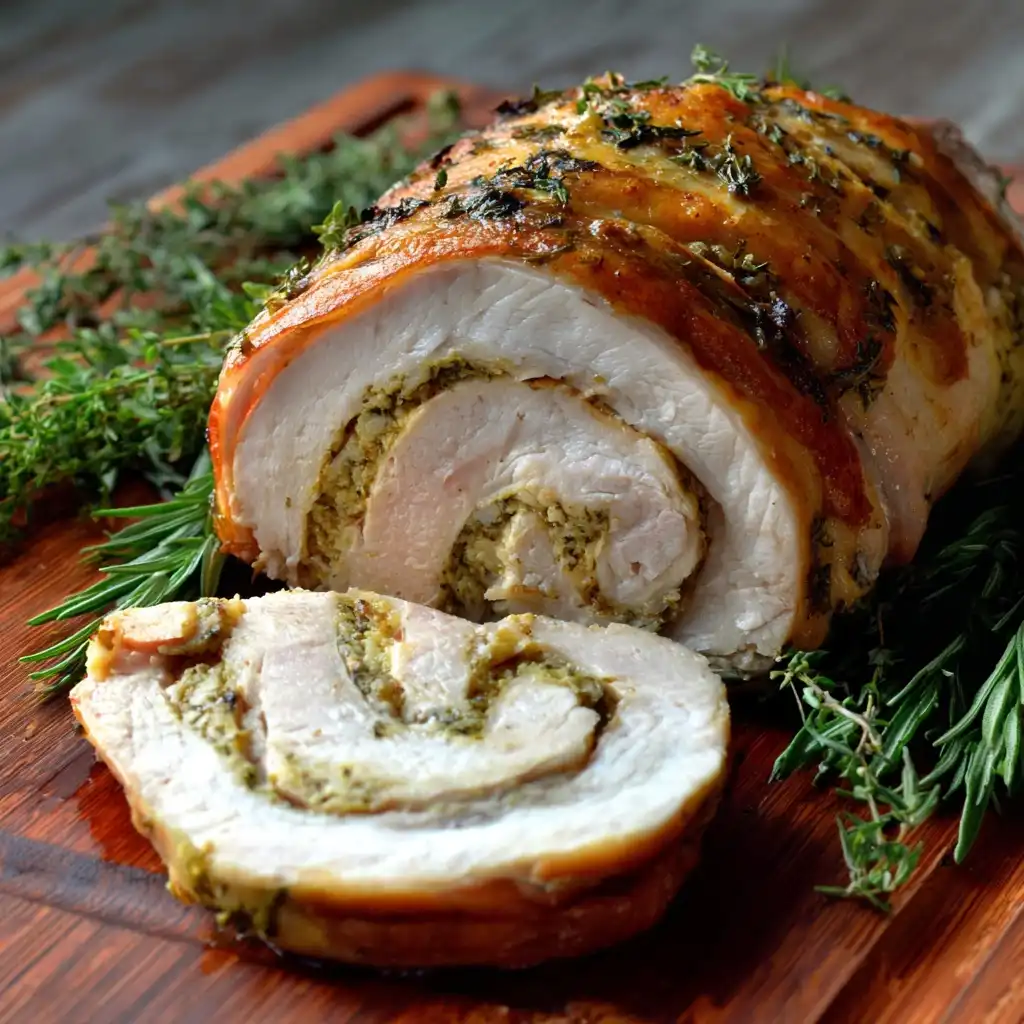
Imagine a stuffed turkey breast so tender and infused with fresh herbs and garlic that it becomes the star of your holiday table. This herb turkey recipe delivers exactly that – a beautiful, golden-brown turkey roulade that’s surprisingly easy to make. Forget dry, boring turkey; this recipe is designed for maximum flavor and juiciness, making it perfect for Thanksgiving, Christmas, or any special occasion.
Why You’ll Love This Recipe
- Incredible Flavor: A vibrant mix of fresh rosemary, sage, and thyme, combined with garlic, permeates every bite.
- Unbeatable Juiciness: The butterflying technique and careful roasting ensure moist, tender meat every time.
- Impressive Presentation: The elegant spiral of the roulade looks stunning on any platter, making it ideal for holiday turkey gatherings.
- Reliability: With clear instructions and insider tips, even novice cooks can achieve professional results.
- Versatile: Adapts beautifully to different herbs and can be prepped ahead for stress-free cooking.
Ingredients Needed
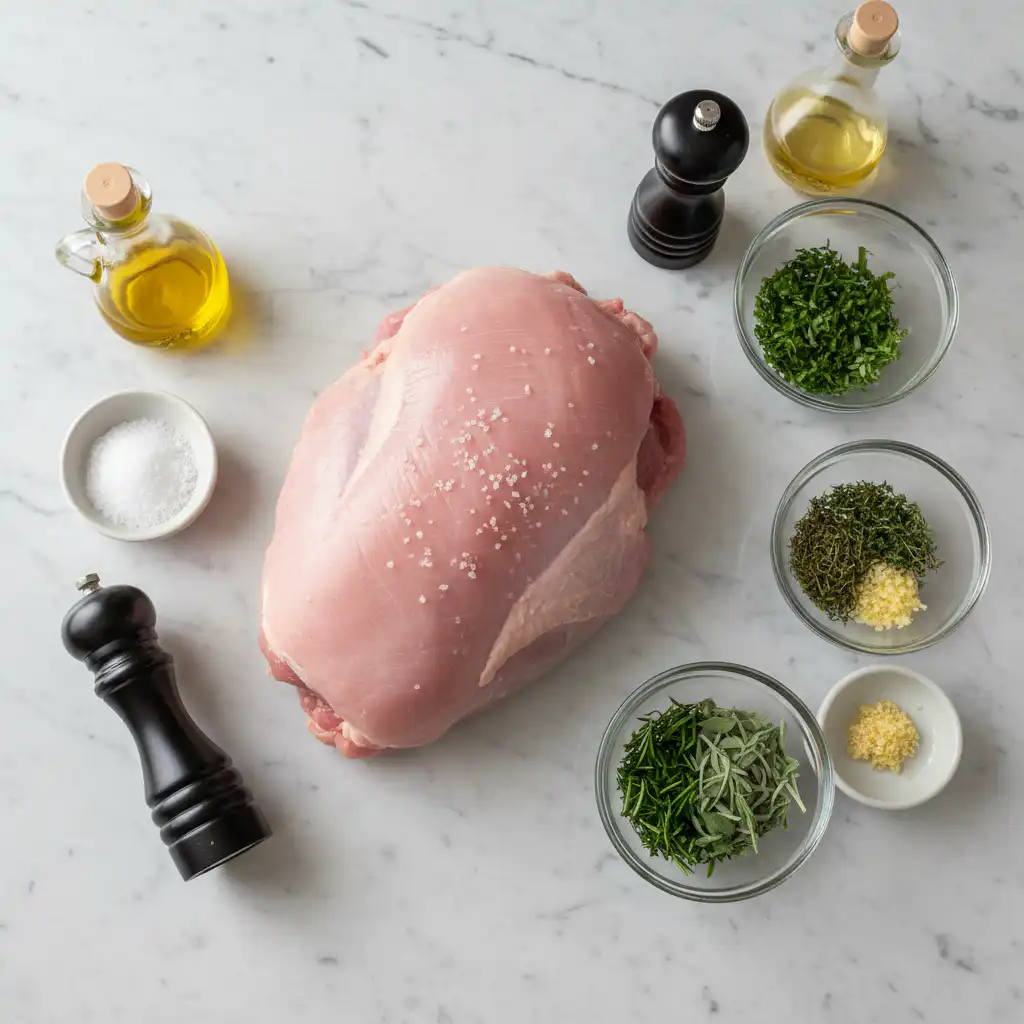
- 2 teaspoons kosher salt
- 1 teaspoon freshly ground black pepper
- 2 tablespoons fresh rosemary (minced)
- 2 tablespoons fresh sage leaves (minced)
- 2 tablespoons fresh thyme leaves (minced)
- 3 cloves garlic (minced)
- 1 tablespoon extra virgin olive oil
- 5 pounds bone-in, skin on turkey breast (patted dry)
- salt and freshly ground black pepper
- 1 tablespoon oil with a high smoke point (such as avocado or canola)
Ingredient Notes & Substitutions
Turkey Breast: Opt for a high-quality, boneless turkey breast for best results. The 5lb size is ideal for this rolled turkey recipe, serving approximately 6-8 people.
Herbs: While rosemary, sage, and thyme are classic, feel free to experiment with other favorites like parsley, chives, or marjoram. For a variety of herbaceous dishes, consider exploring Mediterranean dishes which often feature fresh herbs.
Garlic: Freshly minced garlic provides the best flavor, but garlic powder can be used in a pinch (about 1/2 teaspoon).
Oil: A high smoke point oil like avocado, canola, or grapeseed is crucial for achieving a good sear without burning.
How to Make Herb Turkey Roulade
Follow these steps carefully for a perfect oven-roasted turkey breast:
Step 1: Prepare the Herb Mixture
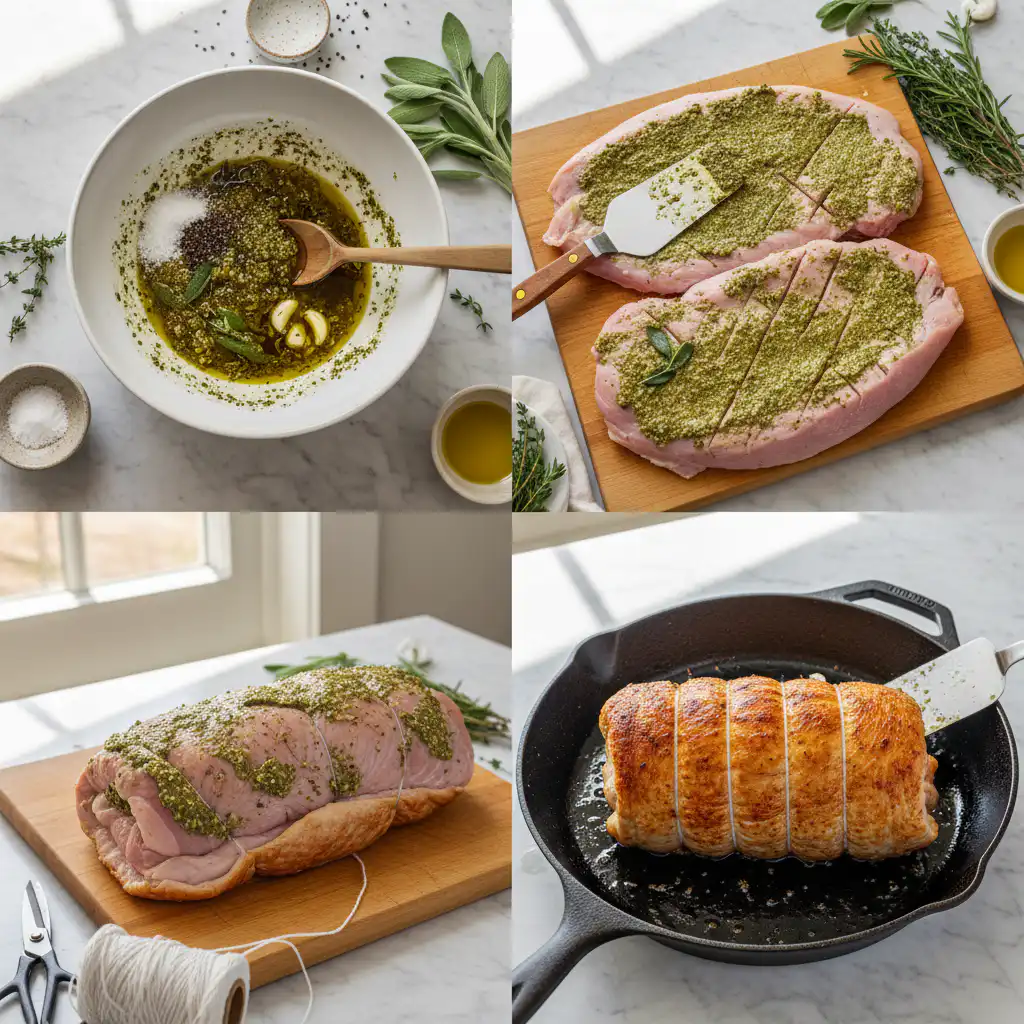
In a small bowl, combine the kosher salt, black pepper, minced rosemary, sage, thyme, garlic, and 1 tablespoon of extra virgin olive oil. Stir well to create a fragrant paste.
Step 2: Debone and Butterfly the Turkey
Carefully remove the skin from the turkey breast and set it aside. Lay the breast flat on a cutting board. Using a sharp knife, carefully slice along the natural ridge to separate the breast from the bone. Repeat for the other half. Remove the tenderloins from each breast half and reserve them for another use (see Gap-Filling section).
Why Butterfly? Butterflying the thickest part of each breast half (leaving one edge connected) allows the meat to cook evenly, ensuring no part is overcooked or undercooked. Make a cut about halfway through the thickest section, then open it up like a book.
Step 3: Prepare for Rolling
Lay the butterflied breast halves side-by-side, skin-side down. Lightly score the meat in a diagonal pattern about 1-inch apart and 1/2-inch deep. This helps the marinade penetrate and the roulade to shape evenly.
Step 4: Apply Herb Mixture
Spread the prepared garlic and herb mixture evenly over the surface of the meat, ensuring it gets into the scored cuts.
Step 5: Roll and Tie
Carefully lift one edge of the reserved turkey skin and begin to roll the meat into a tight cylinder, enclosing the herb mixture. The skin should end up on the outside, fully covering the meat. Secure the roulade tightly using 6-7 lengths of butcher’s twine, spaced evenly from end to end to maintain its shape during cooking.
Step 6: Marinate (Optional but Recommended)
Cover the tied roulade and refrigerate for at least 6 hours, or up to 2 days. This allows the flavors to meld beautifully. For similar flavor infusions, consider trying an ultimate bone broth recipe as a base for other dishes.
Step 7: Preheat Oven
When ready to cook, preheat your oven to 275°F (135°C). This lower temperature ensures gentle, even cooking.
Step 8: Prepare for Roasting
Place an oven-safe wire rack inside a rimmed baking sheet.
Step 9: Season
Season the outside of the roulade generously with salt and freshly ground black pepper.
Step 10: Sear for Color and Flavor
Heat 1 tablespoon of high smoke point oil in a large, oven-safe skillet over high heat until it shimmers. Carefully sear the turkey roulade on all sides until deeply golden brown. This step is crucial for developing a delicious crust.
Step 11: Roast
Transfer the seared roulade, placed on the prepared wire rack and baking sheet, to the preheated oven. Roast until the thickest part of the turkey registers 150°F (65.5°C) on an instant-read thermometer, which typically takes about 2 hours (approx. 25-30 minutes per pound). For side dishes that complement turkey, explore options like Mediterranean roasted vegetables or a hearty autumn harvest grain salad.
Step 12: Rest is Key
Once the target temperature is reached, remove the roulade from the oven and transfer it to a cutting board. Let it rest, uncovered, for at least 10 minutes before slicing. This allows the juices to redistribute, ensuring a moist final product.
Understanding the Turkey Roulade Process
Why Debone and Butterfly?
Removing the bone and butterflying creates a flat, even surface, essential for rolling and ensuring consistent cooking. A bone-in breast has thick and thin areas that cook unevenly. This technique is key to a successful stuffed turkey breast.
The Importance of Low Oven Temperature
Roasting at 275°F allows the turkey to cook through gently and evenly without drying out the exterior before the interior reaches the desired temperature. This contrasts with higher heat roasting, which can easily lead to an overcooked roulade.
Internal Temperature Targets
For a juicy turkey roulade, aim for an internal temperature of 150°F (65.5°C) in the thickest part. Remember, the temperature will rise slightly during the resting period (carryover cooking) and needs to reach 165°F (74°C) for safety, but resting at 150°F is optimal for texture before slicing. If you’re looking for other high-protein meal options, consider high-protein egg bites or Mediterranean cottage cheese egg bake.
Pro Tips & Troubleshooting
Expert Tips
- Pat Dry Thoroughly: Before seasoning and searing, ensure the turkey breast is completely dry. Moisture hinders browning and creates steam instead of a crisp crust.
- Tie It Tight: Use butcher’s twine to secure the roulade snugly. This prevents it from unraveling during cooking and ensures a compact, attractive shape.
- Sear All Sides: Don’t skip the searing step! It adds immense flavor and a beautiful golden-brown color to your herb turkey recipe.
- Invest in a Thermometer: An instant-read meat thermometer is your best friend for achieving perfect doneness without guesswork.
- Rest, Rest, Rest: Allowing the roulade to rest for 10 minutes after cooking is non-negotiable for a moist outcome.
Common Mistakes to Avoid
- Uneven Thickness: Failing to butterfly the meat properly leads to parts being overcooked while others are undercooked.
- Loose Rolling: If the roulade isn’t rolled tightly, it can fall apart when sliced.
- Overcooking: Relying solely on time instead of a thermometer is the fastest way to dry out your turkey roulade.
- Skipping the Rest: Cutting into the turkey immediately after cooking will cause the juices to run out, resulting in dry meat.
- Not Patting Dry: A wet turkey breast won’t sear properly, leading to pale, less flavorful skin.
Serving & Storage
Serving Ideas
Classic Pairings: Serve slices of this garlic herb turkey with creamy mashed potatoes, savory stuffing, or roasted root vegetables like carrots and parsnips. For a lighter, yet equally flavorful side, consider a Mediterranean chickpeas salad.
Sauces: A rich turkey gravy or a tangy cranberry sauce beautifully complements the flavors.
Green Sides: Complement the richness with steamed asparagus, green beans, or a simple side salad.
Storage and Make-Ahead
Make-Ahead: Prepare the turkey roulade (steps 1-6) up to 2 days in advance. Cover it tightly and refrigerate. This allows flavors to meld and saves time on cooking day.
Reheating: Reheat leftover roulade gently in a covered dish in the oven at 300°F (150°C) with a splash of broth or water until warmed through (internal temp 165°F/74°C).
Storage: Store leftover cooked roulade tightly wrapped in the refrigerator for up to 3 days.
Conclusion
This turkey roulade stuffed with herbs is more than just a recipe; it’s a foolproof method for creating a show-stopping, incredibly delicious centerpiece for any special meal. Enjoy the process and the stunning results!
Frequently Asked Questions
What is the ideal internal temperature for turkey roulade?
The ideal internal temperature for turkey roulade is 150°F (65.5°C) in the thickest part. It should then be allowed to rest for 10 minutes before slicing, during which time the temperature will rise slightly to a safe 165°F (74°C) and the juices will redistribute.
How do I prevent my turkey roulade from drying out?
To prevent drying, ensure you don’t overcook the roulade and let it rest properly after cooking. Properly deboning and butterflying the breast to an even thickness also helps it cook uniformly. Using a high smoke point oil for searing and a moderate oven temperature contributes to a juicy result. For other moist and flavorful dishes, explore our healthy Mediterranean chicken orzo recipe.
Can I prepare the turkey roulade the day before?
Yes, you can prepare the turkey roulade up to 2 days in advance. After rolling and tying, cover it tightly and refrigerate. This allows the flavors to meld and can make cooking day less stressful.
What herbs are best for turkey roulade?
Classic choices include rosemary, sage, and thyme, as featured in this recipe. Parsley, chives, marjoram, and even a hint of tarragon can also be delicious additions or substitutions.
How long does turkey roulade need to rest?
Allow the turkey roulade to rest for at least 10 minutes after removing it from the oven before slicing. This crucial step allows the juices to redistribute throughout the meat.
How do I tie a turkey roulade?
Use butcher’s twine to tie the roulade tightly and evenly. Start tying from the ends and work your way to the middle, ensuring a consistent shape for uniform cooking.
What to do with turkey tenderloins?
The reserved turkey tenderloins are delicious pan-seared, grilled, or breaded and fried. They cook much faster than the roulade and can be a tasty appetizer or a separate component of your meal.
Herb Turkey Roulade
Ingredients
Equipment
Method
- In a small bowl, combine the kosher salt, black pepper, minced rosemary, sage, thyme, garlic, and 1 tablespoon of extra virgin olive oil. Stir well to create a fragrant paste.
- Carefully remove the skin from the turkey breast and set it aside. Lay the breast flat on a cutting board. Using a sharp knife, carefully slice along the natural ridge to separate the breast from the bone. Repeat for the other half. Remove the tenderloins from each breast half and reserve them for another use.Butterflying the thickest part of each breast half (leaving one edge connected) allows the meat to cook evenly, ensuring no part is overcooked or undercooked. Make a cut about halfway through the thickest section, then open it up like a book.
- Lay the butterflied breast halves side-by-side, skin-side down. Lightly score the meat in a diagonal pattern about 1-inch apart and 1/2-inch deep. This helps the marinade penetrate and the roulade to shape evenly.
- Spread the prepared garlic and herb mixture evenly over the surface of the meat, ensuring it gets into the scored cuts.
- Carefully lift one edge of the reserved turkey skin and begin to roll the meat into a tight cylinder, enclosing the herb mixture. The skin should end up on the outside, fully covering the meat. Secure the roulade tightly using 6-7 lengths of butcher's twine, spaced evenly from end to end to maintain its shape during cooking.
- Cover the tied roulade and refrigerate for at least 6 hours, or up to 2 days. This allows the flavors to meld beautifully.
- When ready to cook, preheat your oven to 275°F (135°C). This lower temperature ensures gentle, even cooking.
- Place an oven-safe wire rack inside a rimmed baking sheet.
- Season the outside of the roulade generously with salt and freshly ground black pepper.
- Heat 1 tablespoon of high smoke point oil in a large, oven-safe skillet over high heat until it shimmers. Carefully sear the turkey roulade on all sides until deeply golden brown. This step is crucial for developing a delicious crust.
- Transfer the seared roulade, placed on the prepared wire rack and baking sheet, to the preheated oven. Roast until the thickest part of the turkey registers 150°F (65.5°C) on an instant-read thermometer, which typically takes about 2 hours (approx. 25-30 minutes per pound).
- Once the target temperature is reached, remove the roulade from the oven and transfer it to a cutting board. Let it rest, uncovered, for at least 10 minutes before slicing. This allows the juices to redistribute, ensuring a moist final product.